Review of (T)ERROR (2015) by Meg G — 07 Dec 2018
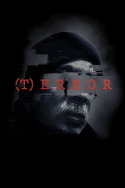
Lyric R. Cabral's (T)error follows Saeed Torres as he surveils Khalifa Al-Akili on behalf of the FBI. The FBI hires Torres, a black Muslim man formerly involved with the Black Panther Party (a group targeted and decimated by the FBI long before Torres himself became an informant), to embed himself in different communities to surveil Muslims within those communities. Torres explains that the FBI does not merely want to incarcerate people; they want to arrest people on charges of terrorism. This documentary thus reveals how being Muslim becomes a racialized category that the FBI targets and terrorizes through its efforts to surveil and apprehend (and produce) Muslims as terrorists. It also reveals how this process is central to the United States' carceral project, which helps the US create an undercaste whose civil liberties are so compromised as to make them all the more vulnerable to state manipulation and coercion.
Manipulation and coercion are crucial components of the FBI's functioning and characterize all of the relationships in this film that are mediated by the FBI and the state. Torres explains that he works as an informant for the cash, to take care of his son, and because of the limited options available to him after being incarcerated. Even after he has been deactivated by the FBI and expresses that he should never have worked for them at all, he discusses his difficulty in finding a job and his desire to provide for his son. Tarik Shah, arrested in 2005 "for talking," as his mother aptly said, was entrapped with the help of Torres. As Torres explains the process of entrapment that created the conditions for Shah's arrest, viewers learn that the FBI exploited a moment in which Shah was under-resourced and owing child support to offer an "out" that would lead to his imprisonment, despite his not having done anything but consent to providing future support to a law enforcement officer posing as a "terrorist"-affiliate.
This all made me wonder--how can folks escape a trap set by the state to capture people who are vulnerable, people who are only trying to take care of their families and provide lives for their children? How do we combat the kind of evil that uses people's desperation against them to coerce them into fulfilling a state's fantasy about itself vs its fantasized "other"? Tarik Shah's mother explained that she could not hate Saeed for entrapping her son: "he may be physically out of jail, but mentally he is not." Saeed expressed a parallel sentiment about his work for the FBI: "this story is never-ending." No one can be truly free as long as the state produces and exploits resource scarcity towards the criminalization of vulnerable populations. How can we imagine alternative communities that meet desperation where it's at and make resources and infrastructures available to support people who are struggling? How can we see the US prison state for what it is--a manufacturer of despair, racist oppression, and widespread disempowerment--and move towards abolition, even as our state tries to teach us to feel insecure? How can we learn to prioritize collectivity over a dangerous fantasy of security, which only produces insecurity for the vast majority of our populations?
This review of (T)ERROR (2015) was written by Meg G on 07 Dec 2018.
(T)ERROR has generally received positive reviews.
Was this review helpful?