Review of Tension (1949) by Mike W — 18 Jul 2004
Geeks like me will be arguing over a true definition of film noir forever. It's what makes us happy. See, what makes noir so difficult to define is that it was discovered, not attempted. It's not as simple as adding song and dance to a story and calling it a Musical. However, we have generally agreed on the origin of the species (note I did say, genre). Simply put, the discovery of film noir came about when, after being denied to American films during WWII, Europe got a whole bunch of them all at once. The French noticed a decided change in the tone of the pictures, compared to those before the war and, furthermore, saw that this tone was apparent in movies from multiple directors, producers and screenwriters from all of the major studios (not Disney, silly).
This last part about the studios is important. During the days of the studio system, each studio had its own character and, while they all produced films from every genre, each had its specialty. MGM made musicals, Warners specialized in gritty realism, Universal did monster movies, etc. So, when the post-war cynicism that played an enormous part in the dark moodiness the French recognized and called film noir bled into the movies themselves, it was bound to effect each studio in a different way, even though no one knew that anything different was even happening. Warner Bros. pioneered the gangster film and had a stable of actors who knew how to bare their souls on screen ferociously, yet with subtlety. The noir mood infiltrated Warners unnoticed. But MGM...how would a very subtle yet definite darkening of the traditional escapist Hollywood philosophy affect the most Hollywood of all studios?
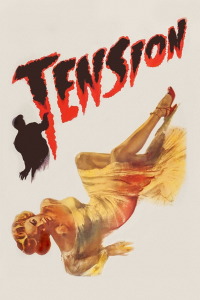
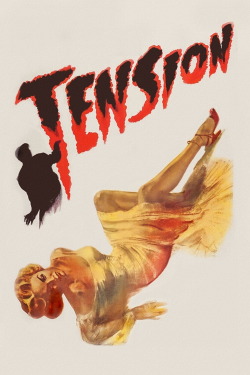
I suppose the answer can be found in [i]Tension[/i]. This film was made during the heart of the noir era, but shows that MGM just didn't know what to do with this new style. MGM was no stranger to the crime film, having very successfully porduced the [i]Thin Man[/i] series. But those were detective stories. One of the hallmarks of noir (from what I can tell) is that the film's POV is that of the criminal, and I don't think Leo the Lion new how criminals think.
[i]Tension[/i] is undone by its own devices. The film opens with Barry Sullivan telling the audience how he puts pressure on a suspect until the [u]tension[/u] finally breaks them. He even repeatedly stretches out a rubber band during this speech, just in case we don't get his point. Sullivan then disappears for the next 45 minutes or so while Richard Baseheart loses his wife (the deliciously cold Audrey Totter) and his dignity to Lloyd Gough. Baseheart then creates a second identity (named after MGM starlet Ann Sothern) so he can kill Gough, blame Fake Baseheart and go on with his life/wife. Complications arise when Fake Baseheart falls in love with Cyd Charisse. The undoing I mentioned earlier is this: Sullivann narrates the whole picture. So, what we have is a story seen from the POV of the crook, but dictated from the POV of the cop. So, is it noir? How the hell should I know? My best guess is that Sullivan's VO and intro were added to an already completed film. And the VO is used very badly. Was it necessary for Sullivan to tell us he's about to set up Totter about 30 seconds before we watch him do it?
It's all too bad, really. The story is very intriguing, the plot twists are mighty entertaining and Baseheart is especially good as the geeky pharmacist driven to murder.
This review of Tension (1949) was written by Mike W on 18 Jul 2004.
Tension has generally received positive reviews.
Was this review helpful?