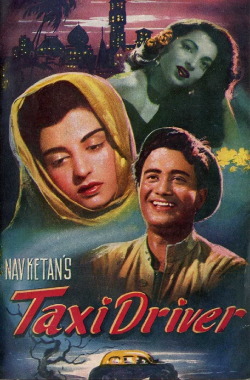
Review of Taxi Driver (1954) by Harry W — 23 Nov 2013
I didn't get Taxi Driver the first time I watched it. I found that it dedicated the first half of the story to a relationship that went nowhere and followed it up by a powerful second half, so I was semi-satisfied. But times have changed and so have I, so Taxi Driver has done nothing short of earning a second viewing.
Taxi Driver opens really well because the atmosphere goes through so many themes which give an intense and mysterious setup to the film, reminiscent of classic film noir. And we quickly get an understanding of who Travis Bickle is. He isn't just a guy trying to make a living as a Taxi Driver. He is a Taxi Driver shaken by a so-far unnamed previous event who is trying to understand the people in a world that openly ignore him. Taxi Driver explores what it is to be a Taxi Driver. The unsuspecting person that is ignored by everyone and does the simple job of moving a person from point A to point B while people around them commit crimes and acts of crude behaviour. He attempts to connect to society but is rejected in so many ways.
Taxi Driver is essentially a complex character study of the iconic figure Travis Bickle that borderlines on being a larger-scale crime thriller which captures elements of a post-Vietnam War figure who has become separated from the world.
The general feel of Taxi Driver is also enhanced by the strongly atmospheric cinematography which captures symbolism at times as well as ensuring that the eerie tension of particular moments are maintained and reflected on powerfully.
The climax in Taxi Driver is iconic, extremely powerful and serves as a powerful contrast to the previous scene because it draws a comparison to the real people of society and the image of a person that claims to stand for them. It points out how society favours liars and pretenders who hold the facade of being real people are valued more highly than the actual people. Really, Martin Scorsese's breakthrough effort as a director on Taxi Driver is one of the smallest scale films of his career and yet one of his most largely notable. His work on Taxi Driver is excellent.
Yet it is matched in acting by Robert De Niro's unforgettable powerhouse performance as the titular Taxi Driver, Travis Bickle. Travis Bickle's eyes light up when he talks to Betsy close up for the first time, and we get a sense that he is feeling something again. That much can be taken away from the simple elements of Robert De Niro's performance in the less dramatic scenes, so its safe to expect that the more powerfully dramatic ones are likely to shoot you in the neck and leave you twitching and bleeding in a pile of your own filth. As gruesome as that metaphor is, that's how good Robert De Niro is in the role of Travis Bickle, and his ability to create a natural chemistry with everyone around him is excellent.
Cybill Shepherd also did a fine job working with Robert De Niro, but the actress that worked the most bravado chemistry with him was Jodie Foster who at the ripe age of 16 managed to work with some of the most complex and damaging subject matter so naturally and skilfully that she is nothing short of an excellent addition to the cast. Her charm and line delivery are unmatched for her age, and her achievement is well worth the Academy Award nomination she received.
Harvey Keitel supplied a gritty supporting role which was right for the feel of Taxi Driver and his general look had a real villainous feel which just enhanced his line delivery.
Peter Boyle was also great, achieving some of his finest work since his lead role in Joe 8 years prior to Taxi Driver.
So Taxi Driver may be slow and dated, but is an undisputed classic.
This review of Taxi Driver (1954) was written by Harry W on 23 Nov 2013.
Taxi Driver has generally received positive reviews.
Was this review helpful?