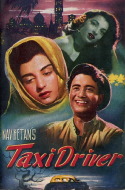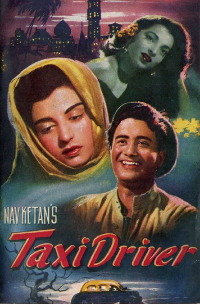
Review of Taxi Driver (1954) by Rian P — 07 Nov 2013
If I had a top 10 of all time, Martin Scorsese would appear thrice with his masterpieces Taxi Driver, Goodfellas and Raging Bull. The first, however, is probably my favourite of the 3 films, and for me to attempt writing about my undying admiration, is an almost insurmountable challenge. Therefore, the following is a very lengthy, incoherent, scene by scene commentary, which may or may not be insightful to others. It is a feeble attempt to articulate my thoughts, and is mostly just me describing the plot.
*******************************************************************.
The opening sequence starts things off splendidly: a taxi drives through thick smoke rising out from the sewers. Accompanying the aesthetic is Bernard Hermann's final score, which is an absolute masterpiece; it begins so heavy [could fit right in with a Alfred Hitchcock picture, really], before diverting to dreamy jazz. It repeats itself like that. It's incredibly atmospheric, and sets up the film's tone beautifully. We then see Travis Bickle's [Robert De Niro] eyes in a red colour palette. Wandering eyes - looking from left to right. The first thing we know about him is that he's an insomniac. He applies to be a night cabbie [wasn't he just driving a taxi?]; because, fuck, he might as well earn some money for his restlessness. The personnel guy says there's porn theaters for that. But Travis has already tried them, with no success. He gives the guy his particulars. Age: 26 [blimely, only 26]. Ex-marine, honourable discharge [the film is, above all else, a commentary on post-war psyche]. Education: some. The character development for the greatest character study ever begins smartly.
Travis starts a diary. During his first rounds with the cab, we hear him via voice-over say: "All the animals come out at night - whores, skunk pussies, buggers, queens, fairies, dopers, junkies, sick, venal. Someday a real rain will come and wash all this scum off the streets." Later, we'll find out just how hypocritical this statement is. Scorsese shows us the unromanticized New York streets. It's all true. A couple fool around in the backseat. Travis has to clean off the cum when his night is finished. Some nights, he claims he cleans off the blood. He hates the scum, yet continually invites them all in.
He goes to a porno theater, and tries to flirt with the cashier, who is not interested [duh]. Wait, she's black? Does this means his later suggestive prejudice was gradual? He retreats and watches the porno. He tells us his days go on and on; that all his life he just needed a sense of someplace to go. So far, so good. I empathize a lot with this guy.
Now he starts to talk about Betsy [Cybill Shepard], about the first time he saw her: "She was wearing a white dress and appeared like an angel, out of the filthty mass." We see Betsy as she walks into her workplace - she is a campaign volunteer for Senator Charles Palantine, who is running for President. She walks right pass Scorsese in his first cameo. "They... cannot... touch... her," says Travis. Albert Brooks plays Tom, a fellow campaign volunteer and Betsy's friend. He's so funny in this film. He's on the phone talking to the person who makes the campaign buttons, trying to explain the difference of the meaning of the slogan they're using: "WE are the people" is not the same as "We ARE the people." God, Cybill Shepard is so beautiful. I keep forgetting to pay attention to her performance to see if she's the bad actress everyone says she is. She notices Travis outside in his taxi, observing her. She tells Tom, and he goes off to whisk him away.
Travis makes his rounds again before going to a cafe where all the cabbies hang around. Another cab driver, Wizard [played by one of my favourite actors - Peter Boyle] is saying a kinky joke, and Travis smiles. The first racially implied moment occurs here, as Travis stares at the black pimps sitting down. He then shares a story to the other drivers about a cabbie getting beat up, and one of them asks if he needs a weapon. He says no.
Back at Palantine's campaign office, Tom is attempting to light a match with 3 fingers in front of Betsy, as Travis watches from outside in his cab. He makes his move; walks straight up to their table and tells Betsy he wants to volunteer. She's on to him, but seems to like it when he calls her the most beautiful woman he's ever seen. But what about Palantine, she asks. He knows nothing about the man, of course. He makes his motives clear: he wants to go on a date with her. She seems taken with him, and accepts.
They go to a coffee shop later and he tells her that he doesn't like her co-worker, Tom, too much; that they, in their brief time together, have a better connection. This isn't true, but she agrees. She tells him how a Kris Kristofferson song reminds her of him [the lyrics go "He's a prophet and a pusher, partly truth, partly fiction-a walking contradiction"]. Scorsese added this in, rather nicely, as a gesture to his friend. Travis, afterwards, buys the song's album for her.
He's making his rounds again, and guess who is his unlikely fare? Charles Palantine. Travis recognizes him and lies how he is one of his biggest supporters. Palantine makes conversation with him, and listens to Travis' disgust at the city's decay. He agrees there needs to be some changes. He exits the cab and shakes his hand. That was a pretty friendly scene. Travis continues his rounds, and Iris [Jodie Foster] enters the cab and tells him to go. Sport [Harvey Keitel], her pimp, takes her out the taxi, and drops a crumbled $20 bill for Travis to forget about the incident. He drives off, as some black kids throw eggs at his cab. He keeps the bill, looking disdainfully at it.
Time for date #2 with Betsy. We see a man on the street with shoe polish in his hair beating a drum. Peter Boyle suggested this eccentric guy to Scorsese, and he included him in, god knows why. Betsy can't believe Travis has taken her to see a dirty movie. Yet she still goes in, but is naturally appalled. "Taking me to a place like this is as exciting as saying 'let's fuck'," she says, memorably. Travis apologizes, says they can go somewhere else to see a movie [he tells her he knows nothing about them], and offers her the album he bought. She already has it.
Next we switch to the "phone call" scene, 'the most important one of the film.' Travis is calling Betsy to apologize again. "The camera moves to the side slowly and pans down the long, empty hallway next to him, as if to suggest that the phone conversation is too painful and pathetic to bear." Scorsese once said in an interview that it was the very first shot he thought of in the film... ''that's the style of the picture.'' He keeps calling her, and sends flowers, but with no luck. The flowers rot in his apartment. It makes his headaches worse. He says he shouldn't complain, though. He writes in his diary twice: "You're only as healthy as you feel." How you feeling, buddy? Frustrated, he goes back to the campaign place and tells Betsy off. He accepts her as being just like the others.
Scorsese's second cameo as the deranged passenger is next (one of the best cameos ever, let alone by a director). This scene is the game-changer; the one where the ticking bomb meets its maker - which then sends Bickle on a one-man mission to cure the world. They're parked on the curb, "put the meter back on," a threatening Scorsese says to Travis. "Put it back on, I don't care what I have to pay." De Niro gave him an acting tip to make Travis put the fare meter back on [Scorsese, if you didn't know, was only filling in for an actor who got into an accident - when I first saw the film I didn't even know it was Marty]. Travis stares at him, cautiously, through the rear view mirror. Scorsese points out to him his wife, in the upstairs apartment, having an affair with a black man [the race further presented to Bickle in a negative light]. He says he's going to kill her, with a .44 Magnum Pistol. "Have you ever seen what a .44 Magnum will do to a woman's pussy? Now that you should see. What a .44 Magnum will do to a woman's pussy, that you should see," he tells Bickle. Travis seems interested in the weapon. Scorsese was very funny, and convincing here. "You must think I'm really sick?".
Back at the Taxi cafe. A black cabbie, the only minority apart from the cashier girl which Travis doesn't seem to mind, asks if he has the 5 bucks he owes him. Travis checks his change, and notices the crumbled 20 dollars. Wizard gets up to leave and Travis asks to speak with him. Outside, he exchanges more dark looks with black people. He then tells Wizard things have got him down... He really wants to do something - he has "some bad ideas in his head." Wizard tells him some improvised BS about becoming his job. "Go on, get laid, get drunk. Do anything. You got no choice, anyway. I mean, we're all fucked. More or less, ya know" is his wise advice. Travis tells him that's about the dumbest thing he's ever heard. "It ain't Bertrand Russell, but what do you want? I'm a cabbie... Don't worry so much," Wizard tells him.
Travis listens to Palantine on TV at home. He hears him say the people are rising to the demands he has made on them. "The people are beginning to rule!" Travis makes his rounds again, still driving by campaign headquarters. He runs back into Iris on the streets. She's with a friend this time - the real Iris; who Jodie Foster was modeled after. He follows her and sees she's a prostitute. He drives off. "Loneliness has followed me my whole life. Everywhere. In bars, in cars, sidewalks, stores, everywhere. There's no escape. I'm God's lonely man... June 8th: My life has taken another turn again. The days can go on with regularity over and over, one day indistinguishable from the next. A long continuous chain. Then suddenly, there is a change." Then suddenly, there is a change...
He meets Easy Andy, the gun dealer. Andy has two briefcases of weapons. He describes the details of 4 guns. Travis, hilariously, asks not the price for one, but for everything. A training regime starts: 50 push ups and pull ups every morning. No more pills. No more destroyers of his body. "Every muscle must be tight." He starts practicing shooting. He goes back to see another dirty movie. This is probably my favourite scene in the film: He blocks one eye as we hear the girl off-screen commenting on the pornstar's penis. Then he unblocks his eye. Blocks. Unblocks. He tells us an idea has been growing in his mind, as we see a poster of Palantine. "True force - all the king's men cannot put it back together again." This is all seems very brusque.
In his apartment, he builds his own gun sling, sharpens his knife and idolizes himself holding a gun in the mirror. He attends a campaign rally, and has a funny exchange with a ''Secret Service man.'' He talks to him about seeing 'suspicious-looking' people and asks about what kind of guns agents carry... he asks what he has to do in order to get into the Secret Service. The agent asks for his info to send him the details, and Travis' only slip-up in giving false information was giving a 6 digit zip code, instead of a 5 digit one. He was thinking of his phone number. Lmfao.
Next up is the most famous improvised scene in celluloid history. "You make a move. It's your move. You talking to me? Well I'm the only one here." Roger Ebert says no one remembers the last line, that it is the truest one in the film. He's right. "Who the fuck do you think you're talking to?" Haha. Man, De Niro IS Travis Bickle. It's still quite impressive to know he got a license and drove a real taxi for weeks in preparation for the role [unafraid to be picked out, as he was already an Oscar winner for The Godfather: Part II], and was still filming 1900 at the same time in Italy. Wow, man.
"Listen, you fuckers, you screwheads. Here is a man who would not take it anymore. A man who stood up against the scum, the cunts, the dogs, the filth, the shit. Here is a man who stood up." - that line plays twice, and no it's not a glitch with the DVD. The visual of him 'standing up' is not shown, though. He's lying down.
He makes his rounds again, and stops at a grocery store. A black guy is sticking the place up. His back turned to Travis, who is also armed. Travis calls the guy to look around, and shoots him, dead. Now, I'm not going to say that the guy didn't deserve it, but I wonder if Travis could of not killed him? His racism is now fully present.
The next scene is the only one with a song - Late for the Sky. It's one of the movie's best moments: Travis is in his rocking chair, pistol in hand, watching Soul Train or some shit. The song lyrics go like this:
Awake again I can't pretend and I know I'm alone.
And close to the end of the feeling we've known.
How long have I been sleeping.
How long have I been drifting alone through the night.
How long have I been running for that morning flight.
Through the whispered promises and the changing light.
Of the bed where we both lie.
Late for the Sky.
Another campaign rally. Palantine says we, the people, have suffered. He mentions Vietnam. Travis, in voice-over, writes to his folks; lies to them that he's working and making lots of money with the government, that he's healthy and is going out with a girl named Betsy. Palantine's speech ends: "no more will we fight the wars of the few for the harm of the many." Back home, Bickle watches a soap opera and destroys his TV. He's getting sicker.
Travis finally meets Iris. To speak with her alone, though, he needs to talk with Sport first, who thinks he's a cop. A entertaining exchange ensues - I love when Travis says "I'm hip," and Sport cheerfully replies, "Buddy, you don't look hip." We find out Iris is 12 and a half. Christ. Up into her apartment, we see a Mick Jagger poster. The Rolling Stones is Scorsese's favourite band. Mine too. Travis tells her about the night she came into his cab and wanted to get out of this place... and how he's here to the rescue. She dismisses it, and is more concerned about "making it" [she tries to unbuckle his pants - trivia: it's actually Jodie Foster's sister doing the underage actress' more explicit scenes]. She tells him she can leave any time she wants, that she only came into his taxi that night because she was stoned. Travis doesn't understand, but agrees to meet her tomorrow for breakfast - maybe he can talk sense to her then. "Sweet Iris" he says as he leaves, and gives the other pimp/room guy the crumbled $20.
Next morning they do have breakfast, and Travis confronts Iris' lifestyle and is vehement about how Sport is a piece of scum. Iris is so naive, and says Sport isn't all that bad, instead talking gibberish about peoples' horoscopes. She does say, however, that she'd like to go to a commune in Vermont. She asks Travis if he'll come too. He can't - he's doing something for the government... He's going away for a while. But he'll give her the money to go.
The next scene in the apartment with Sport and Iris is the only one where Travis is not seen [yet he's outside, parked]. She tells him she doesn't like what she's doing, and how he doesn't spend time with her any more. Sport sweet-talks her, puts on music - the film's main jazz theme. She gobbles his lies of loving her. She is so naive.
Next scene, Travis is still practicing his shooting. At home, he burns the dried flowers, sharpens his knife, leaves a note for Iris with money... He says his whole life has been pointing to one direction. There's never been any ch.
This review of Taxi Driver (1954) was written by Rian P on 07 Nov 2013.
Taxi Driver has generally received positive reviews.
Was this review helpful?