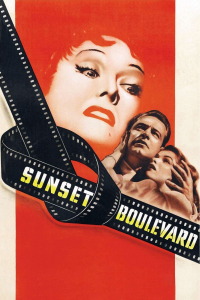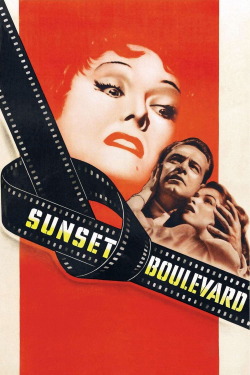
Review of Sunset Boulevard (1950) by Ed B — 10 Mar 2013
What's left to say about this film that hasn't been said already? For all intensive purposes, it's the perfect picture. Billy Wilder took things up a notch when he dreamt up this masterpiece. It's just too bad that more people haven't been turned on to this immortal piece of filmmaking.
From the casting, to the many rewrites, to the lighting and cinematography, all the way to the performances, there's nowhere to find fault within Wilder's magnum opus. I've done an oral presentation and written two papers on this leviathan, and I never cease to be awed by it.
Among the many legends regarding the making of Sunset Boulevard is the scuttlebutt regarding Gloria Swanson's performance as Norma Desmond. To this day people wonder if she was merely overacting or if she was deliberately having her character overact. I'll go with the latter and say it was all by design. Luckily for us, having a former silent era star play a former silent era star was too much for Wilder to pass up.
Prior to her introduction to us, Norma was famous as an actress who never relied on her voice. Now, many years later, the washed-up silent movie star has isolated herself away from society, living alone with her bizarre delusions of grandeur. When she finally gets the chance to acquaint herself with an outsider, the spoiled Hollywood starlet has no conception how to communicate. Her over the top, dramatic wailings with the big, over-exaggerated body language is the only means of expression she comprehends. The bitch is freaking nuts and Swanson plays the role to a T.
Another perfect choice was casting William Holden as chump screenwriter Joe Gillis. He flawlessly plays the role of a down on his luck dreamer who's ready to cash in his chips and get the hell out of tinseltown. From the very first scene, his cynical narration says everything you need to know about him: He's sick of it all. We meet a man who's bummed out and waiting for something, anything, to happen in his otherwise directionless life. His tone is aptly moribund as he bitches about his squandered opportunities. Joe Gillis is a man of regret.
Erich Von Stroheim completes the magnificent trio, playing Max. It's a well known fact that in real life Erich blamed Gloria Swanson for ruining his career as a director. At the time, Billy Wilder's decision to put the two of them together for this picture was either really brave or really foolhardy. Whatever the reason, it works impeccably. Plus, you've got to dig Norma constantly screaming "Max!" every time she wants something or needs someone to push around. Genius.
Together, they share a delicately constructed dynamic consisting of shamelessly insincere relationships. Joe sees Norma merely as a financial opportunity, a chance to make a little dough and get the hell out of town. Norma sees Joe as an opportunity as well, but only as means of getting back on that silver screen. Their motives are as clear as they are phony, it's Max's motives that are the fly in the ointment.
Max is the glue that holds everything all together throughout the picture. He keeps Norma's fragile pride in check, constantly reassuring her of her continued greatness, all the while maintaining the fantasy world that he's constructed. This all comes naturally to Max, having been both Norma's former lover and the director of some of her greatest silent films. It's funny how life imitates art and vice-versa.
By the time Joe arrives on the scene, the fragile equilibrium that Max has created begins to topple. By crashing the party, Joe becomes the proverbial stranger in a strange land. To his utter bemusement, he finds an alternate universe consisting of a spooky mansion, a chimp funeral, a pipe organ, and an eccentric shut-in all too eager to placate this bewildered wayfarer.
It's only after Joe's departure that our suspicions are finally confirmed: Norma is completely and totally deranged. Once again, Max is her rock, her astral sage. Even as Norma's make-believe world is crumbling all around her, Max remains by her side, never wavering from his deft ego enabling. As her sudden infamy launches her into the spotlight, she slips away further into dementia, completely oblivious to the fact that she's done any wrong. Beguiling Norma yet again, Max assumes the director role for her greatest performance yet: the queen entering the castle.
It's here that we see Norma at her spectacularly irreproachable finest. As she makes her legendarily dazzling procession down the grand staircase to that final curtain call, Indulgent self-satisfaction absolutely oozes from her. Unaware of her own downfall, she envisions herself as an awe-inspring somebody once again. Then, with the whole world watching, she utters the prophetic quote, "Alright, Mr. DeMille, I'm ready for my close up." That line alone is worth the price of admission. The perfect end to the perfect picture.
Sunset Boulevard's camerawork, lighting, and editing have all been praised endlessly, so I won't go on about it's technical virtues. It's score, however, deserves a special shout out. Franz Waxman nails the emotion with his musical phrasing in nearly every scene. There's a reason it's considered one of the best ever.
Want to know why this film has stood the test of time and is among the elite films considered classic? Structure and story. Of course the other things I mentioned make it legendary as well, but without a memorable screenplay, none of this happens.
If you follow the screenwriting guidelines like Wilder did with this, you can make any film classic. It's a towering monument of plot, story arc, and character development. Why do you think we're still talking about it more than sixty years later?
This review of Sunset Boulevard (1950) was written by Ed B on 10 Mar 2013.
Sunset Boulevard has generally received very positive reviews.
Was this review helpful?