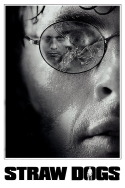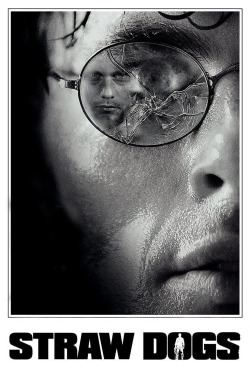
Review of Straw Dogs (2011) by Mallory T — 24 Dec 2011
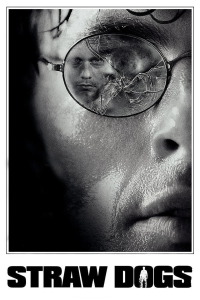
In this reimagining of Sam Peckinpah's 1971 classic, the premise remains the same but the execution fizzles. The lead up is tantalizingâ"every character has layers, and the cast is superb. James Marsden is the Hollywood screenwriter (he was a mathematician in the original) who travels to the small town of Blackwater so he and his sexy/spunky TV actress wife (Kate Bosworth) can fix up her late father's home for resale while he works on a new screenplay. Alexander Skarsgard is the somewhat conflicted ringleader of a group of rural trash homeboys who is hired to fix a roof while he ogles Bosworth. And James Woods leaves James Woods the actor behind to disappear into his role as the psycho football coach who precipitates the fin al confrontation at the end. The violence at the end is what we expect; it's a catharsis; but that catharsis would have been better served up with some simple logic and dramatic truth (see below). Surprisingly, the director/writer is a former film critic.
SPOILERS AHEAD...don't read unless you've already seen the movie.
There are two things that leave a bad taste in your head at the end of this film. The first has to do with the subplot about the retarded man who is being threatened by the local "gang." When he accidentally kills a 15-year-old girl who is putting the moves on him (similar to how the mentally disabled man in John Steinbeck's Of Mice and Men kills a woman), they instantly blame him for her disappearance and start hunting him down. But they never even find out that he actually killed her, which would have been much more of a credible motivation for the vigilante action at the end. In fact, why is it even necessary for him to kill her in this story since no one finds out, anyway? If suspicion was enough to motivate the vigilantes, why not just have her hiding at a friend's place, for example?
Secondly, Kate Bosworth's character is raped by two men, but she never tells her husband. And he doesn't find out in any other way, either. So when he is defending himself, his wife and the retarded man inside his home, he tells his wife that he won't give the man to the vigilantes "because I am responsible for him." So the final, bloodsoaked confrontation between the hero and the vigilantes becomes all about protecting a disabled man he hardly knows instead of being about defending (and avenging) his own wife, who was brutalized. This not only doesn't make any sense, but it weakens the dramatic impact of the climax.
One more flaw. The character of the sheriff was very one-dimensional and an insult to people of color. This is another film where we see the "noble black man" stereotype, which is a form of inadvertent racism in itself. The town's black sheriff (now how did he get elected in a place so populated by racists?) is portrayed as a flawless man of integrity and conscience throughout...but all that integrity ends up being neutralized when he is shot by the "coach." So instead of portraying the sheriff as a savvy lawman who knows how volatile the men are, and makes the right moves to stop them from committing violence, he becomes just a poor martyr who actually turns his back on 1) a wild, violent gang of vigilantes 2) who put their guns down on the ground on his orders, but 3) who were left alone with the loaded guns still lying on the ground while he walked up to the house.
Straw Dogs 2011 is an example of a film that could have been so much better if it had not sacrificed dramatic truth for plot shortcuts.
This review of Straw Dogs (2011) was written by Mallory T on 24 Dec 2011.
Straw Dogs has generally received mixed reviews.
Was this review helpful?