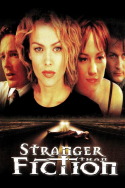
Review of Stranger Than Fiction (2000) by Sashenka P — 21 Feb 2016
In an engaging encounter between fantasy and reality, screenwriter Zach Helm in his 2006 American film, Stranger than Fiction, brings to life the journey one embarks on when finding themselves confronted with fate. Will Ferrell plays the main role of Harold Crick, a monotonous, average ISR auditor. Starring with him in this dramatic comedy are actresses Emma Thompson and Maggie Gyllenhaal and actor Dustin Hoffman.
The film opens in a narration by Karen Eiffel (Emma Thompson) discussing the mundane, tedious details of Harold's robot-like scheduled life until one Wednesday morning when Harold begins to hear the voice narrating everything he does. The action rises as Harold begins to deal with the panic and bewilderment that accompanies his revelation. Harold is forced to step out of his safe and familiar everyday life into a world of uncertainty and excitement as he struggles to find out the truth behind the voice narrating his life. He meets rebellious baker, Anna Pascal (Maggie Gyllenhaal) and ventures into new territory as their romantic relationship unfolds throughout the film in a quirky and heart-warming way. Soon after meeting her, he finds himself at the door of Professor Hilbert (Dustin Hoffman), an expert in literature, to find answers about what the voice in his head means. Professor Hilbert helps Harold define the meaning of the voice by learning that the narrator is all-knowing because of a line Harold repeats out loud to him, "little did he know". The professor narrows Harold's fate into two options; his story is either a tragedy or a comedy. While Harold continues on his quest to define his story, the audience is shown that the voice in Harold's head belongs to writer, Karen Eiffel. Eiffel is a chain-smoking, strung-out author who is struggling with a bad case of writer's block as she tries to figure out how to end her story about Harold Crick. She is set with the fact that Harold must die eventually but cannot find it in herself to write his fate. As this action plays out the audience is confronted with questions about whether or not Harold will figure out Karen Eiffel is the narrator in his head, and above all whether or not he will ultimately be able to find a way to direct his fate.
One aspect of this film that is particularly well done is the on-screen special effects that enhance the portrayal and impact of characters and their actions in a concrete way. The audience is able to literally see the calculations of Harold's mathematical brain as he counts every tile in the bathroom and performs mathematical calculations at work. The unique use of criss-crossing diagrams that detail the mundane, boring facts down to the number of times Harold brushes his teeth (76 times) helps the audience understand his personality and the structure of his monotonous life. Another aspect of the film that created an overall effective and endearing experience was the phenomenal performance of Will Ferrell as Harold Crick. In a more dramatic role than his typical well-known comedic previous roles, Ferrell pulls off the character of Harold Crick through effectively portraying each emotion experienced on Harold's journey to take control of his fate (bewilderment, panic, and uplifting liberation). The psychological trauma his character goes through is so effectively revealed in his facial expressions throughout the movie. An example of the way Ferrell portrays Crick's awkward social dynamics so perfectly occurs in a scene where he is talking to Anna Pascal at her bakery. He so obviously misses social cues with a straight face and rigid demeanour that leaves the audience laughing in true comedic fashion at his inability to understand her actions.
Overall the film Stranger than Fiction is thoughtfully executed and stands in its own category of ingenuity. It strikes the true discerner and intellectual with the resonating message that our lives are impacted in all sorts of ways, in all sorts of small moments. This film shows that when we break free of the dull, mundane cloud of grey that can control our lives, we experience creativity and inspiration and reach a new height of living through learning what it really means to be alive. I would recommend this feel-good film to anyone looking for a heart-warming, light yet impactful film offering a fresh perspective on life and fate. I rate this 4 cigarettes out of 5 in honour of Karen Eiffel:
Penny Escher: And I suppose you smoked all these cigarettes?
Kay Eiffel: No, they came pre-smoked.
Penny Escher: Yeah, they said you were funny.
This review of Stranger Than Fiction (2000) was written by Sashenka P on 21 Feb 2016.
Stranger Than Fiction has generally received positive reviews.
Was this review helpful?