Review of Starting Out in the Evening (2007) by Mel V — 10 Dec 2007
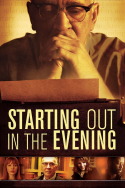
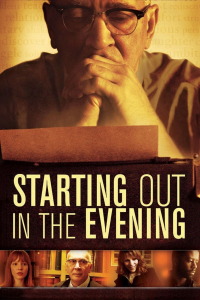
For his first feature-length film, director Andrew Wagner ([i]The Talent Given Us[/i]) had a $500,000 budget, an 18-day shooting schedule, a screenplay co-written with Fred Parnes based on Brian Morton?s novel, [i]Starting Out in the Evening[/i], and multiple Tony Award-winning actor Frank Langella (the forthcoming [i]Frost/Nixon[/i], [i]Lolita[/i], [i]Dracula[/i]) in an award-worthy performance as a retired literature professor and struggling novelist, Leonard Schiller, hoping to finish his fifth and presumably last novel before he dies of heart disease. Wagner also had two talented actresses, Lauren Ambrose ([i]Six Feet Under[/i]) and Lili Taylor ([i]Six Feet Under[/i], [i]I Shot Andy Warhol[/i], [i]The Addiction[/i]) as a graduate student writing her thesis on Schiller?s under-read novels and his daughter, respectively, to round out an insightful exploration of the writing life and its many complexities.
A retired professor and widower, Schiller (Langella) lives a solitary, almost monastic life. Only his daughter Ariel (Taylor), a former dancer turned yoga and Pilates instructor keeps Schiller from complete isolation. The author of four well respected, but out-of-print literary novels, Schiller sets aside several hours a day on his yet-to-be-completed, ten-years-in-the-making novel. For Schiller, writing is, in fact, living. Without writing, Schiller has no purpose. With writing, Schiller is convinced he can live just long enough to finish his last novel. But finding a way through to finishing his novel proves elusive until he meets Heather Wolfe (Ambrose), a super-smart, passionate graduate student who plans on writing her master?s thesis on Schiller?s novels and restoring his faded literary reputation.
Flattered by Heather?s passion for his work (she claims one of his novels changed her life) and recognizing that his literary legacy, including the fate of his last novel, depends on cultivating a positive relationship with Heather, Schiller eventually agrees to collaborate with Heather on her thesis project. As ambitious as she is hyper-articulate, Heather sees her thesis as a way in to the New York?s literary scene. Schiller and Heather?s relationship gradually changes from professional collaboration into friendship, with Schiller mentoring Heather on literary theory and criticism and Heather reinvigorating Schiller?s passion for writing, and thus writing. Despite grappling with her own personal issues, including a renewed relationship with ex-lover Casey (Adrian Lester), Ariel becomes suspicious of Heather?s motives.
[i]Starting Out in the Evening[/i] interweaves several plot threads and themes, focusing the personal sacrifices needed to create art, the disappointments implicit in unrecognized endeavors (both Schiller and his daughter had modest, temporary success, he in literature and her in dance), and, of course, end-of-life or end-of-life-stage decisions everyone is forced to make. It?s in both the particulars of Schiller?s personal and professional crisis (i.e., continuing to work on a novel that he may never finish or seeing it published) and the all-too-universal issues connected to mortality for Schiller and career or personal disappointments for Ariel that [i]Starting Out in the Evening[/i] is a truly exemplary piece of filmmaking, balancing pathos, humor, and insight into a riveting character study.
Given that [i]Starting Out in the Evening[/i] is driven by dialogue, a wrong note in one of the performances would have resulted in a lesser effort, a misfire or worse. Thankfully, Wagner had a strong, talented cast willing to dig deeply into their characters and come up with nuanced, authentic performances. Langella especially deserves credit for giving a quietly controlled performance, a performance defined by the smallest gestures (e.g., a raised eyebrow, a slightly stooped shoulder, slowed speech) that never feels theatrical, a not insignificant risk given Langella?s experience in the theater. Lili Taylor is just as naturalistic and authentic, but that?s to be expected from an actress of her talent and her experience. It?s to Lauren Ambrose?s credit, however, that she holds her own in the dialogue-heavy scenes her character shares with Schiller. Ambrose could have been easily overplayed her character, but doesn?t.
Less positively, [i]Starting Out in the Evening?s[/i] nearly two-hour running time is probably twenty or thirty minutes too long, probably due to Wagner?s desire to faithfully adapt Morton?s novel, up to and including an epilogue that switches back and forth between Schiller and Ariel to neatly, perhaps too neatly, resolve their conflicts. Compared to Wagner?s otherwise assured, unobtrusive direction, however, [i]Starting Out in the Evening?s[/i] running time is a minor, easily overlooked problem. As for Langella, don?t be surprised if he receives an Academy Award nomination for Best Actor early next year. It?ll be richly deserved.
This review of Starting Out in the Evening (2007) was written by Mel V on 10 Dec 2007.
Starting Out in the Evening has generally received positive reviews.
Was this review helpful?