Review of Sophie Scholl: The Final Days (2005) by Bill V — 05 Jan 2008
Munich, Germany - February 1943.
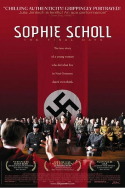
This movie is not a thriller. We have all we need to know from the get-go. Sophie Scholl (Julie Jentsch) is guilty. Her and brother Hans (Fabian Hinrichs) belong to the White Rose, an underground group that distributes mimeographed statements critical of the Nazi regime and the continuation of a war Germany is losing. In February 1943, instead of mailing the leaflets, Hans gets the idea of distributing them on the university campus. This is not such a good idea. It struck me as kind of buffoonish, grandstanding and idealistic. They are Catholics swayed by conscience, young adults captured by frustration over a lost war.
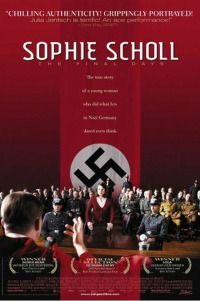
"Sophie Scholl," was an Oscar nominee for best foreign film. There is no contrived drama or suspense. Directed by Marc Rothemund, it is based on fact and uses the transcripts of Scholl's interrogation and trial, as kept by the Gestapo. When East Germany fell, the documents were found and released. Most of the words in the questioning are literally what Scholl and Robert Mohr (Alexander Held) said. Mohr sits behind his desk, virtually unmoved, very precise, very official. He asks her to explain her presence on the campus. He asks her to explain a suitcase just large enough to hold the leaflets. She's cool, calm but nervous. She answers the questions with same precision used by Mohr. But her alibi doesn't hold.
The law is the law even if (as in the case of Nazi Germany) it undergirds evil. Sophie is caught along with her brother after they put piles of leaflets outside classroom doors. Impulsively, Sophie then sends a stack of them floating down into a central area. The janitor sees them. They are arrested, interrogated, jailed, tried and executed 2 days later.
The centerpiece of this movie is the interrogation by Mohr of Scholl. The sequences are captivating and I wanted Sophie to win and get away with it. With law, there is no reference to higher authority even with the Nazis. There's paper, notes, carbon copies, stamps. The law must be followed and it is. There's a mountain of evidence against Sophie. She's guilty and it's legal.
Scholl's trial is played out in part. The judge Roland Freisler (Andre Hennicke) speechifies and this is also historically accurate. Were Freisler, Mohr and the Nazis evil? Absolutely. Freisler was sick. Someone has said, those who know their actions are wrong are often the loudest to defend them, especially when they fear a higher moral judgment may come down on them.
The screen goes black at the end as you listen to the executions. It left me wondering what Scholl heard. This movie appealed to me. If you like conversation and police/courtroom drama this movie works. If you want shooting, hideous torture scenes, blood, gore, etc. see something else.
This review of Sophie Scholl: The Final Days (2005) was written by Bill V on 05 Jan 2008.
Sophie Scholl: The Final Days has generally received very positive reviews.
Was this review helpful?