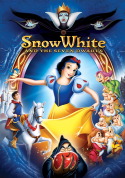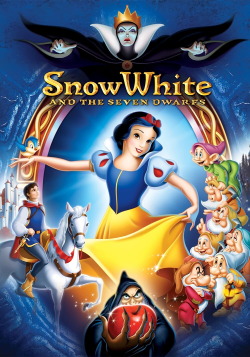
Review of Snow White and the Seven Dwarfs (1938) by Brandon S — 13 Jun 2011
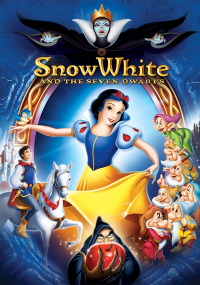
It's impossible to dig into Walt Disney's Snow White and the Seven Dwarfs without first mentioning its enormous influence on modern animation and filmmaking as a whole. More than the first animated feature, more than a stunning testament to its artists' craft and talent, more than an incarnation of resurgent hope in Depression-era America, the film is an icon in the industry; an icon that birthed the Disney empire, instantly established animation as a legitimate artform and respected genre, and paved the road for every Pixar powerhouse and traditionally animated feature since. But like Citizen Kane and many other innovative monoliths, the film itself is arguably less impressive than the role it's played in cinematic history. While its artistry is still undeniably magnificent, its characters are endearing animated archetypes, and its story is still able to capture the imagination of young and old minds alike, Snow White doesn't resonate as readily as it did in the 20th Century. It remains an influential classic, sure, but one that has evolved into a different sort of classic than it was seventy, thirty, even ten years ago.
Most everyone knows the story of Snow White, even those who've never had the opportunity to actually watch it. It's become as much a part of our cultural consciousness as The Wizard of Oz, It's a Wonderful Life, Jaws, and Star Wars. Based on a 19th century Brothers Grimm fairy tale, Snow White and the Seven Dwarfs tells the tale of a young maiden (voiced by Adriana Caselotti), who's so beautiful that she inadvertently invites the wrath and hatred of her stepmother (Lucille La Verne), an evil queen with a penchant for dark magic. After fleeing her stepmother's kingdom, Snow White stumbles upon the woodland cottage of seven diminutive men - Sleepy (Pinto Colvig), Sneezy (Billy Gilbert), Happy (Otis Harlan), Bashful (Scotty Mattraw), Grumpy (Colvig as well), Dopey (Eddie Collins), and Doc (Roy Atwell) - who agree to take her in. Before long, they become enchanted with their new guest. She cooks, cleans, and gives them everything a mother would, if they had one. Unfortunately, her stepmother learns the girl is still alive. After disguising herself as a decrepit crone and tricking Snow White into eating a poisonous apple, the girl lies dead. However, the dutiful devotion of her dwarfen hosts and the arrival of a Prince (Harry Stockwell) may just help the slumbering girl escape her eternal sleep.
You have to hand it to Walt Disney. Not only did Snow White solidify his position as a creative and entrepreneurial genius of his day, it represented the culmination of his team's lead, paint, and tears. Surpassing the moviegoing public's every expectation, Disney produced an unequivocal hit; one that has continually blessed his successors in the seventy-two years since. You can see its animators' souls shining through every scene, you can see the faces of the men who brought it to life in every grumpy scowl and dopey expression that graces the screen, you can even see its father's confidence in every emotional encounter and joyous eruption of song. At a time when advisors worried such colorful animation would blind audiences, Disney infused his picture with bold reds and blues (even though he relented a bit and toned down his palette). As critics and cynics predicted the failure of a feature-length animated film, Uncle Walt saw the potential in its form. When money was tough to come by, he sold investors on his vision, opening the door for subsequent features and the parade of soon-to-be masterpieces that would follow. Even today, despite unimaginable strides in computer animation, Snow White stands as a staggering accomplishment. The hours, months, and years that went into its production dances across every frame; Disney's late nights, Sweatbox screenings, and drive for perfection flutter into view as gracefully as the songbirds that land on Snow White's shoulders.
But as astonishing an achievement as the film is, several elements have prevented it from aging as well as other timeless animated entries in the studio's canon. Though the Dwarfs remain some of Disney's most indelible characters, Snow White herself is, sorry to say, a tad grating. As memorable as the film's songs are, as engaging as its playful conversations may be, Caselotti's sometimes-shrill vibrato pierces the air like an icepick to the brain. More often than not, it's bearable - particularly since it fits in well with the vocal theatrics that dominated the '30s and '40s - but I can't help but wince a bit every time Caselotti attempts to a crack my glasses. Likewise, while the story is magical and its developments as unforgettable as they come, the film's pacing is quite slow, especially by modern standards. The Dwarfs and the Queen, as well as supporting characters like the Magic Mirror (Moroni Olsen) and the Huntsman (Stuart Buchanan), keep things plowing along nicely, but the title character is a constant killjoy. All of that being said, every issue that haunts Snow White is a minor one simply because each one is a product of the bygone age, and yes, her dependence on every man with a winning smile or a fearsome pickaxe offends modern sensibilities, but to hold such things against Disney's film, beyond personal preference, is fairly narrow-minded.
Snow White and the Seven Dwarfs hasn't stood every test of time, but it has withstood every test that matters. As an early cinematic marvel, it readily reveals its creators' commitment and skill, trotting out a slew of innovative firsts that have inspired every animated film since. As a beloved classic, it still has the power to entertain and entrance, leaving kids as wide-eyed as it left me when I was four, as wide-eyed as it left my parents when they were the same age. As a triumph in filmmaking, it stands as a towering milestone in Walt Disney's sterling career; a near-perfect storm of storytelling, artistry, design, and craftsmanship. As a mesmerizing, heartfelt passion project, it pulses with the enthusiasm of all those who helped make it a reality. Personal nitpicks aside, Snow White isn't just the first animated Disney film, it's one of its strongest.
This review of Snow White and the Seven Dwarfs (1938) was written by Brandon S on 13 Jun 2011.
Snow White and the Seven Dwarfs has generally received very positive reviews.
Was this review helpful?