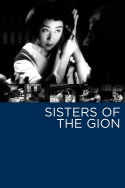
Review of Sisters of the Gion (1936) by Michael T — 09 Apr 2012
Early Mizoguchi film that deals with one of his usual themes: the social issue of geishas. The film is as simple and logical as an enlightenment novel regarding plot: there are two sisters, diametrically different in character, in the same situation (they are both geishas) and each deals with it her own way (the younger hates men, is cynical and wants revenge for the position she is in; the older is more stoical, cares about the feelings of others and wants to please them and she loves a man who abandons her in the end) .
The film ends with a shot that frames the two of them after they realized that both reached the same dead-end after following different paths. The camera zooms in the face of the younger one who is lying on the hospital bed, while she speaks a monologue that conveys directly this dead-end and all the issues the film is concerned with (''Why is there such a profession as the geisha's at all?'').
This final monologue, while it's a bit awkward in its directness and feels like the melodramatic social awareness disrupts the fiction and becomes a message for the viewer, it is also touching because of the building up of the drama up to that point.
At least it's not as embarassing as Chaplin's The Great Dictator final monologue though there is a certain relation. The cinematography is wonderful at times with subtle camera movements and very atmospheric use of black and white.
Some nice camera angles help evoke the feeling of the pleasure quarters of Japan at the time and also some night scenes of the city are really good. Very good performances that shine despite the lack of close ups.
Mizoguchi seems to like taking a distance from the emotions and let the actions of the body speak for itself. This style is linked to the social awareness of his films as, despite the melodramatic plot, the distance manages to frame relations between individuals and not intensified individual feelings; it is a non-melodramatic style for melodramatic plots.
This lack of close ups also intensifies the final zoom in as it takes greater significance. The film is not as rich as the later great works of Mizoguchi as it seems pretty straightforward, but it still holds much power and indicates what would follow after the war.
This review of Sisters of the Gion (1936) was written by Michael T on 09 Apr 2012.
Sisters of the Gion has generally received positive reviews.
Was this review helpful?