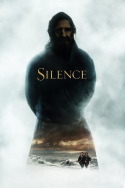
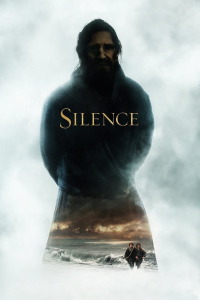
Review of Silence (2016) by Spangle — 14 Jan 2017
My mother more than anybody else is the reason I am a Christian today. She raised me a Christian, but never forced my hand. When I was young, she asked whether I wanted to accept Jesus in my heart or not. In high school, she told me she would love me no matter what and did not want to force me to believe in Christ. Above all, she taught me that a relationship with God is a personal endeavor. It is not one to embark on through another person. Instead, reading the Bible, speaking to God, and praying for guidance from Him is the path to fulfillment. You must find God for yourself and it likely not the same way God is viewed by others. As such, I have never gone to Church, nor will I likely ever find myself listening to somebody preach about God. Instead, I pray daily. I try to live up to his values, but I fail every single day. I sin and ask for forgiveness. Ashamedly, I am often like Kichijiro (Yōsuke Kubozuka) in this very film. Constantly asking for forgiveness only to commit the same sin once more is a great vice and struggle of my own. To see it portrayed in this film is riveting and heart wrenching. Yet, Silence's pre-eminent impact upon me is two-fold. One, what I have discussed. The personal relationship with God that one must form in order to truly know Him. Two, the doubt that comes with following the path of righteousness. If I have not doubted my faith everyday that I have truly known God, then I must have not been awake long enough on the missed days to grapple with my faith.
A harrowing portrayal of God's supposed silence, but solemn stolidness alongside us through our trials and tribulations, Silence is set during the mid-1600s. Depicting the horrifying torture and persecution of Christians in Japan, Silence stars Andrew Garfield and Adam Driver as two priests, Father Rodrigues and Father Garupe, tasked with finding Father Ferreira (Liam Neeson). Allegedly a fallen priest, Father Ferreira had gone missing and fallen victim to the wrath of the inquisitor. Father Rodrigues and Father Garupe have faith, however, that he has not left the faith. Upon arrival in Japan, they find a horrible picture. Torture, pain, and hidden Christians who are persecuted and threatened with death. This leads to some graphic moments, but the film is not overly violent. Instead, it gives a face to the sound of the tormented who were forced to suffer as Christ once did.
That said, Father Rodrigues - after suffering for a long time - has an encounter with Father Ferreira. It is once Father Ferreira is brought into the fold that Martin Scorsese's incredibly personal film soars. With Father Ferreira, Father Rodrigues learns why they are being persecuted and why they have failed to lead the Japanese to Christ. Above all, he learns that beliefs speak louder than actions or words. As such, we see Father Ferreira explain that the language and cultural barrier is too great for somebody uninitiated in the culture to teach the Bible. Though those being killed are dying for what they believe is Christ, they are instead dying because Rodrigues (and Ferreira before him) had told them to die. It is only through the apparent and repeated renouncement of God that their suffering will stop and, as such, it is a necessity. However, they learn to live in hiding. By day, they identify Christian items for the inquisitor. Yet, all throughout the day, they speak to God and foster their relationship with Him. Though they renounce Him to the Japanese when they ask, it is done to further the word of God throughout the country. By hiding and denying Him verbally but not in their hearts, it is not an act of self-preservation, but a way of letting Christianity survive in Japan. As Father Rodrigues says at one point, to say that he is dead, it would mean that Christianity in Japan is dead. Without Father Rodrigues and the other fallen priests retaining the faith within them and not causing their people to suffer, they gain strength and are able to do their work as missionaries. Those who seek the fallen priests and wish to learn the way of God are rewarded with a man that is able to speak to them about God. Though the film does not depict these moments, the final shot of Father Rodrigues still holding the cross after he is dead certainly shows that the man died a man of faith and, as his scene with Kichijiro highlighted, he was still willing to shine a light for others.
One of the most important moments of Silence, however, is when Father Rodrigues steps on the image of God. In the Bible, God rebukes those who worship idols and practice idolatry. This image is an idol. It is not God. God Himself tells Father Rodrigues this when we hear God speak for the first time in this film. He encourages him to step on the image and to save the suffering followers. Father Rodrigues does so and the Japanese Christians suffering in the pit and tied upside down and spared. For the rest of his life, he finds other idols and reports them to the Japanese.
This review of Silence (2016) was written by Spangle on 14 Jan 2017.
Silence has generally received positive reviews.
Was this review helpful?