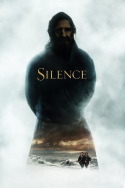
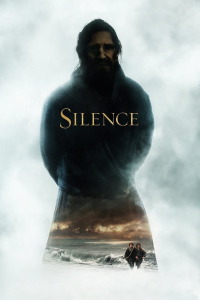
Review of Silence (2016) by Jspotter89 — 12 Jun 2017
"Well, there's 161 minutes of my life that I'll never get back," I said as the credits to Silence rolled.
There's so much wrong wit Silence that 5,000 characters might not be enough to explain it all, but I'll try. First, and most obviously, it must be said that this movie is boring. Painfully boring. When you combine the tedium with its nearly-three hour run time, you feel almost like you are a victim of the torture routinely being displayed on screen. Simply put, there is no logical reason why this film should be as long as it is, except for the fact that a legendary director considers it a pet-project, and evidently no producer or editor possessed the stones to tell him he should truncate it.
Okay, so the form itself is dreadful, but what about the content? Insulting. Puerile. Apparently, Martin Scorsese believes that human faith only goes as deep as iconography. On numerous occasions throughout the film, Christians are challenged to step on an image of Christ to signify their apostasy, and the viewer is apparently not supposed to laugh at the sheer lunacy of this. Even if one is able to accept that some of these characters believe that stepping foot on an image of Christ constitutes apostasy, the set piece is used so frequently that by the time in happens to Rodrigues/Garfield, there is almost no emotional weight left in it.
The saddest part of this whole project is the fact that it took 30 years for Scorsese to make it. Three decades, and the end result is this jumbled, aimless mess. The main conflict is less about Christians versus Buddhists in Japan in the 17th Century, and more about the nature of faith in the face of adversity. Okay, it's been done before, but when an artist like Scorsese takes on such a fundamental human conflict, it's not hard to pique one's interest. Turns out this interest was misplaced.
Scorsese doesn't really offer any tangible answer to the questions about faith that he poses. Does God speak to us in the silence? Who knows. Does suffering enhance faith or destroy it? It does both to different characters throughout the film. Is apostasy for keeps, or can forgiveness and redemption really be attained? The hell if I know, from watching this film. Rodrigues is a weak vehicle to explore these questions, although Garfield plays him as well as anyone could, given the material he has to work with. The film spends two solid hours with Rodrigues and his flock fighting against logic and sanity to remain faithful, and not apostasize via Christ-shoeing (for lack of a better term), leading the viewer to believe he will find some way to reconcile his faith against all the suffering that comes attached to it.
Nope. With 45 minutes left, and after being confronted by freshly-apostate Liam Neeson, Rodrigues steps on Christ, crossing what the film has presented thus far as an unredeemable line in the sand. But just as the film ends, as Rodrigues' body is being burned, the camera zooms to show us the crucifix that was given to him by his flock earlier in the film.
Once again, is Scorsese so infantile as to say that one can apostatize as simply as deriding an icon of Christ? And then that one can redeem oneself in similar fashion? If so, why would any of these persecuted peoples not simply apostatize for the authorities and then redeem themselves as soon as they leave? According to what Scorsese presents here, it is that simple.
In the end, the film's length, lack of urgency, and undermining of its own message serve to make it unwatchable. An exercise in self-indulgence for a legendary director who should know better.
This review of Silence (2016) was written by Jspotter89 on 12 Jun 2017.
Silence has generally received positive reviews.
Was this review helpful?