Review of Silence (2016) by Ken C — 04 Feb 2017
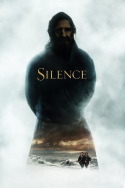
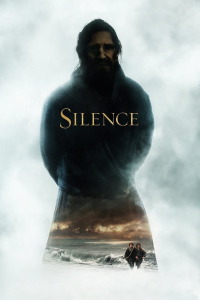
28 years in making, Silence (??) directed by Martin Scorsese turns to the asceticism of Sh?saku End?'s 1966 historical novel about the persecution and religious discrimination of Christians in 17th-century Japan.
It begins with "an army of two" Portuguese priests Rodrigues (Andrew Garfield) and Garupe (Adam Driver), embarking upon a Conradian mission to "the ends of the Earth" where Christians are forced to apostatise their faith on pain of torture and death after remoured hearing Ferreira (Liam Neeson), a Jesuit missionary and their mentor who has reportedly gone native, turning his back on the cross and living as a Japanese with wife and family to match. Yet the young padres, proud and impetuous, refuse to believe that their former mentor has abandoned their God, or that Christianity cannot take root in "this swamp" of Japan.
Then, Father Rodrigues finds himself locked in a wooden cage and faith to be testified by forcing him to watch and hear the torture of Japanese Christians whom followed and helped him. He is plagued by doubts, not just about the wisdom of coming to Japan or his capacity to survive this ordeal, but the wisdom of the missionary enterprise, which expects people to suffer and die on behalf of ideals. The priest even begins to wonder what God wants, what He's thinking, and whether He has a point-of-view on misery and pain.
Scorsese and his co-screenwriter Jay Cocks-the two did uncredited rewrites on "The Last Temptation of Christ" adapted the screenplay with care as they devote to crack-in the position of the Japanese authorities without condoning their brutality, it lets a major character-Inoue Masashige (Issei Ogata), "the inquisitor" in charge of eradicating Christianity from Japan, explains the official point-of-view on Western religion. He doesn't just consider it a corrupting influence on Japanese culture, he doubts that Christianity can truly take root in "this swamp" of his home country. There are echoes here of another recurring Scorsese fascination, the self-preservation instinct of the tribe. The tribe may tolerate rebellion, heresy or external threats up to a point, but after that they crack down mercilessly.
Another collaboration with The Wolf of Wall Street cinematographer Rodrigo Prieto not only visually striking but respectful distance makes the suffering more unbearable than it would be if he showed every atrocity in close-up. It's unsettling because it conflates the point-of-view of God and the point-of-view of the audience being paralysed, unable to act, against the suffering, but the suffering continues until finally it doesn't. Watching the men of God being tested where they worry that they've missed the point; that they're not faithful enough or smart enough to understand why this horror exists, or must exist.
This review of Silence (2016) was written by Ken C on 04 Feb 2017.
Silence has generally received positive reviews.
Was this review helpful?