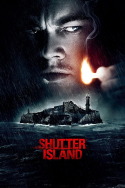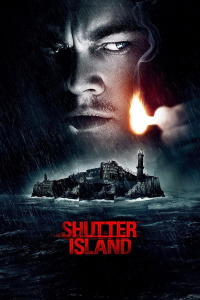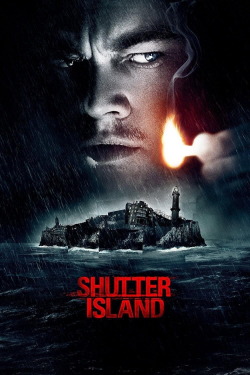
Review of Shutter Island (2010) by Nitin N — 17 Jul 2015
When it comes down to making psychological thrillers, Martin Scorsese has already figured out the ingredients that go into crafting a masterful one. Cape Fear proved to be his emotionally darkest film, whilst Taxi Driverâ??s smidgeons of psychological elements have elevated it as a classic. But his only other film of this genre has proven to be his most accomplished. Martin Scorsese literally goes for it with Shutter Island, and because his filmography is already littered with classics, Shutter Island will never be given the same critical treatment, and will always be considered inferior because it hasnâ??t yet faced the test of timeâ?¦ but Shutter Island does not need to be tested because from the look of this grimly consuming thriller, it has enough substance to last a lifetime.
Based on Dennis Lehaneâ??s novel of the same name, Shutter Island was destined to succeed. Lehane is such a great author with a knack for great stories-turned-Hollywood fables consisting of the likes of Mystic River and Gone, Baby, Gone. But, Shutter Island is the most momentous narrative as it revolves around two detectives, Teddy Daniels and Chuck Aule, who investigate a psychiatric facility on Shutter Island in search of a missing patient. As Teddy and Chuck delve deeper into the mysteriousness of the Island, events begin to unfold that challenge the very fabric of reality, forcing us to constantly shift our opinion of the fate of this story, and when the ending comes, no one will be able to comprehend the actuality of the outcome.
â??This is a game. All of this is for you. You're not investigating anything. You're a fucking rat in a maze.â??
The depths of the filmâ??s psychological impact can be found simply in this damning sentence of realisation as it reveals a larger overriding framework of deceit that indicates nothing can be trusted, not even the protagonist who is seemingly being playedâ?¦ just like us!
Shutter Island borrows smartly from an array of genres and cinematic influences. The film borrows from psychological thrillers in the sense that it is mentally challenging, not simply for the characters but also for us, as we have to constantly juggle truth from fib. The film even sponges on horror as the tonnes of blood elevates the film from a mediocre thriller that tiptoes the edge of trauma to a film that tackles and gets dirty with intensely horrifying moments that challenge the very fabric of humanity. Plus, the tense unravelling of events follows the Hitchockian way of suspense in the sense that as we feel we know more, each disclosure takes us down a different avenue of focus, only to be mistakenly taken there as a means of suspenseful development, which works wonders for Shutter Island as it only grows in magnitude. There is moreover a sub-plot of romance that transpires into tragedy, but the romanceâ??s authenticity cannot be questioned for its decline emphasises a sense of tragedy more than anything else. All these influences havenâ??t simply been recycled; theyâ??ve been manipulated alongside the twisted story into something that together works to heighten the psychological impact of this film.
Shutter Island makes amazing use of its inspirations and meshes out a puzzling tale that renders itself powerful not only in terms of the magnitude of its story, but also the significance of its visual choices. From the many flashbacks, freeze frames, dream states and frames that dissolve, Shutter Island is able to further distort the truth by adding a background to characters and events that appear as the truth but is in fact the polar opposite. Not only does the story twist reality thanks to the powerful overtones of sound that give the chills, but also the visual choices of Scorsese that together work to create such a tense, unrestrained thriller that nitty-grittily gets under your skin and infects your psyche with a doubt that ensnares Shutter Island as a whole.
Leonardo Di Caprio stars as the twisted detective Teddy Daniels in probably his most testing role. Many wonder why Di Caprio doesnâ??t win Oscarâ??s, and it is because no matter how good he is, he lacks an original essence to his performances, and in Shutter Island despite required to be psychologically damaged, he fails to capture the gravitas of such a performance and simply performs as he regularly does, with a lack of novelty. Mark Ruffalo portrays the other detective Chuck Aule with such a calmness that he can be described as the definition of tranquillity. Seeing as no one can be trusted, he is the only one we have hope for in saving the story. Ruffaloâ??s tranquil exterior and, from what it appears, sweet personality, his performance perfectly embeds itself into the tale, never intruding Di Caprioâ??s mentality yet we always acknowledge his importance. Ben Kinglsey is the fishy lead psychiatrist Dr. John Cawley, and boy is he just suspicious from the off, never letting his firm pose be broken and acting as if he always has something to hide. But that is plainly too easy for the audience who have come to expect something shocking. And Michelle Williams portrays Dolores Chanel, the unfortunate wife of Teddy, with such weight and meaning. She only appears in moments of false reality, most notably bloody, burning hallucinations or a shocking flashback, but her capitulation is something to truly fear.
After all, it is all about the remarkably spectacular twist ending; one of the most unexpected endings to have ever come from a film. It had me so shocked I was waiting for a twist to reveal another twist, but it never comes, and that is the most shocking part of the film. The fact that the tale fools you for over 2 hours and then drops the biggest bombshell there could have been emphasises Shutter Island as an incredibly unique story. Shutter Island proposes to be the most shocking psychological film with a twist since The Sixth Sense, and perhaps it trumps it, for its revelation is scandalous. Everything that occurred should not be taken as the truth because the unreliability of our protagonist is damning to our understanding of events; and that is why Shutter Island is a great film because it offers new shocking revelations and interpretations each time whilst maintaining its tortured atmosphereâ?¦ minus the twist ending too! And if that wasnâ??t enough, the last line forces you to depart the film psychologically questioning another layer of unravelled obscurities.
â??Which would be worse â?? to live as a monster? Or to die as a good man?â??
Shutter Island can simply be described as a pure work of art. A stunning tale of symbolic worth that contravenes its genre and fashions out a riveting anecdote of puzzling significance.
â??â??â??â??â??â??â??â??â??â?? 10/10.
This review of Shutter Island (2010) was written by Nitin N on 17 Jul 2015.
Shutter Island has generally received very positive reviews.
Was this review helpful?