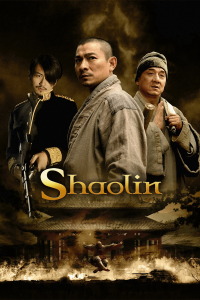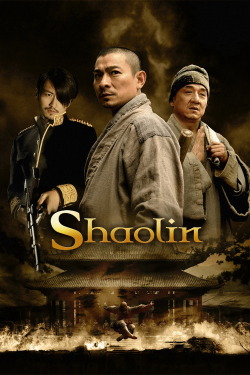
Review of Shaolin (2011) by Yilin N — 21 Feb 2011
The movie felt a little tedious at first until Jackie Chan appeared but his relief didn't last long the movie had to become serious and keep going.
This isn't a remake per se of the old Shaolin Temple movie given a fresh set of characters and a premise that's remotely similar, set after the fall of the Qing dynasty with warlords battling it out for supremacy and territory in China. In what I thought was quite a stark message in warning of any future infighting amongst the Chinese if they do not stand united, that foreign powers are more than willing to wait for an opportunity to exploit. Economic advantages offered should also be scrutinized beyond immediate gains, where corruption of the few in power would mean severe losses on a national scale.
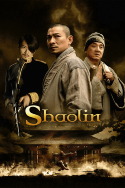
That aside, this film centers itself squarely on the central character of the ruthless and cunning warlord Hao Jie (Andy Lau), who has no qualms in constantly gaining upper hands amongst enemies and allies even. In a wrongly calculated move to take on his sworn brother in an ambush, his protégé Cao Man (Nicholas Tse) probably had understood his mentor's philosophy that no man is indispensable to quash his insatiable appetite for power and glory, and through the countless of indoctrination in the Hao-Jie-School-of-Thought, it is no wonder that Cao Man ultimately decides to betray his master. Think of it as striking when the iron is hot to become top dog and making decisions, rather than taking them.
In a tale about retribution and karma, Shaolin doesn't deviate very far from those themes, of how evil intentions can lead one astray and suffer inconsolable consequences, only for religion to point one back to the path of righteousness and all things good. In some ways this resembled the story of Huo Yuanjia in Fearless, where pride comes before the fall of man, stripping him of everything and down to his core, then comes the rebuild of character, and ultimately walking the talk and redemption. Hao Jie's story follows this trajectory and there's no qualms about Andy Lau being cast in this dramatic role despite his lack of real martial arts skills as compared to his other counterparts in the film, opposite the likes of co-stars Nicholas Tse, Wu Jing, Xing Yu, Xiong Xin Xin and Jackie Chan who serves as comic relief as a Shaolin monk-cook.
But most of the co-stars were severely under-utilized, as the story, with responsibility coming from no less than five writers, didn't pay the others too much attention. Nicholas Tse probably had the meatier role as the chief villain who schemes and sneers, while the rest are in to showcase more of Shaolin martial arts in one film, except for Xiong Xin Xin being the villainous sidekick to Cao Man, with no dialogue. Wu Jing, Xing Yu and Ye Shaoqun all starred as the requisite monks caught up in the firefight as the latter two become part of a group who steals from the army to feed the villagers. Fan Bing Bing was a complete waste as the token female amongst the cast, and although she had a scene or two in a big action sequence in an ambush, little can be said once she appears on and off as the damsel always in distress.
Action direction came from Cory Yuen, with choreography courtesy of Yuen Tak (responsible for Gallants) and Li Chung Chi, all veterans in their field, so quality is almost assured when the combatants take on each other, although I must say that most fights ended as soon as they began, which is a pity. Quality also goes toward the art direction, with production values culminating in the recreation of the Shaolin Temple, made to resemble a bastion of compassion open to all and sundry displaced by warring factions seeking refuge at its doorsteps in tumultuous times.
Benny Chan's filmography may have blown hot and cold in recent years, but Shaolin establishes him back at the top of the game able to handle a big budgeted spectacle that doesn't necessarily rely on star power and action to deliver the goods, but actually is a thinking man's film on the philosophical aspects of Buddhism, and the balance of Martial Zen.
The story is set in China after the fall of Qing Dynasty with various warlords fighting over the territories. Hou Chieh, a ruthless warlord who bear grudges with Shaolin Temple and sets to get rid of the people around him for his own benefits, was betrayed by his right-hand man, Tsao Man (Tse). It not only leads to the death of his daughter, but also makes his wife (Fan Bing Bing) decided to leave him for good. After being taken refuge by the cook (Chan), the cook enlightens him and Hou decided to become a monk in Shaolin, leaving down the past behind him and start a new life. Though disciples in Shaolin bear grudges with Hou in the past, they accepted Hou. Eventually, we will see how Hou and the disciples defend Shaolin from the invasion of Tsao's army and the Western powers.
The plot sounds no novelty in it, where we can see how the protagonist repents from his sin to the mistake made in the past, to how they will defend in what they believe in. Here, we have seen how the Buddhist teachings have been integrated into the plot. In relating to the Buddhist teaching on the term 'you reap what you sow' with cause and effect, Hou saw the fall of his power and death of loved ones by betrayal, which he gets it from his belief of the dog eat dog world.
Another perspective of Buddhism that can be seen in Shaolin is 'evil begins with the greed and obsession for power'. This is shown by the portrayal of the sufferings from the civilians during the civil war, with warlords fighting for power and wealth. The perspective has become the main theme of the movie, where not only we have seen how Tsao wanted to control the territory, but also the Western powers who aims to take over China using gun power. This has somehow reflect on what has happened in today's society, on how stronger bodies are getting rid the culture, values and history using destructive powers.
Lau's role of Hou Chieh is different from Li's leading role in Shaolin Temple, in terms of characters and the incidents they have been through. Both shared similarities in their fate and enlightenment, to how they find a way to save the majority of the people around them. Chan's cameo appearances as the cook provides some comic relief for the audience after having a long intense and pressure from Tse's evil character. The comic relief did not last very long, since the fate of Shaolin Temple is the main concern of the film.
China is plunged into strife as feuding warlords try to expand their power by warring over neighboring lands. Fuelled by his success on the battlefield, young and arrogant Hao Jie sneers at Shaolin's masters when he beats one of them in a duel. But the pride comes before a fall. When his own family is wiped out by a rival warlord, Hao is forced to take refuge with the monks. As the civil unrest spreads and the people suffer, Hao and the Shaolin masters are forced to take a fiery stand against the evil warlords. They launch a daring plan or rescue and escape.
This review of Shaolin (2011) was written by Yilin N on 21 Feb 2011.
Shaolin has generally received positive reviews.
Was this review helpful?