Review of Shadows and Fog (1991) by Kenneth L — 07 Aug 2013
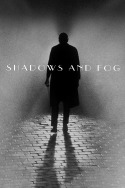
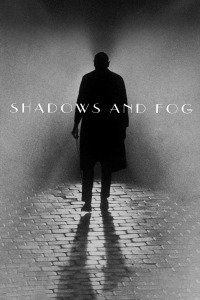
This is one of Woody Allen's smaller, lesser-known films, and to be honest, I can see why. Made in between the similarly slight Alice and the more troubling Husbands and Wives, this is one of Allen's mannered homage films, which, while often interesting, usually don't end up as memorable as his more original movies. Interiors was his take on Ingmar Bergman; Stardust Memories was his Fellini movie; and this one is his tribute to German Expressionism and the writings of Kafka, and it particularly reminded me of Fritz Lang's M. While Allen certainly gets the visual aspect of the homage right, the actual content of this movie is often not especially distinctive.
The movie begins promisingly enough, with a clerk named Kleinman (Allen) being woken in the middle of the night somewhere in 1920s or 1930s Eastern Europe by a posse of men out to catch a local serial killer. The idea of Allen hunting for a serial killer is pretty funny, and the movie does get some laughs whenever it focuses on his storyline, but unfortunately it spends a lot of time on a second, less interesting plot. Mia Farrow plays Irmy, a circus performer who runs away from her home after she finds her clown husband (John Malkovich) cheating on her with another performer (Madonna, oddly wasted in only one scene). She is taken in by a group of street-smart, down-to-earth prostitutes (including Lily Tomlin, Jodie Foster, and Kathy Bates), and unexpectedly finds herself mistaken for one by an eager young man (John Cusack). The cast all give decent performances, though many of them end up reduced to only a scene or two.
When the movie focuses on Allen's character, it manages to get some easygoing, if predictable, laughs from the tension between Allen's neurotic persona and the supposedly high-stakes business of catching a serial killer. The ending, featuring the sorely under-used and under-appreciated comedic actor Kenneth Mars as a magician, is particularly kind of delightful. But the scenes focusing on Farrow's character are almost never funny, and don't really have much of a dramatic arc, either. They feel brought in from a different movie. While Allen effectively used the comedic and dramatic halves of his earlier Crimes and Misdemeanors to comment on each other, in this case the two strands of the plot just kind of sit next to each other without any very compelling reason to be together. While the Farrow storyline isn't terrible per se, it just doesn't feel like it needs to be in the same movie with the other material.
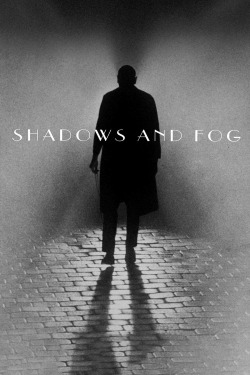
Visually, the black-and-white movie makes its relationship to German Expressionism quite clear, almost to the point of overkill, actually. There really is quite an emphasis on shadows, but they're so omnipresent and so dark that for much of the movie you can't really see the actors' faces. While Allen is certainly capable of using black-and-white and shadow artfully (see: Manhattan), in this movie he overdoes it, and it's distracting just how dark everything is all the time. The set design is nicely evocative, but again, you can hardly see much of it. Overall, this isn't Allen's weakest movie (I would still say that would be You Will Meet a Tall Dark Stranger), but it never feels like it reaches its full potential. It's occasionally amusing and has a distinct visual identity, but the story ends up falling short of Allen's better movies.
This review of Shadows and Fog (1991) was written by Kenneth L on 07 Aug 2013.
Shadows and Fog has generally received positive reviews.
Was this review helpful?