Review of Séraphine (2008) by Eric F — 21 Aug 2009
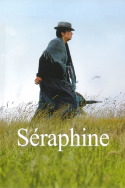
Sometimes a performance can be so good that you simply become unaware that you are, in fact, watching an actor. You simply sit, accepting every mannerism without reservation, and assuming that this robust woman in early 20th century France wondered into the set of Martin Provost's "Séraphine". Provost's film is an effortless one - with the period detail flawless and the performances far from showy, yet so pitch-perfect. Yolande Moreau, an unlikely leading lady, inhabits Séraphine to an almost eerie precision. It's only when the credits roll, and you're taken out of this fantasy world, that you begin to realize the tremendous accomplishment of the performers in this astoundingly well-constructed picture.
"Séraphine" comes to us from France with the highest of honors. It was the winner of seven different César awards, the French equivalent of the Academy Awards, including Best Picture and Best Actress. Much of the success of the film is owed to Yolande Moreau, who plays the title character, in a performance that has been rightfully universally honored.
The film concerns a real early 20th century painter by the name of Séraphine Louis, better known as Séraphine de Senlis. At the time, she was referred to as a "naive artist" - but, today, the more appropriate and respectful term would be outsider artist. She was a humble woman, a housekeeper who spent the majority of the day scrubbing the floors of the bourgeoisie on her knees. Between her jobs, however, she collected a number of liquids - blood from the butcher, turpentine from church candles - and mixed paints. At night, guided by her "guardian angel", Séraphine reached a state of ecstasy by painting flowers and fruit while singing to the Virgin Mary.
As much as the film is about Séraphine, it's also about the art collector and critic Willhelm Uhde (Ulrich Tukur). Séraphine serves as his housekeeper and one day, by chance, Uhde notices one of her small pieces. He recognizes her brilliance immediately, convincing her to allow him to sell her work for her own profit. Séraphine is astounded at first, not believing that anyone could want anything to do with her work, but she eventually embraces what she believes to be potential great fame and riches. Not long thereafter, however, Séraphine was locked in a mental institution, where she would die in 1942.
"Séraphine"'s pace is slow and deliberate, a sort of intimate biopic that revels in small gestures rather than elaborate set pieces. We never get to know Séraphine much at all - throughout the entirety of the film, we observe her closely yet couldn't be any more distant. Nevertheless, however, the film is touching and powerful for the sheer brilliance of Yolande Moreau.
This review of Séraphine (2008) was written by Eric F on 21 Aug 2009.
Séraphine has generally received very positive reviews.
Was this review helpful?