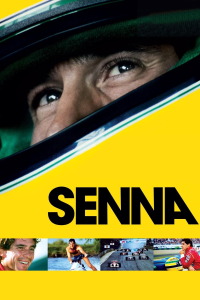
Review of Senna (2010) by Timmy S — 21 Aug 2012
Formula One racing is a savage, underexposed sport. Even today, it is common for the immensely fast cars to fly off the circuit track into a wall, breaking dramatically into a bazillion pieces. Think NASCAR, except with a far higher chance of death. Now place yourself back in the late 80s-early 90s, when cars were routinely unstable, unreliable, and frequently out of control. Thatâ(TM)s the milieu in which Brazilian racer, Ayrton Senna, made his name.
The name Senna may be unfamiliar to you, but to his home country, he was a national hero. Not that things in Brazil have gotten all that much better, but in the early 90s, it was the kind of place that if you asked anyone there how they felt about it, theyâ(TM)d probably say something like, âItâ(TM)s not good. Itâ(TM)s bad.â? For some Brazilians, Sennaâ(TM)s racing career was about the only bright spot in their lives. In contrast to the abjectly poor people who filled out the majority of the country, Senna grew up privileged, and he had a relatively easy time breaking into the racing scene. But because the state of affairs in his country was so bad, he was always aware of the pressure on him to succeedâ"it seems as though he alone dictated the morale of the nation at the time.
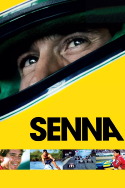
Luckily for Brazil, Senna was one of the greatest racers of all time. He won three consecutive world championships, and constantly overshadowed his competitors, even his teammate, Alain Prost. Asif Kapadia, in his documentary about Senna, emphasizes the racerâ(TM)s popularity, charisma, and talent above all else. He assembles the story of Sennaâ(TM)s extraordinary career exclusively by using archive footage, which keeps you locked into the filmâ(TM)s time and place. He chronicles Sennaâ(TM)s swift rise to fame at a young age, as well as his many successes in the late 80s. Sennaâ(TM)s rivalry with Prost also occupies a significant part of the film, for a good reason: it creates dramatic tension in a subject that may otherwise have been tension-free. This is because, for all intents and purposes, Senna rose to the top entirely unopposed.
The best sequences of the movie take place during the races, when the point of view shifts to the onboard camera on Sennaâ(TM)s car. From the distance of conventional cameras, the cars donâ(TM)t seem to be moving all that fastâ"mostly because the cars are moving towards the cameras. When youâ(TM)re right in the driverâ(TM)s seat with Senna, though, the film takes on a breathless, almost unbearably intense quality. There is little to no foreshadowing in the movie, so you have no idea how each race will turn out. Being locked into the driverâ(TM)s eye level truly conveys the skill and strength required to wrangle the unwieldy cars used in Formula One racing.
Kapadia keeps the focus on Sennaâ(TM)s racing career, and probably for good reason: his exploits on the circuit are more than enough to interest viewers. To have delved into his personal life would have been a worthless exercise. Unfortunately, due to the lack of narration in the movie, you can only guess what was really going on in Sennaâ(TM)s head. You do get to see interviews with him, but the essence of the man is never wholly revealed. Nevertheless, Senna is a compelling, high-octane documentary that is, ultimately, not for the faint of heart. If you have any interest in the filmâ(TM)s subject, do yourself a favor and check it out.
This review of Senna (2010) was written by Timmy S on 21 Aug 2012.
Senna has generally received very positive reviews.
Was this review helpful?