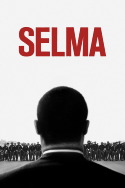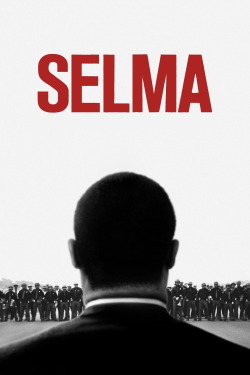
Review of Selma (2014) by Ben R — 13 Feb 2015
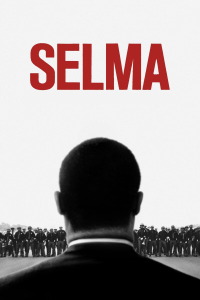
Selma does so many things that I love in movies. It's a heavy topic, and there are some very dark moments, but there are moments of great levity, and an ending that is joyful and cathartic without forgetting all the low points that came before it. It's a historical drama that focuses on one very specific time period and goes for depth instead of breadth without remaining over-focused on one thing. If there are flaws to this movie, I suspect people would say that King's family doesn't get a ton of development, and his marriage is relegated to a subplot, but how else would they do it, and why does his family life need to dominate, anyway? What's wrong with keeping it as a small plot in the background? Especially when the few scenes that do carry it really count for a lot.
I don't really know where to start. The acting is all fantastic, especially David Oyelowo, who gives dual magnetic performances as a charismatic leader and a regular old guy with flaws and insecurities. The direction is pretty great; all the action scenes are amazing, and there are a lot of interesting shots that I'm trying to analyze based on my film class composition lessons - in some shots there wasn't much head space, or look space, and the characters often didn't follow the rule of thirds like I've learned. These shots didn't bother me at all, but I'm curious as to what my professor would say about them.
Once again, I have to mention how impressive it is how the film juggled breadth and depth. By sectioning off the narrative to three months, the film is able to touch on King's marriage, his cause, and many of the minor supporting characters who are involved, like Oprah's character, and the family of three whose son tragically died. The scene where King comforts the man's father is one of my favorites, and I was almost misty-eyed. It's remarkable how quickly I came to care for all the characters who had almost no development beforehand; the trick of adding in little tidbits and shots of them throughout the beginning of the movie really paid off in creating audience sympathy later on.
The movie also somehow has time to explore Lyndon B. Johnson's administration. Frankly, I don't understand people's complaints with this. Johnson was still shown as coming around and signing the Voting Rights Act, and even if his real-life reasoning may have been more altruistic than the way he was depicted in the film (which I can neither confirm nor deny, knowing basically nothing about the subject), he did the right thing in the end. My general policy is that historical accuracy shouldn't be compromised if the truth would make a more compelling narrative, but I found LBJ's characterization pretty multi-faceted and fascinating, even if facts were distorted. I love that he was mostly unlikable, but not entirely unreasonable, and more likable towards the end (even if it was ultimately for manipulative or selfish reasons).
And then there's just so many beautiful touches, like the priest who was beaten to death (another character given unexpected dimension just by virtue of seeing him several times), the arguments between King and his wife, and even the little 'thank you' you can see the sister of dead Jimmie mouth to King as he steps onto the stage for the last time in the movie. It's a triumph of civil rights with chilling echoes to the present, and it made me want to cry, laugh, and get up and march, all at once.
This review of Selma (2014) was written by Ben R on 13 Feb 2015.
Selma has generally received very positive reviews.
Was this review helpful?