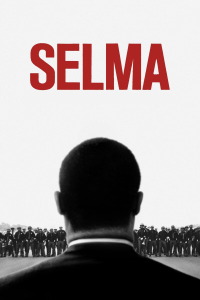
Review of Selma (2014) by Harry W — 19 Feb 2015
With the world of cinema long overdue for a film about Martin Luther King Jr., Selma sounded like a powerful film which was absolute necessary viewing.
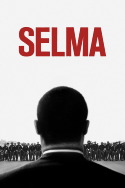
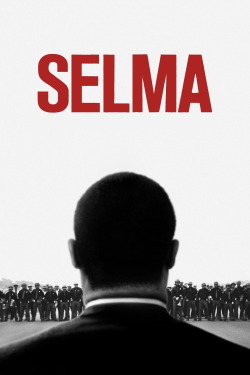
Selma is not a perfect film, but the passionate directorial work of Ava DuVernay is all too easily felt. It wasn't precisely what I had expected as the film did not tell his entire story or even depict his famous "I have a dream" speech. As a whole, Selma is a film more about his influence on the people around him and the general movement regarding the rights of African-Americans. While the film is a slow one which is not too deep in its characters, it certainly is a tale which is likely to leave the viewer cheering.
Selma depicts one of the hardest ways that African-Americans had to suffer in history: simply through the process of fighting for their rights. The story of what Martin Luther King Jr. wanted is much different to the vision that Malcolm X had which was more racist and aggressive. Malcolm X is actually depicted briefly in Selma, and the contrast between his attitude and Martin Luther King Jr.'s is interesting. The way that Selma depicts Martin Luther King Jr.'s role in the movement really forces viewers to examine exactly how futile and pointless the concept of prejudice is.
Selma shows the way that African-Americans attempted to fight for their rights in the most peaceful manner, refusing to respond to injustice with the violence that was forced upon them by racists and corrupt officials. The screenplay addresses this all with intelligently written language which is an accurate representation of the dialect spoken by people of the African-American race without ever resorting to racial stereotypes in the process. And although there are very many characters in the film who are not explored too deeply, the characters in the film give a lot of potential to the cast and they all end up turning in strong efforts. This adds to the film by capturing the large scale of events and depicting just how many people were influenced by Martin Luther King Jr.'s efforts, showing how strong the movement grew despite being in the face of such prejudicial violence. The harsh nature of 1960's racism in Selma is hard to confront, but Selma does it without getting too graphic or having to dramatize things forcibly, instead allowing the brutal nature of the true story to develop atmosphere on its own. To be frank, Selma is largely a recreation of the true story and not a Hollywood film which means that it has more honour to it than most biopics these days. Its themes are handled in much the same way that Bennett Miller handled the story of Foxcatcher, only Ava DuVernay does it better because she really has the spirits of the viewers rising with her film. She makes audiences look at just what kind of oppression her people faced back then, but also encourages them to consider that we really still have a long way to go to match up to his vision.
The central theme at the heart of Selma is about giving African-Americans the right to vote. The film points out that even though they have that right, they are still prevented from using it due to ingrained prejudice in society. Even today this is a problem because being a conivicted felon stands in the way of one's voting abilities, and with the lack of education for African-American communities and prejudicial legal system standing against them it prevents them from being given the fair voice that they deserve. If viewers can't see it because of the media then perhaps Selma will make them do it because it certainly served as a ray of sunlight into my mind where I had to look at how peace can be used to combat violence while also examining how difficult it is to do that in such a prejudicial society. Ava DuVernay did a wonderful job of capturing me on that.
All in all, everything about Selma does a beautiful job paying tribute to the legacy of Martin Luther King Jr., and the leading performance of David Oyelowo is one of the most memorable reasons for that existing.
David Oyelowo is perfect casting for the role of Martin Luther King Jr.. I wouldn't say that his performance was snubbed from an Academy Award nomination considering that Selma did not focus on the personal aspects of the character that much and was more about his influence, but there is no denying that his performance is still thoroughly grand. He looks the part perfectly and flawlessly captures the right tone of voice to deliver his words in a very wise manner. His line delivery embodies the heroism of the man while also capturing a sense of wisdom rarely found in actors, with the only appropriate comparison being Morgan Freeman. David Oyelowo could very well be the next Morgan Freeman, and his performance is just wonderful. He sinks really far into the role and delivers every word with a beautiful tenacity over them and a passion for the subject matter of the film without getting melodramatic or stepping out of the role for a second. His performance is a thoroughly beautiful one, and if Selma focused more on the character itself then there is no doubt that he would have scored an Academy Award nomination because it is a thoroughly beautiful effort.
The supporting performances of Tom Wilkinson, Giovanni Ribisi, Cuba Gooding Jr., Oprah Winfrey, Carmen Ejogo, Nigel Thatch and Martin Sheen are also very strong. None of them stand out like David Oyelowo, but they all do a powerful job.
So although Selma does not tell the full story of Martin Luther King Jr. or get all that deep about him, the powerful job it does of depicting his influence over society and the courage of the African-American rights movement through beautiful directorial work from Ava DuVernay and a strong central performance from David Oyelowo.
This review of Selma (2014) was written by Harry W on 19 Feb 2015.
Selma has generally received very positive reviews.
Was this review helpful?