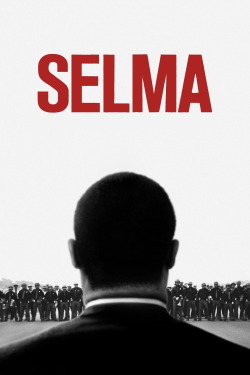
Review of Selma (2014) by Jason M — 17 Oct 2015
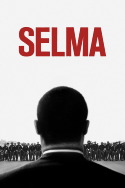
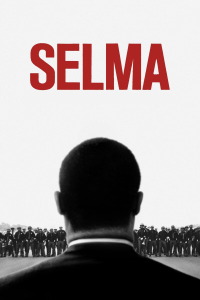
Released at a time of high racial tension in the United States, Selma is a perfectly timed look back at the civil rights movement that serves to both educate a new generation to the happenings of the past and draw parallels to the present.
Opening in 1965 with Rev. Dr. Martin Luther King Jr. (played by David Oyelowo) being welcomed to the White House by Tom Wilkinson's President Lyndon Johnson, Selma wastes no time beating around the bush - despite his efforts to urge the president to pass legislation ensuring the ability of African-American citizens to vote, King is shot down - the president has decided to focus on the War on Poverty for the time being. Despite this initial rejection, King continues to fight for the desegregation of America and refuses to let his cause fall out of the spotlight.
Although Selma appeared to be advertised as a biography that would follow the life of Rev. Dr. Martin Luther King Jr, it instead focused on a three-month period in 1965 - from King accepting his Nobel Peace Prize to, after two attempts to legislate voting rights for African-American citizens, leading a fifty four mile march in protest of the lack of voting rights for black Americans in the South. Written by Paul Webb, the film did an excellent job of compressing a complex timeline without making it feel like anything was missing - the story flowed smoothly and contained a good balance of major and minor events. One thing, however, that I felt the film could have done without was the added tension to the relationship between President Johnston and King. While historical films can often feel like facts being reeled off in succession and filmmakers may have to alter the course of history for the sake of entertainment, the modification of this specific relationship was ultimately unnecessary. The southern United States was easily one of the most difficult and dangerous places to be an outspoken person of color in the nineteen sixties and, as such, King (and other civil rights advocates) had no shortage of real historical adversaries and people who were vocal in their dislike of him and, although scenes featuring King and Johnson were dramatic in their own right, adding another ultimately did nothing for the story itself.
One of the hardest tasks present in the creation of this film was, in my opinion, the characterization of Rev. Dr. Martin Luther King Jr. It would have been incredibly easy for him to have been put on a pedestal and portrayed as larger-than-life in an incredibly inaccessible way - small details in the movie prevented that from happening. For example, the film opens with a shot of King fiddling with his necktie (which is actually an ascot) in the mirror. While seemingly insignificant, this immediately creates an image of King, not as a Nobel Prize winner and incredibly important historical and political figure, but as a man like any other. By showing him doing unimportant and mundane day-to-day tasks, the audience is reminded that despite his importance he was, at the end of the day, a suburban family man. Of course, great writing is nothing without a great performance which is exactly what David Oyelowo did - he captured the essence of the character and played him to perfection.
Ultimately, Selma is both a look back on a pivotal period on the path to desegregation and equality and a passionate (and incidental) call to arms - the parallels between a time that is often thought to be long past and the world we live in today are striking and do not go unnoticed.
This review of Selma (2014) was written by Jason M on 17 Oct 2015.
Selma has generally received very positive reviews.
Was this review helpful?