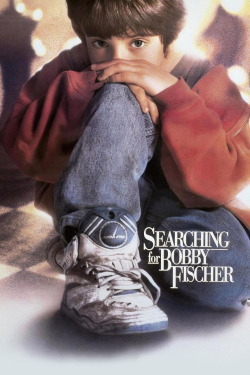
Review of Searching for Bobby Fischer (1993) by Robin M — 21 Oct 2010
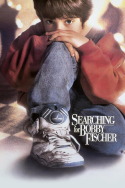
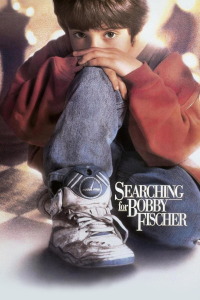
Searching for Bobby Fischer tells the story of Josh Waitzkin, a 7-year-old boy in 1980s New York who happens to be a chess prodigy. Although his talent is supreme, Josh's future could also go down the same tragic path of Bobby Fischer (1943-2008), the American world chess champion and Cold War hero of the early 1970s who succumbed to madness. But Josh simply enjoys playing the game and doesn't care how great a player he is, as long as he can still be a good person. And by the end of the movie, we see how wonderful things can turn out for the better. Instead of Josh turning into another Bobby Fischer, we see him as whom Bobby Fischer should have been.
Josh is played by Max Pomeranc, one of many child stars to retire from acting once grown, and he is perfectly innocent to the minds of the adult roles in the movie. Though Josh is the film's subject, the lead roles are his sportswriter father Fred (Joe Mantegna), his encouraging mother Bonnie (Joan Allen), a renowned chess teacher and author named Bruce Pandolfini (Ben Kingsley), and a Central Park "pautzer" named Vinnie (Laurence Fishburne). All four characters see the same potential in this boy and want to bring out the best in him, but not all of them see eye-to-eye on most occasions.
Searching for Bobby Fischer is one of the best family films I saw while growing up, and also one of the smartest. It may be about chess but it is also about a child's love for his family and others around him. When you see Josh playing in chess tournaments and championship rounds, you're really seeing a competition set up by the adults, not the players. (There's a great scene where some of the parents are standing behind their child during one of the tournaments and a fight breaks out between two of the fathers and all the parents are then forced down into the basement, in which all the kids start clapping.) When Josh deliberately loses a match at the State Finals, his father and teacher are disappointed while his mother defends him from their accusations. "He's not afraid of losing," she tells her husband, "He's afraid of losing your love." Again, love and family come before all else to a child, not winning something that's "just a game.".
Of course, Josh wants to make everyone happy. And by the time all four seem to have given up on his abilities, Josh decides to go ahead and continue playing. He wins and continues ahead to the championship rounds but we also know he's playing for love, not glory. Whether or not he's crowned is predictable but we don't care how that turns out. The climax probably came before it appeared.
That the story is so absorbing doesn't mean the filmmaking stature has to be overlooked. This is a great looking picture with beautiful lighting and subtle narration. The movie opens with archival footage of Fischer's victory over Russian opponent Boris Spassky, and throughout the movie we get glimpses of still photographs of many different chess players. We even get to see some of the faces of real chess moguls who wander the streets entering tournaments as they go, a habit even the Ben Kingsley character shows for a split second.
Seeing the movie again years after first viewing it when I was 9 years old, it seems that Steven Zaillian approached the script in a similar fashion to the way Terrence Malick did his movies in which he uses personal narration and visual storytelling by simple takes and edits. There isn't much dialogue in this picture but there is so much depth in Conrad L. Hall's photography, an achievement that earned him an Oscar nomination. And as for chess in movies, there's probably nothing less significant than watching two people play chess without talking. But this movie shows chess in a way that doesn't require the viewer to understand the game thoroughly. Having played in academic chess tournaments myself, I'm amazed the same sets of chess pieces designwise were used for this film. But at least I never had to play using chess clocks which are used to determine how fast you think before your next move.
Interestingly enough, some of the minor characters in this film are credited by something they bring up, like 'Man of Many Signals' or 'Tunafish Dad' (played oddly enough by William H. Macy). Laura Linney also appears briefly as Josh's school teacher and even though it's only three minutes of screen time, her role is very memorable.
This review of Searching for Bobby Fischer (1993) was written by Robin M on 21 Oct 2010.
Searching for Bobby Fischer has generally received very positive reviews.
Was this review helpful?