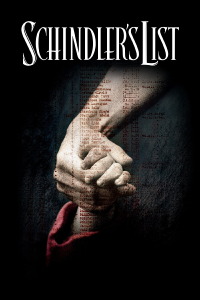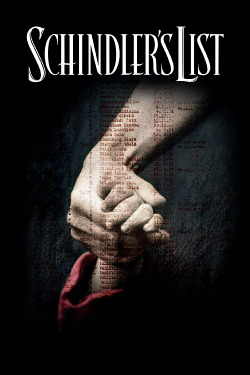
Review of Schindler's List (1993) by Matt L — 02 Jun 2013
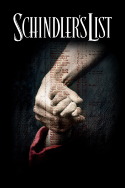
Simply reading a history book or learning about it in school can paint a picture in our minds, yet it's not until we see images that we truly have a realistic impression of a situation. In the case of World War II, so many events took place over a six year period that no film could ever fully do any one event justice - realistically, they can only give us an impression or an idea of how it may have happened. Recently, films such as Red Tails, Defiance, and Valkyrie have all attempted to tell a specific story about the many events taking place during World War II. Some films are better than others in the wide ranged war-telling genre, but regardless of quality, the point of entertaining while informing viewers about the past still remains. And, there are few directors better than Steven Spielberg, the director of the1993 classic, Schindler's List - one of the one of the most heart-wrenching wartime depictions ever brought to the big screen.
In Schindler's List, Liam Neeson stars as Oskar Schindler, a businessman (and member of the Nazi party) that takes advantage of the invasion of Poland by the German army. Once in Poland, Schindler uses his money to bribe Nazi officers, thus allowing him to take over a production facility - where he heavily profits from the production and sale of army mess supplies (using Jewish workers). In order to run the business, he persuades a member of the Jewish business community, Itzhak Stern (Ben Kinglsey) to manage his books and finances. However, once the Nazis start forcing Jews into ghettos, Schindler witnesses firsthand the senseless massacre of Jews - by SS officers, like Amon Goeth (Ralph Fiennes), and becomes sympathetic to their struggle to survive under the Nazi occupation. With his newfound wealth, Schindler does all he can to maintain his partnership with the Nazis, while protecting his Jewish production workers. Embeth Davidtz, Caroline Goodall, and Jonathan Sagall also star in supporting roles.
The film's focal point, Oskar Schindler, serves as a neutral figure turned protagonist. When we first meet this man on screen, he cares more about money and women than what's happening around him. It's not until he sees the (now famous) girl in the red dress that he has a change of heart about the Jews. However, he is smart enough to protect his Jewish workers in a legitimate way, while still appearing to be loyal to the Nazi party. On the other hand, the antagonist - Nazi officer, Amon Goeth, was an uncontrollable madman with a license to kill. Unfortunately, Nazi officers didn't see what they were doing as malicious or unethical - but rather a cleansing of the population. And, once again, Spielberg carries out this daunting portrayal with exasperating perfection.
War films are notorious for getting it wrong. For examples, look no further than Pearl Harbor or The Patriot - two films that cared more about the historical backdrop than telling a true story. Obviously, those two particular films came way after the release of the critically-acclaimed story of Oskar Schindler (showing how backwards film-making has gone). One of the many reasons this is such a widely praised film is the fact that Spielberg cared more about telling a true, realistic story than anything else. The correct story always starts with the correct cinematography - and while cinematography is a technical term that doesn't always fit into a date night review, it has to be the starting point here. In this particular film, an effective documentary style of filming is used - not to mention in black a white, both of which would be correct to their time period had this film been shot in the early 1940s.
The Nazi camps had to be recreated for the film, but they were done in close proximity to the originals with the majority of filming taking place where the actual, real-life events took place. These camps give viewers a small taste of the absurd, malicious conditions that the Nazis forced their captives to endure until the end of the war - assuming they survived that long. Not only did Spielberg succeed in bringing these work camps to life on the big screen, he also gives a very real depiction of the Nazi officers - who were allowed a great deal of leeway to eliminate Jews as they saw fit. If a Jew rested for a moment while they were supposed to be working, they were quickly executed with prejudice.
Schindler's List is a film that can't be praised enough and there's very little doubt this is a film that deserves to be written about extensively - not via a short film review. Regardless, this film - along with Saving Private Ryan, are collectively Steven Spielberg's finest directing achievements and honor those that were lost in World War II>.
This review of Schindler's List (1993) was written by Matt L on 02 Jun 2013.
Schindler's List has generally received very positive reviews.
Was this review helpful?