Review of Saving Mr. Banks (2013) by Spangle — 22 Apr 2017
Sentimental and sugary sweet to the very last drop, director John Lee Hancock's Saving Mr. Banks may not reinvent the wheel, but is pure crowd pleasing entertainment that hits on all the right notes. It will make you cry. It will make you laugh. It will make you feel. Yes, there are visible manipulative strings being pulled by a sinister mouse standing in the background and P.L. Travers undoubtedly turns over in her grave every time somebody watches the film, but dammit, it is very pleasant cinema. While Hancock may pull a bit too tightly on the audience's heart strings to the point that it causes physical pain. Yet, his touches are so sweet and nice, it is hard not to just give into the simple pleasure of the film. I know that films of this type are hated to the point that they get wildly popular 1/2 star reviews on the internet where the reviewer just trashes Disney and lists adjectives as to how the movie is bad, but I really could not care. Saving Mr. Banks is a nice little film may not be a masterpiece, but delivers everything a movie should: joy, laughter, and tears.
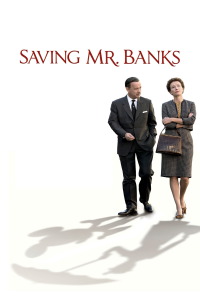
Telling the story of how Walt Disney (Tom Hanks) convinced P.L. Travers (Emma Thompson) to give Disney the rights to Mary Poppins, the film undoubtedly takes various liberties with the true story in the name of entertainment, but that is neither her nor there. Throughout the process, Travers is quite hesitant. She openly hates every idea Disney and his colleagues offer up, rejects the idea of a musical, and bans red from being in the film. She is eccentric, frightfully British, and incredibly manic. Focusing mostly on Travers and showing her life in Australia with her parents, especially her beloved but alcoholic father Travers Goff (Colin Farrell), it quickly becomes clear why she is hesitant to give up Mary Poppins: the story is her life. To give it up is to move on from that point of her life and to finally let go of her father and forgive herself after all of these years.
The scenes of the making of Mary Poppins are classic "movie about movies" material and, as always, this plays out quite well in my eyes. I am a sucker for movies about movies and this one is absolutely not an exception. The process of getting the rights to the novel and creating every bit of a movie I have never even seen is positively riveting to me and Saving Mr. Banks aces it throughout. The film's more manipulative parts, its flashbacks with Colin Farrell lushly riding off into the sunset on a white horse, still do play well. They may be a bit cloying and drastically overly sentimental, but it provides great development for Travers and shows why she is behaving the way she is with the creators of the Mary Poppins movie. It provides context for the inspiration for each character and why she holds onto them so dearly. The scenes may be a bit too much, a real trait of Hancock's, but their nostalgia and depiction of trauma and how one reacts to it is rather beautiful. Each tear is well-earned and though sentimental and sweet, the scenes work due to the installation of a sense of wonder and imagination that really brings the old school movie magic the film tries to create.
Emma Thompson, as P.L. Travers, shows why she is a cinematic treasure. Brilliantly displaying her regret and hesitation at signing Mary Poppins away due to what she represents to her, Thompson equally plays her controlling and intensely witty nature. Much of the film's comedy comes from the mouth of Thompson with zippy and smart lines rolling off of her tongue with ease. Playing off of Hanks' steely, bubbly, and determined Walt Disney, Thompson's seemingly oblivious and demanding Travers who seeks to push Disney away from her beloved property through innocuous demands and pushing them too far, really works well. Together, they occasionally make you laugh, but mostly deliver the drama of the film. Again, this drama is a bit sentimental and dripping in nostalgia, but comes out on top because of the excellent chemistry between Thompson and Hanks in these moments.
Unlikely to convince haters of John Lee Hancock's brand of sentimental cinema, but hardly worthy of the vitriol some online reviewers throw at it, Saving Mr. Banks is a touching tale of a woman trying to save her work. While she eventually gives in and is willing to share her creation with the world, she must first forgive herself and end her grieving over her beloved father. Funny, charming, pleasant, and melancholy, Saving Mr. Banks plays the audience's emotions like a violin and while it may play a bit rough, the film's overwhelming pleasant nature wins out in the end and makes this one an absolute joy to watch.
This review of Saving Mr. Banks (2013) was written by Spangle on 22 Apr 2017.
Saving Mr. Banks has generally received positive reviews.
Was this review helpful?