Review of Rushmore (1998) by Manny C — 11 Jan 2011
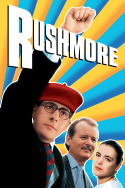
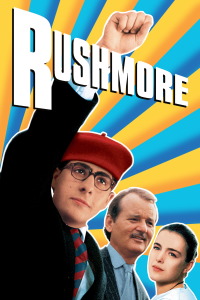
Wes Anderson's Rushmore was the film in which Bill Murray allowed us to see the sad face under the iconic smirk, and thus gave one of his greatest performances ever, his snarky humor laced with nuance and feeling. As Herman Blume, a steel tycoon with an unfaithful wife and two teenage sons he despises, Murray digs deep, and delivers a tour de force. But Rushmore isn't just the Bill Murray show. There are other great characters in Anderson's rich screenplay. Like Max Fischer, played brilliantly by Jason Schwartzman. Max is a fifteen year old smart ass at the snobby Rushmore Academy, who befriends Herman. Then both men fall hard for for Rosemary (Olivia Williams, wonderful), a first grade teacher. This leads to a game of sorts between the two in which they nearly kill one another. Along the way Anderson pays stark tribute to films as diverse as Apocalypse Now and The Graduate.
Those cinematic powers come courtesy of Anderson and his screenwriting partner Owen Wilson, friends from the University of Texas who both collaborated on Anderson's debut Bottle Rocket. The two can make characters totally flesh and blood, laced with staggering detail, complemented buy the kick ass tunes from the likes of The Stones, The Kinks, The Who, The Faces and Cat Stevens.
Max is terribly annoying at first, a smartass with way too many extracurricular activities. He also has a thing for lying. He claims his father, Bert (Vincent Cassel) to be a neurosurgeon, when he's actually a barber. He also claims that Miss Cross is in love with him, another lie. Cross sees Max as a surrogate son, since his mother died when he was seven. It's a seldom discussed detail until Max receives the Rushmore scholarship, just before his mother's passing. You end up laughing at Max's plays and his other shenanigans, especially when it comes to Herman, but eventually you come to genuinely feel for him. The same arc is given to Herman, who grew up poor and served in Vietnam. He sees Max as just a fellow outsider at first. Murray brilliantly reveals a whole lifetime of pain and frustration into the smallest of scenes, sometimes with no words at all, and it's all heartbreaking. And then there's Rosemary, haunted by her own demons. Her husband, a former student of Rushmore, died a year before, and she lives surrounded by artifacts of his memory.
In many ways Rushmore can be categorized as a love triangle between depressives. But it's more. And there's no happy ending to tidy things up. One word reaction: bravo.
This review of Rushmore (1998) was written by Manny C on 11 Jan 2011.
Rushmore has generally received very positive reviews.
Was this review helpful?