Review of Rushmore (1998) by Ben S — 14 Jan 2018
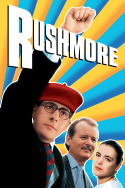
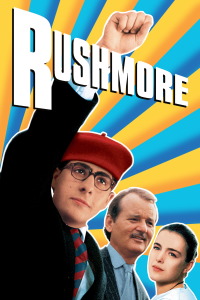
Rushmore follows Max Fischer (Jason Schwartzman) as he works his way through adolescence at Rushmore Academy. Max is much more devoted to his many extra curricular activities than his studies and adores his school. But when he falls in love with one of the teachers (Olivia Williams) it threatens his first love, Rushmore.
Right from the start of the film we see that Max is not completely in touch with reality as the film opens with a daydream of Max's as he dozes off during a speech being given at an assembly. We are also introduced to another major character in this scene. Giving the speech at this assembly is Herman Blume (Bill Murray). Anderson already showed his ability create rich and interesting characters in his first film "Bottle Rocket" but he truly comes to form in "Rushmore". Anderson has always had a knack at getting the most out of his actors and smoothly bringing them into his world. Bill Murray and Jason Schwartzman are staples to the Anderson filmography and they are utilized perfectly in their roles. Their chemistry in this film is among some of the best in Anderson's works.
Something that I think clicks in Rushmore that Wes Anderson didn't necessarily achieve in his first film was making even the tertiary characters sympathetic and meaningful. A great example of this in Rushmore is the character Magnus Buchan (Stephen McCole). Magnus is a clear antagonist throughout the film. However, near the end we get a very endearing moment with Magnus. Max offers him a role in his final play and Magnus responds simply with "I always wanted to be in one of your fuckin' plays." Anderson loves to play with the idea of no clear cut antagonists of protagonists. In his films, much like in life, things are not always so clear between good and bad we are still people in the end. Anderson also writes Max's father (Seymour Cassell) beautifully. He writes him as one of the sweetest father figures imaginable without making him too unbelievable or cheesy. Anderson's dynamic between father and son is so subtle and so sweet it makes for a very strong smaller part of the film. All of these smaller roles that have such a big impact on the film as a whole helps "Rushmore" stand out as a much more well rounded work of Wes Anderson.
Another theme Anderson hints at in "Bottle Rocket" but that resonates much stronger in "Rushmore" is the concept of children acting like adults and adults acting like children, or at least, trying to. We did see this in "Bottle Rocket" with the relationship between Anthony Adams (Luke Wilson) and his sister Grace (Shea Fowler). But in "Rushmore" Anderson has much more to work with and plays with this theme much more. And then comes back to it incredibly successfully with "The Royal Tenenbaums" and "Moonrise Kingdom".
With "Rushmore" we finally get our first look at a true Wes Anderson soundtrack. And with the first addition of Mark Mothersbaugh to the score "Rushmore" is a truly great soundtrack and my personal favorite of his. The addition of Mark Mothersbaugh is something that proves to compliment Andersons next few films so brilliantly. Anderson scatters in some of his personal favorites as well to the score. Adding some great tracks from The Rolling Stones, John Lennon and Cat Stevens, to name a few.
Right from the get go in "Bottle Rocket" we knew Anderson would be a filmmaker who was a stickler for color and framing and Rushmore, nor any of his other films, have proved any different. Wes Anderson's anal attention to detail in his films makes them visually some of the most appealing cinema we have.
And, of course, we end the film with another staple to the Anderson films, a slow motion scene. "Rushmore" solidifies Anderson's creative style and launches his career into what it is today. "Bottle Rocket" feels like Anderson creates a small little corner in the world. But in "Rushmore" Anderson creates an entire world. The way his characters talk and interact with each other would not be possible in the real world. Anderson writes characters in a way that is so unlike anything we, in the real world, would ever see. But in a way that is also incredibly honest and relatable.
"It's good, but let's hope it's got a happy ending".
This review of Rushmore (1998) was written by Ben S on 14 Jan 2018.
Rushmore has generally received very positive reviews.
Was this review helpful?