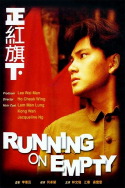
Review of Running on Empty (1991) by Evan H — 11 May 2011
The entire movie is understated and simple. River Phoenix bubbles and broods with delayed teenage angst, finally realizing that he is behaving with more adult sensibilities than his parents, whose foolish adolescent foray into hippie-hood adversely affects their introverted, devoted, and confused son.
The family's nomadic style of living means that despite their constant proximity to each other, they are not close knit as an actual family, instead surviving together as a sort of functional unit.
This is emphasized by Lumet's typically detached and utilitarian directorial style; he uses hardly any close-ups in the film's first hour to stress the lack of connectivity any of the family members feels with another person.
As Phoenix's character starts to attach himself to a girl he likes as well as nurturing a dormant talent, he finds himself understandably torn. The story is quite simple and steers clear of melodrama.
There is hardly any yelling or cursing, no throwing of dishes or upending of tables. The film is driven by dialogue and discourse between other people; its emotional core is largely from Phoenix's tormented actions.
He is only able to express these actions in his powerful piano performances or his intimate dialogues with his new girlfriend. The movie's staid intensity comes to a close when the boy is dumped into the real world, when his parents realize what is best for him, not for their outdated cause or their own preservation.
Lumet utilizes his skills in drama for something that is not courtroom nor gritty crime as is his forte, but instead focuses on the family. Running on Empty gives Lumet and Phoenix a real chance to shine and boy do they ever.
This review of Running on Empty (1991) was written by Evan H on 11 May 2011.
Running on Empty has generally received mixed reviews.
Was this review helpful?