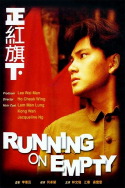
Review of Running on Empty (1991) by Paul Z — 06 Sep 2011
The most unsettling part of the family setting their dog out into the street and telling the children it'll certainly find another home is that the children take it rather well. They've deserted family dogs before. And they've left whole lives behind more times than that. The Popes are a married couple who've been subversive since the '60s, and their children include Danny, a high school senior and has never known any other kind of routine. The Popes were implicated in radical politics.
They destroyed a building, and there was a janitor they didn't know would be there. They've been fugitives ever since, switching towns and names, finding jobs that don't draw attention, learning to keep the kids home on picture day. The more they flee yesteryear, the more it's in their mindset. And now time is catching up. What, for instance, is Danny going to do? He is a talented pianist, and through one of his teachers he gains a Juilliard scholarship. But he can't collect it unless he supplies his high school transcripts, which are strewn back along countless towns under countless different names.
Judd Hirsch's Arthur Pope has taken an uncompromising position for decades, and he's not prepared to change now. He deems that the family must remain together, must safeguard itself against the world. He has created a stronghold psychology, and Danny shares it. He understands that if he confesses and enrolls at Juilliard, he'll never see his family again. His mother, Christine Lahti's Annie, will be heartbroken. She has been fleeing for ages without lamenting the forfeits she made, but she can't accept the idea that Danny will have to surrender his future, just as she lost hers.
Life, for the time being, continues. Danny makes a girlfriend, whose father is conveniently the music teacher. They share secrets, but Danny can't share his biggest one. This is the first time he's had a girlfriend, the first time he's let anyone become this close, and he has to learn to confide without being truthful. Plimpton knows something's off, but not exactly what. The family has outlasted each close shave with the Feds, each question from a loud-mouthed neighbor. But this is an impossible risk, as it derives from within: It's no longer feasible for these people to elude questioning the very practicalities on which they've made their lives.
And that questioning causes the movie's emotional pinnacle, when Lahti calls her father and coordinates to meet him for lunch. Long ago, she hurt him irrevocably. She vanished for years. Now she wants her parents to assume Danny, so he can go to music school. She will lose her son, as her father lost her. It's ironic and heartbreaking, and by the end of the scene we have been through a choker. The one scene that doesn't work is the cheesy and lugubrious ensemble dinner scene where everyone breaks out into song. But in either case, Lumet is showing us people who've chosen and are observing the cost, and throughout the film they'll have to reassess their assessments.
Lumet was one of America's best directors, and his expertise here is in the way he takes a histrionic plot and makes it truthful by making it exclusive. All of the supporting characters are persuasive, mainly Plimpton and her father. And there are impressive performances in the principal roles. Phoenix largely bears the story. It's about him. Lahti and Hill have that devastating scene together. And Lahti and Hirsch, clustered together in bed, realizing in terror that they may have reached a turning point, are poignant. We see how they've relied on one another.
The family is not actually political at all. Politics, interestingly, have been left far behind. That sort of commitment would reveal the Popes. The film is a tender, moving drama in which a choice must be made between staying together or splitting apart and perhaps realizing a long-deferred possibility. The parents never met whatever potential they had, owing to their fugitive life. Now, are they warranted in making their son forsake his own future?
This review of Running on Empty (1991) was written by Paul Z on 06 Sep 2011.
Running on Empty has generally received mixed reviews.
Was this review helpful?