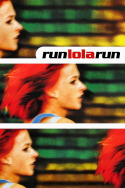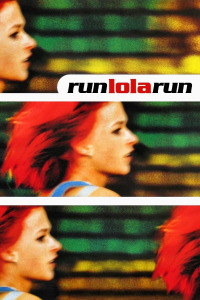
Review of Run Lola Run (1998) by Wadha A — 16 Apr 2018
Run Lola Run: The Bigger Picture is Hidden within the Tiny Details.
The film Run Lola Run is about a girl that has 20 minutes to help her boyfriend with a predicament that will most likely cause him his life. The film is an artistic masterpiece that transgresses the architectures of containment in such an interesting way. The director Tom Tykwer was successful at capturing the imprisonment of time that the main character Lola was experiencing throughout the film. The pattern portrayed throughout the film gives the viewer a sense of depth that is not always presented to the same extent in many films. This was achieved through the use of sound, color, editing and the various camera angles.
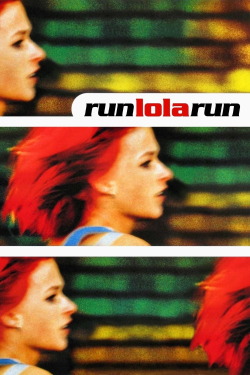
The opening scene of the film shows a panoramic shot of the city from above and quickly zooms into Lola's apartment complex. We follow the camera as it quickly aims toward the red telephone ringing, all while hearing the sound of upbeat techno music that gives the viewer a sense of urgency. The crane shot which proceeds to zoom in is a way to portray the main event of the film, a technique to show the object of most importance. Even the color of the telephone is significant, which is identical to the color of Lola's hair. The color red is noteworthy as it was intentionally displayed in an attempt to give the viewer an indication of passion, anger, emergency, love and worry.
Lola answers the phone and the director uses the same technique of shifting the camera to her boyfriend Manni in a similar fast paced zooming as seen earlier. This simply adds to the effect and feeling of urgency that is displayed time and time again throughout the film. The director intensifies the anxiety of the situation by abruptly shifting the shots to both Lola and Manni as they speak during their telephone conversation. Manni informs Lola that he has lost the money he was supposed to deliver to a drug dealer and he will most likely be killed by him if he does not deliver the 100,000 marks within 20 minutes. They end their telephone conversation and the techno music intensifies as Lola turns to the clock to see the time she has left to help her boyfriend. Simultaneously, we get flashes of her television screen showing a set of dominos swiftly toppling over. This is a brilliant foreshadowing of the films main theme of how every action has a reaction that leads to a specific outcome. It highlights the fact that everything is linked together, perfectly representing how the butterfly effect takes place and how every miniscule encounter can have a major impact on an individual's timeline. This is displayed when Lola passes by the side characters in the film and we are shown millisecond clips of their fore coming futures. The way the director chose to show us the future was portrayed in such an artistic and simple way that gave us the solid visual of the effect that would take place in their lives, and this was achieved in mere seconds through time lapse shots.
While the dominos are toppling on the television screen Lola is seen to be shuffling through her mind desperately thinking of a person to seek help from. We see clips of the people Lola knows flash through her mind and finally fall on the image of her father, she utters the word papa and rushes out the door. Interestingly the image of her father comes to life and he gazes at her as she runs out the door then shakes his head in disapproval. The director is giving the viewer a hint of what is to come later in the film. Since later on in the film it is revealed that he is not her biological father after all and is unwilling to help her with her dilemma.
The movie is constantly engaging the viewer and keeping them at the edge of their seat by using the many techniques shown in the film. In many scenes we are shown clocks to express the urgency of time and a constant reminder of how Lola is running out of time to complete her task. Lola repeated the task three times and in each round there are slight variations in the details of her journey. For example, the third and final round is when Lola did not cross between the group of nuns, however, the first two rounds she ran right in-between the group of nuns. This is a very interesting small detail that the director added, which is an unconscious indication of Lola's faith in accomplishing her task. Moreover, during the final round the first side character Lola runs past is shown through the time lapse clips to have a future in which she enters into the faith and becomes religious. This only adds to the signs that Lola has developed faith in her mission for the last round.
Overall, I found the film to be visually appealing and the plot to be very entertaining. I appreciated the subtle hints that connected the small encounters to the bigger picture and brought the story together. The beginning of the film starts with a clip of many people rushing to their everyday lives as it focuses on some of the characters shown in the film. This represents how many people you can cross by throughout your life without even realizing how that may affect you or them in the future and this is basically what the film was representing all along. Every small difference Lola made in each one of her three journeys not only affected her outcome, but also it is quite obvious that every other person in the film that interacted with Lola had a different outcome each time, no matter how minor the interaction was. The film helps us appreciate and be aware of the strangers we pass by and how the tiniest interaction could have a major effect on their day or even their life.
This review of Run Lola Run (1998) was written by Wadha A on 16 Apr 2018.
Run Lola Run has generally received very positive reviews.
Was this review helpful?