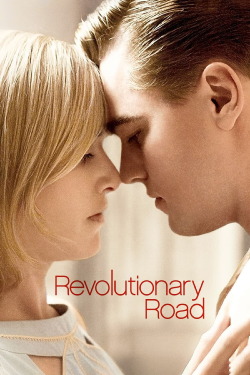
Review of Revolutionary Road (2008) by Kelly A — 12 Jan 2011
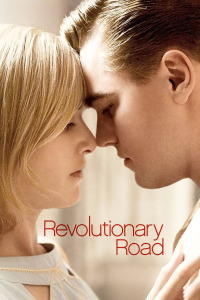
Not as groundbreaking as other indictments of suburbia, i.e. "American Beauty" and "Blue Velvet", "Revolutionary Road" takes a more conventional way, but still gives the viewer the opportunity to question his or her own drab life. After witnessing the turmoils of Frank and April as they try to become radically different in what was considered high class and normal for the 1950s, I feel as if we had all gone that way of the picket fence. Behind our Crest whitening strip smiles, there lies a sense of regret that we could not succeed with our dreams back in our prime. I'm 19, but I had dreams that I wish I could have succeeded. And looking back, I feel as if this film's telling us what could happen if we try to get on with our dreams with incomplete devotion.
Thomas Newman's score, while minimalistic, did have some memorable qualities, such as the piano piece that served as the harbinger of doom. When you knew that suburbia was becoming less than perfect, the music would start and, if the viewer didn't know what was going on, something would go wrong.
Mendes' direction is nice. There were qualities of his past films "American Beauty" and "Road to Perdition" thrown in there, but other than that, it serves as more of an extension of his talents and not just proving that he is one of Hollywood's most unique auteurs. He's far from unique - I've seen things that felt really suited for a dramatic movie of that caliber. I mean, the arguments, the false hope, the sly-as-the-devil satire, the eventual destruction of everything pure and hopeful.
You know, whenever I think back on Woody Allen's much more light-hearted "Annie Hall", I am reminded of when his character Alvy is doing interviews on the streets of New York and he finds this perfect couple to answer his question, they answer that they have anhedonia (inability to feel pleasure) and that they're just simply bland. In that sense, this film shows us couples that have passion but fail because of temptation and/or halfhearted devotion (the Wheelers) or just simply ignore all the problems in favor of outward appearances (the Givingses, the Campbells). This is real - and this, my friend, is the book and movie that tells you that the happy-as-a-lark Cleaver-and-Harrier family structure was not as nice when the American dream became essential to America. This would lead the way to, ultimately, the Connors, the Hills, the Simpsons, the Griffiths, and many more families who look perfect at first glance but are just plain messed up.
And that's why you should see this movie. Before you start talking about how the 1950s was perfect, watch this and "Rebel Without a Cause" and then talk to me about how you think the 1950s were the last decade of peace. We had war, divorces, DIY abortions, troubled teenagers, an outdated movie censorship system, and people so terrified of change that they'll indict anybody they can blame for said phenomena.
Now, keep in mind, this is not as wickedly funny as "Who's Afraid of Virginia Woolf" (from what I've seen), but it communicates the same uneasiness in marriage in modern culture.
Not for children unless if they really know what it's like to be in a dysfunctional family.
This review of Revolutionary Road (2008) was written by Kelly A on 12 Jan 2011.
Revolutionary Road has generally received positive reviews.
Was this review helpful?