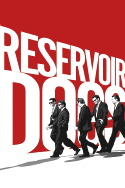
Review of Reservoir Dogs (1992) by Horvath S — 23 Dec 2015
Quentin Tarantino's habit of telling stories in inconsequential order has a striking effect on his movies. Take, for instance, his 2003 masterpiece, "Kill Bill Vol. 1," whose first official "chapter" does not bear an elongated, dramatic name, but simply '2.' Such a puzzle piece doesn't make sense to the viewer right away - it isn't until later clues arrive that tell us that technically, the last death in the movie is actually the first, and the victimization of the knife happy Vernita Green (Vivica A. Fox), which we originally thought to be the gold, is really the silver. Tarantino's storytelling techniques make his films seem more epic, more grand - there's always a feeling that there's more to the story than what's being presented.
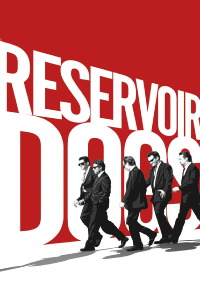
His directorial debut, 1992's "Reservoir Dogs," if told chronologically, would be a novel tale of a diamond heist gone wrong. But it all seems to be much more than that, as exemplified by Tarantino's introduction to the characters with a discussion about the true meaning behind Madonna's "Like a Virgin," jumping to, only seconds later, the bloody aftermath of the heist. Most of what happens in-between is later addressed, but not the diamond heist, and not a lot of group interaction. We fill in the blank spaces up later, imagining what really went down as a pastime. That's why Tarantino's films stick with you long after you've finished them - so much time is spent on chatter and violent standoffs that we're pressed to conceptualize the darker details ourselves. Becoming absorbed should be expected.
At a mere 99 minutes, it is Tarantino's shortest film, and admittedly wears the feeling of a film made by an confident auteur still not yet confident enough to go out in public with the bolder aspects of his aesthetic values. Perhaps such an opinion derives from the fact that it was the only film in Tarantino's oeuvre I had not yet seen, and therefore am better used to when he's working big. Regardless, the film is masterful, a fine initiation to his talents in the same way "Blood Simple" worked for the Coen Brothers. The control he has over his dialogue, his actors, is startling for an artist who was only 29 at the time of conceit - "Pulp Fiction," to come out two years later, would be the superglue to land him a spot alongside the greatest writer/directors of all time.
The story, famous by now, covers the orchestration and aftereffects of a jewelry store robbery gone to shit, wisely refraining from detailing the crime itself. The blueprint is set in motion by Joe Cabot (Lawrence Tierney), a wrinkled, cranky crime boss who hires a group of energetic lugs to do the dirty work and gives them code names that keeps personable conversation a thing of the past. All are criminals who talk and walk tough but handle violence like sensitive civilians - the only people in the group able to assert their dominance over any given situation are Eddie Cabot (Chris Penn), Joe's deceivingly friendly son, and Mr. Blonde (Michael Madsen), a psychopath who listens to 1970s pop radio while inflicting violence on others. But one member of the heist is actually a cop deep undercover, thickening what would normally be a routine job.
"Reservoir Dogs" would cause most viewers to undergo a knee-jerk reaction had the tone been a little more serious. Tarantino, always seeming to be half-joking, subtly jabs his characters for their incompetence - it's all a matter of karma, and trying to empty a diamond store is no way to live. Tarantino's compact understanding of Cabot's squad heightens their three-dimensionality; while, in essence, them discussing why "True Blue" sucks, why tipping at a diner doesn't matter, or why Pam Grier is the ultimate blaxploitation female, appear to be topics of superficial smallness, it speaks volumes about them. Concerned with unimportant matters, only to turn to crime a second later, it portrays them as observant wallflowers who never fit in anywhere, looking for sinful activity to discover fellowship in not so idyllic places. Personal appearance is of utmost priority, even in the face of potential death - look at the way Harvey Keitel takes a break from arguing with Steve Buscemi post-failed heist just to check himself out in the mirror, comb his hair. These men like to look cool, but don't like the baggage that comes along with lifetime criminality.
Tarantino's dialogue is entertaining in and of itself, but the actors representing his attitudes and conversational fantasies are what make "Reservoir Dogs" the electrifying experience that it is. Tierney, as the head honcho of the operation, is a grumpy curmudgeon not to be messed with; Penn, playing his son, is in the category of the two-faced villain approachable one moment and sadistic the next. Roth, Keitel, and Buscemi, given the best moments in the screenplay, all seem like everymen who don't know what the hell they've gotten themselves into. Michael Madsen, the standout of the cast, is a charming masochist.
But "Reservoir Dogs" is Tarantino's show - his then-youthful talent is so invigorating that one cannot help but feel lucky that his flawless filmography is available for reference, anytime, anywhere. I cannot imagine a time during which he wasn't yet considered to be one of cinema's most individualistic auteurs. Everyone has to start somewhere; thank god he got off on the right foot.
This review of Reservoir Dogs (1992) was written by Horvath S on 23 Dec 2015.
Reservoir Dogs has generally received very positive reviews.
Was this review helpful?