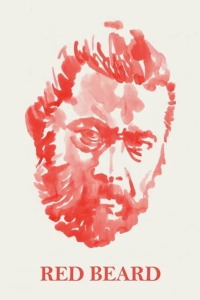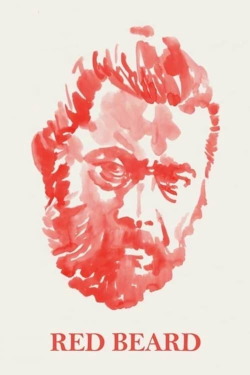
Review of Red Beard (1965) by Paul Z — 19 Sep 2008
From the start, not a moment during this three-hour masterwork is dull. Its opening credits music is periodically paused for the ambient sounds of the health clinic, one of the many things Kurosawa does that is sudden but subtle. Those three words are the aphorism that best describes Kurosawa.
Through a three-part first act and a two-part second act, the film takes place in the 19th century. A young doctor named Yasumoto, played by a very able actor named Yuzo Kayama, is the protagonist, portrayed with an uncanny, lifelike pride. Educated in Dutch medical schools, the conceited Yasumoto aims to the prestige of personal physician of the Shogunate. For Yasumoto's post-graduate medical training, he has been transferred to a countryside clinic under the leadership of a clinic director aptly nicknamed Red Beard, played by Toshiro Mifune in a tremendous performance, seeming like a domineering tyrant, however it is easy to see that in truth he is a kindhearted clinic leader. At the outset of the movie, Yasumoto is up in arms about his relocation, judging beyond a shadow of a doubt that he has not much to reap from working under Red Beard, whom he believes is merely interested in his medical writings and almost immediately defies the clinic director. He rejects his uniform and turns his nose up at the food and simple surroundings.
In a scene of tension that one could cut with a pairing knife, Yasumoto crosses into the prohibited garden in which he encounters The Mantis, in a mysterious and brimming performance by Kyoko Kagawa, an enigmatic patient that no one but Red Beard can doctor. This scene is a long, unbroken stationary shot that will pour inspiration and enlightenment into any aspiring filmmaker. In one of the film's most emotional chapters, Yasumoto, subsequent to falling ill, is nurtured to health by the tending and warmth of a 12 year old girl who he and Red Beard have saved from a brothel in a spectacularly entertaining scene involving a choreographed fight that no matter how unexpected is not one bit incongruous.
In the course of his interpretation of Red Beard's empathy and a chain of impoverished patients, Dr. Yasumoto gathers the most precious knowledge he could ever ascertain as a doctor. The lives of patients slowly become more valuable than prosperity or reputation. Through the film's vignettes, he studies Red Beard and thus so do we, and we see his unapologetically spartan philosophy, that their misery can be improved and even revolutionized with kindness and reliable attention.
Kurosawa, unlike most of the great directors, is much more interested in the hero and the essential study of a good person rather than empathy of their flaws, much like what fascinates Scorsese, PT Anderson or Fritz Lang. Kurosawa is an unaffected portrait of a hero, not so much a character who has flaws, but a misunderstood spiritual teacher to the characters and the audience. He sees illness, in its deepest form, as a disorder of the soul, originating as an effect of the tortured heart or mind. He rejects the idea of a political solution to health care, though he is frustrated with the disdain politics show to the pain of those it controls. He finds a more timeless cure for his horribly ailing patients, though many may suffer and die. Yet the stages they go through to their death or survival are astoundingly drastic.
The swiftness with which Toshiro Mifune conveyed and emoted is amazing. The average actor may perhaps need much more time and space in a given scene to communicate an impression than Mifune did. The promptness of his actions is such that he alleged in a solitary, distinct movement or facial expression what takes many classically trained actors a lot longer to squeeze out. He presents everything without delay and unflinchingly, and his awareness of pace was the sort I am sure any director would have longed for dearly, because he was entirely in sync with Kurosawa, perhaps because their minds were so uncannily alike. And still with all his timing and sharpness, he as well possessed startlingly perceptive and beautiful feelings. He had to! Otherwise, what would all of that precision mean? I am speaking collectively of his performances in Yojimbo, Sanjuro, Seven Samurai, Rashomon, Drunken Angel, Stray Dog, I Live In Fear, High and Low and others, but in Red Beard, he has reached that point that can only be so apparent with age, one of great wisdom and understanding of personal compromise.
This review of Red Beard (1965) was written by Paul Z on 19 Sep 2008.
Red Beard has generally received very positive reviews.
Was this review helpful?