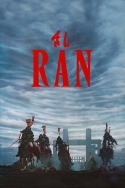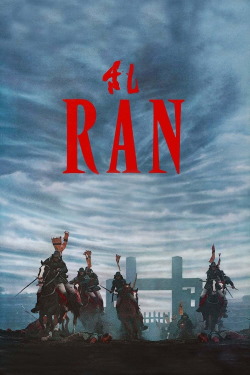
Review of Ran (1985) by Ryan M — 22 Jan 2010
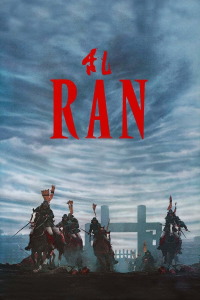
It was originally based on Samurai legends, but during the writing process Kurosawa noted that the story drew parallels with King Lear and made some adjustments. After a prolific filmmaking period between 1950-1965 Kurosawa only made a film every 5 years until his final two films in 1991 & 1993, in truth Kurosawa had to survive a suicide attempt and wait almost 10 years until he could finally make the film he always wanted to make (he even handpainted storyboards for it & his previous film "Kagemusha" was simply a test for this). It's funny how some things don't always turn out the way you want them, but in spite of the gargantuan effort required for Kurosawa (who was going blind during shooting at 75 years old), his last epic "Ran" turned out quite perfectly.
Set in 16th Century Japan it centres around the Ichimonji clan, consisting of ageing warlord Hidetora and sons Taro, Jiro and Saburo. After 50 years of bloodshed Hidetora has decided to abdicate his power to his 3 sons in order to bring peace to the land, but his youngest son Saburo believes that his father's violent ways of the past have rubbed off on his elder brothers and believes a power struggle is inevitable. Hidetora banishes his youngest son and vassal Tango who defended Saburo's outburst, as Hidetora has to accept that he isn't the clan leader as Taro and his wife Kaede residing in the Castle which her parents used to inhabit (Hidetora killed her parents), except Jiro has always felt bitter about sucking up to his 11 month older brother......
It doesn't take a genius to figure out that Saburo's prediction would come true, as Hidetora descends into madness at seeing the extent of his son's betrayal and bloodlust (in the legendary battle sequence which required the building and destruction of a wooden castle), wandering the land tormented by all the people he hurt in a lifetime of blood being spilt, with the only option of asking for Saburo's forgiveness (he marries into another warlord's family).
Kurosawa's camera simply observes the action onscreen, almost never moving with no closeups whatsoever, as his most nihilistic film deals with the neverending cycle of killing and wars threatening to destroy everything to the point where not even God can save mankind from himself. But for all its despair and tragedy, it's a remarkably glorious film to look at, making the depressing themes of the film that much more tragic. As far as acting goes, Tatsuya Nakadai gives an extraordinary performance as a man 25 years older than his real life self, with the rest of the cast ranging from very good to sensational.
It's possibly the ultimate tragedy, made on an epic scale with no special effects harking back to a time when humanity were simply repeating past mistakes, yet the reality of the situation is that we have still yet to learn. Akira Kurosawa's "Ran" may not be as influential as his work from the 50's and 60's, but it's my favourite film of all time and a powerful study of loyalty, greed, revenge and war.
This review of Ran (1985) was written by Ryan M on 22 Jan 2010.
Ran has generally received very positive reviews.
Was this review helpful?