Review of Rabbit-Proof Fence (2002) by Tricia E — 29 Aug 2010
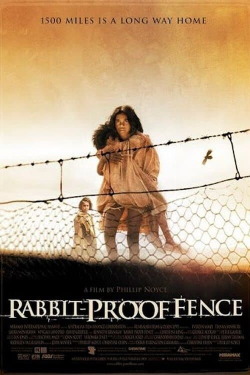
Rabbit Proof Fence is a true story based on the journey of three brave little Aborigine girls, who were ripped from their mother?s arms and taken 1200 miles away to a native camp in Western Australia. The girls Molly (13), her sister Daisy (8) and her cousin Gracie (11) were mixed Aborigine children called half-caste. The Australian government policy known as the Aboriginal Protection Act allowed the government to control the lives of the Aborigines. This included removing half-caste children from their homes and placing them in government controlled native camps. These camps were established to help train and integrate the children into white society as domestic workers. The camps would not allow the children to speak their native tongue or practice their native beliefs. The goal of the government appointed Chief Aborigine Protector A.O. Neville was to actually breed out the Aborigine blood from this mixed race.
Molly was very unhappy and just wanted to be with her mother, so she escaped the camp with her sister and cousin. The girls hiked for 9 weeks through very harsh desert conditions 1500 miles back to their home in Jigalong. Molly carried her little sister on her back for most of the way. The girls were able to elude the trained Aborigine tracker and escape starvation by finding food and water, no doubt skills taught to them by their native mothers. They followed the rabbit proof fence that was built in Western Australia to keep rabbit and other varmints away from farming land. Unfortunately Gracie decided to go her own way and was caught by the trackers. She never made it back to Jigalong. Molly and her sister Daisy did make it home to reunite joyfully with their mother.
The Aborigine Protection Act lasted until 1970. The children affected by this act are known as the Stolen Generation. These children lost their families, identity and culture. This movie was very heart-touching and eye-opening to the treatment of indigenous people. The Aborigines are not the only culture that has suffered from the expansion of industry and Christianity. This type of injustice has happened to other indigenous populations like the Native Americans. I hope everyone that views this movie feels the same compassion I have towards these people, and I hope we can continue to learn from our mistakes.
This review of Rabbit-Proof Fence (2002) was written by Tricia E on 29 Aug 2010.
Rabbit-Proof Fence has generally received very positive reviews.
Was this review helpful?