Review of Pulp Fiction (1994) by Mohit K — 29 Nov 2016
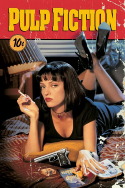
Quentin Tarantino's Pulp Fiction is rightfully edged in as one greatest films in the history of cinema. Unlike traditional movies, Pulp Fiction does not follow a stereotypical plot line for Pulp Fiction, but instead chooses to intertwine the tales of a boxer, a couple of novice robbers, two hit men and a gangster's wife into one action packed thriller. This is a key concept that Tarantino clearly thought of when writing the script because even though the events in the movie do not follow a chronological order, the script flows flawlessly. This is accomplished through Tarantino's exceptional use of dialogue to make the four chapters of the movie weave in and out of the chronology fluently. The first and last scenes of the movie clearly illustrate the plot structure of the film as both the scenes are the same subplot of the movie; the restaurant robbery with Pumpkin (Tim Roth) and Honey Bunny (Amanda Plummer), and the rest of the subplots integrated inbetween these scenes.
The tone of the movie is set within the first scene with the iconic soundtrack "Miserlou" by Dick Dale and His Del Tones, following the introduction of one of the four subplots. The upbeat tempo matches the fast paced events and all action style of the movie. Tarantino's use of background music for special effect is evident throughout the movie as he uses tracks such as "Girl You'll Be A Woman Soon" to depict the tension between Travolta and Thurman, and highlight Travolta's cautious approach to his mobster boss' wife. This is not the first time we have seen Tarantino use background music as a crucial tool in his film, as his other films such as Kill Bill have also contain soundtracks famous now such as "Bang Bang", in which the lyrics explain a major event in the movie.
This use of dialogue is the signature characteristic which makes Tarantino's movies standout. Following the structure of the plot, Tarantino uses dialogue in an unconventional way to set the tone of the scene as well as depict the relationship between characters. We see this in underrated scenes, for example when Jules (Samuel L. Jackson) and Vincent (John Travolta) hold an irrelevant conversation about what Quarter Pounders are called in Paris and the degree of intimacy insinuated by a foot massage while they are driving to a bloodthirsty encounter with some college kids who had managed to get on the wrong side of Marsellus Wallace (Ving Rhames), Jules and Vincent's boss. In an ordinary plot, the two hit men would be discussing how to tactically handle their job, but we see Jackson and Travolta engage in a pointless conversation. However, Tarantino's dialogue is not unusual dialogue is not just to throw off the audience, but actually follows a particular strategy. We see Jackson bring up the conversation about Quarter Pounders a few scenes later when making small talk in a tense situation with the college teens. Moreover, an anecdote of Marsellus throwing someone off a four-story building for giving his wife a foot massage is raised to set up one of the four plots in the movie; when Vincent takes Marsellus' wife out on a date on his orders. This is why Tarantino's use of dialogue is so crucial in the film as despite the plots not following a chronological order, the structure of the dialogues allows the movie to flow freely as the dialogues lead the movie from one scene to another.
Throughout the movie, Tarantino successfully merges themes of raw brutality and humor to give the film a unique sense of identity. This dark humor is portrayed through numerous methods throughout the movie. For example, Tarantino uses the simple concept of a comedy of errors but twists it into something darker in the scene where Vincent accidentally shoots one of the college kids in the car on their way back from retrieving the brief case.
Pulp Fiction can be interpreted as an absurdist film due to its distinct structure and story line, as unlike a traditional film, the plot does not have a typical build up to a problem, which is then resolved by a character and allows the story to reach a climax. Instead the plot focuses more on observing different characters behaviours under varying circumstances that seem to be purposeless and philosophically absurd. The movie's use of dark humor adds to the abstract nature of the plot, as this is humor you would not see in normal storylines, hence emphasizing the idea of absurdity.
This absurdist plot may be viewed as a point of criticism to those who prefer traditional three-act storylines with an inciting incident, a confrontation of the problem and the resolution. To this audience, the plot of Pulp Fiction may seem aimless and lack the conservative structure of other movies, and to this audience I would advise to keep an open mind towards the storyline or not to watch it if they are absolutely against such a movie.
Having chosen a strong cast, including highly credible stars such as John Travolta, Samuel L. Jackson and Bruce Willis, the actors did not disappoint. Playing the roles of two mob hit men, Travolta and Jackson put in phenomenal performances, capturing the essence of the characters and portraying the stress and fear of mob hit men when they run into trouble in very emotive displays. Both actors displays were on par with performances they had delivered in previous movies, especially Travolta who turned in his best display after his iconic role in Grease, only this time he has reinvented himself from a chocolate-boy hero to a hard-hitting mob gunman. While other actors such as Ving Rhames, Uma Thurman, Tim Roth and Amanda Plummer didn't have roles as big as Travolta and Jackson, they were essential in painting the bigger picture as part of the other subplots respectively, and did an admirable job representing their respective characters to create greater affects of tension and build up the story.
With Pulp Fiction, Quentin Tarantino has proven himself to be more than just a director or a script writer. He is an artist. He has worked his quintessential magic on the film through the plethora of different ways scenes have been shot; the introduction of the characters and the subplots, the key themes of vengeance and violence and other key characteristics that make the movie scream "Tarantino!". While these directing traits are, what made Tarantino a legend, the very same traits can be seen as what are bringing about the mediocrity in his work. Considering Pulp Fiction was released in 1994, it was one of the first few movies that put Tarantino on the map, and so with a 'tried-and-tested' formula proven to work so successfully, Tarantino's following movies such as Kill Bill, Inglorious Basterds and Django Unchained have followed similar themes of violence and vengeance. This has seen Tarantino's latest movies become somewhat predictable and cliché as the audience already knows what to expect, so unlike me, if you have seen any of Tarantino's more recent films you may not be that surprised by what Pulp Fiction brings to the table, but it will definitely strike you as one of, if not, his best movie.
"Pulp /'pelp/ n. 1. A soft, moist, shapeless mass of matter. 2. A magazine or book containing lurid subject matter and being characteristically printed on rough, unfinished paper." That is how Tarantino introduces his script and screenplay for Pulp Fiction, and that is what tells us so much about the film from so little.. As previously mentioned, the structure of the movie is erratic in a way which makes it unique. Its lack of following a chronological path when taking the audience through the four key plots of the story is what Tarantino highlights with that very opening sentence in the script, which is perhaps why 'Pulp Fiction' was considered the perfect name for the film.
The rarely seen structure of the plot line, the phenomenal dialogue and script in addition to some outstanding performances from a star studded cast made the movie extremely gripping for the audience and brought out and combined well the flavors of action and dark humor. A must watch in my opinion, as an action film enthusiast, it gave me everything I was looking for with a dollop of humor to swirl with the craziness of the events in the movie.
This review of Pulp Fiction (1994) was written by Mohit K on 29 Nov 2016.
Pulp Fiction has generally received very positive reviews.
Was this review helpful?