Review of Prom (2011) by Shiira — 18 May 2011
Incredible as it may sound, but the legacy of Jim Crow still insinuates itself in the rural towns of the Deep South that time forgot, perpetuated by racist holdovers from the not-so-distant past who were alive when the Brown vs.
Board of Education of Topeka ruling was handed down in D.C., circa 1954. Effective immediately, cities all across America were mandated into desegregating their public schools, which represented the first major blow to the practice of state-sponsored institutionalized racism.
Many hardliners were obviously not very happy, the very same people, extras, who years later came to the on-location sets of Alan Parker's "Mississippi Burning", uncannily prepared, toting old authentic Klan paraphernalia they had tucked away in their closets, basements, and attics, for future generations to admire.
This genealogical consanguinity with familial incorrectness helps explain why there are parents of high school-aged children today who insist on two separate formal dances for the blacks and whites in boondocks such as Montgomery, Georgia and Charleston, Mississippi, just to name a few.
The latter, a city in North Central Mississippi with a population about 2,198, became the subject of a Morgan Freeman-produced documentary called "Prom Night in Mississippi"(directed by Paul Saltzman), after the septuagenarian actor(a Charleston resident, and who was seventeen when Justice Earl Warrem read the monumental edict) offered to pay for a nonsegregated prom.
To the ostracized African-American students residing in the Bible Belt, the provisions connatal to the Civil Rights Act of 1964 must seem like a joke to them, as it was to the black mob who burned their city down during the Watts Riots of 1965, as a way of dramatizing their broadening alienation from the values of middle-class America in the form of a militant-style protest.
But in 2009, in Barack Obama's America, the humiliated Georgian students from Montgomery County High orchestrated no such display of civil disobedience. The young adults attended their black prom without incident.
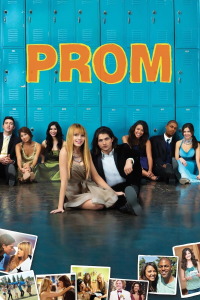
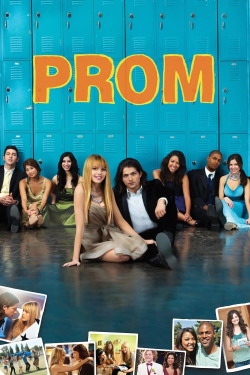
If only the real world was like a film. While the prom in "Prom" is worlds apart from the ideologically resolute formals that persevere in red state pockets like an unfortunate time warp, this family-friendly production smuggles in some incidental, but appropriating referential social commentary with a little "Mississippi Burning" of its own, when the fire that destroys the tool shed containing the school's prom decorations, just so happens to have been set(accidentally) by black(!) sweethearts, who forget to extinguish that last candle from a romantic dinner before leaving the premises.
The culprits, Tyler & Jordan, are so suburban, so integrated with the predominantly white student body(like Stacey Dash in Amy Heckerling's "Clueless" & Jason O. Smith in Richard Linklater's "Dazed & Confused"), their skin color is basically a non-issue.
(Likewise, Mei, the Chinese girl played by Yin Chang, probably doesn't speak a word of Mandarin.) Had there been a police investigation though, the otherness of the ebony-hued students would suddenly be foregrounded, but "Prom" just leaves the plot thread concerning the cause of the fire hanging, because had Tyler and Jordan been tied to the potential crime scene, the inevitable police interview would allow too much reality to seep into the filmmaker's utopian vision of a multi-ethnic high school.
Had this occurred in Montgomery, there'd be the presumption of arson, and the innocent couple's counterparts would be charged with malicious intent. "Prom" never goes there, due in part that there is no "there" to go to.
The diegesis is ideologically pure. Racism can't exist without the recorded history of Jim Crow. Everybody is colorblind at this school. Jim Crow never happened. When Tyler starts dating Simone, both Lucas, the girl's thunderstruck lab partner, and Jordan, the suddenly single alpha female, seem oblivious to the fact that they're on the outside looking in at an interracial couple.
(Jordan comments about Simone's relative youth(she's a sophomore), not her skin color.) Alas, in the real world, people notice difference. It's human nature. In the John Hughes-produced "Pretty in Pink", Andie(Molly Ringwald) and Blaine(Andrew McCarthy) are the same color, and still they're talked about derisively, because they belong to different social classes.
Talking about segregated proms, the film could use Long Duk Dong(Gedde Watanabe) from "Sixteen Candles" to add a little more racial diversity into the mix. (Look quick and you'll miss him: the token black.
) "Prom" needs some racial diversity, too. When Tyler and Jordan are named to the royal court, the queen declines the opportunity to dance with the king, which in another film, would be a bigger point of emphasis.
Tyler and Jordan, however, are not token blacks, because they're hardly black at all. It's like watching a roomful of beige people.
This review of Prom (2011) was written by Shiira on 18 May 2011.
Prom has generally received mixed reviews.
Was this review helpful?