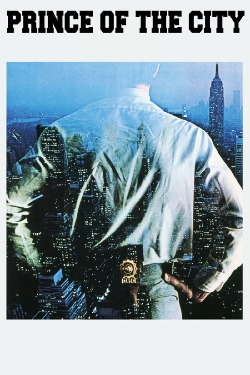
Review of Prince of the City (1981) by Jay M — 07 Feb 2009
"The law doesn't know the streets." But that doesn't mean that blurring the lines of the law is necessarily a good thing. Many law officials criticized this film during its release, perceiving it as glorifying its corrupt cops and vilifying the prosecutors who toiled to convict them. That is not what the film does. There are no black and white hats here. The story divides its characters into two sides, yes, but they are all struggling throughout to assert a concrete ideology within the oceanic gray area that is the law, and the good and evil it represents.
The axis of the film is that Danny Ciello will not inform on his partners. Outside of his wife and kids, who know them like uncles, they are the only people who care about him. He will make the deal to talk about the involvement of narcotics in the corrupt activities of other cops, but not his dear and implicitly loyal friends. As we watch this movie, it is about narcs and New York City crime, but Sidney Lumet wants the underpinnings to be just as visible, how in a corrupt world, one cannot go straight without burning cherished bridges.
Lumet gets to the heart of the war on drugs. And we see how it is, was, and will continue to be an utter failure. Addicts depend on the drug. Police depend on the continuation of the trade to uphold their status, and if not their status, their basic living condition. They know that if addicts are going to cooperate with them, they need their drugs. They know that if the courts are going to cooperate with them, drugs must be confiscated and accounted for. They know why they became cops, but they also know more than anyone else on their theoretical side of the law how miserable life is for a junkie. This is a lonely, dangerous and thankless dichotomy of a 24-7 job that's never finished, and if they want to skim a little drug money, that's their way of making it feel more worthwhile.
Because Danny Ciello, based on New York cop Bob Leuci, who cooperated in a 1971 internal affairs investigation, is such a demanding and grueling role, almost always on screen in stressful, tiresome and emotional situations, I spent a good deal of the movie having trouble with the casting of Treat Williams. He was a no-name at the time, and that is what Lumet wanted, but there is something incongruously theatrical about Williams that is inconsistent with the rest of the actors. But he does convince us in the latter half of the film that he is falling to bits on account of his job, his testimony and the inextricable fate of the two that he will eventually have no choice but to rat on his friends.
Prince of the City is a crime film, about cops, drug dealing, set in New York, and Lumet captures the gritty NYC streets of the 1970s that he encapsulated in Serpico and Dog Day Afternoon as if the era had never left. But it's not a violent film at all. There are many characters, hardly any of whom we really get to know beyond their legal and moral standpoints in the story. There is a later scene wherein a meeting of prosecutors debate whether or not a charge of perjury is justified. Its ethical issues are passionate and effective to us, but the verdict is a coin toss in the political climate. The movie answers none of the gray questions posed. It only threatens with possible scenarios.
This review of Prince of the City (1981) was written by Jay M on 07 Feb 2009.
Prince of the City has generally received very positive reviews.
Was this review helpful?