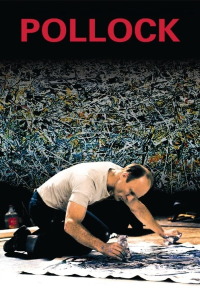
Review of Pollock (2000) by Ashley T — 29 Sep 2006
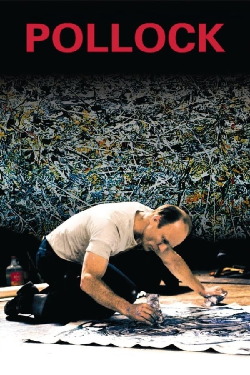
Okay, part of my problem is obviously due to the fact that I just don't like Jackson Pollock's art very much. I'm not much of a fan of modern art in general; I'm a realist. I like my art to look like stuff. (As an example, once, my sister and I went to a Picasso ceramics exhibit that was making its one North American stop in Tacoma, where we were both living at the time. We'd been there maybe fifteen minutes when we kind of looked at each other and said, "Why are we here? Neither of us likes Picasso much!").
But the fact is, the Jackson Pollock presented here, whether you like his art or not, is a desperately unsavory little man. He's emotionally abusive to, well, everyone who comes in contact with him. By all accounts, he stifled his wife's art. He cheated on her. He was an alcoholic.
And let's look at that last, shall we? When you spend as much time in the art world--be it visual, literary, or musical--as I have, you are submerged in the thought that Great Artists drink or use drugs, and that Great Art is somehow dependent on it, that if you happen to abstain, you're not tapping into a source of inspiration.
This may be true, though I do have to keep pointing out that there's a lot of [i]bad[/i] inspiration to be had in drugs. But the one whose work I admire most who's talked to me on the subject says that you at least have to go over the stuff again sober, just to make sure it's as good as you thought it was when you were stoned.
What's more, let's look at those tortured, drug-abused artists more closely. In this film (and I don't know if it's true and am not qualified to judge anyway), Lee claims that Jackson's work was better when he wasn't drinking. Certainly their relationship was better, though by all accounts still not good. And he killed himself. Maybe not on purpose, but driving drunk is killing yourself--and he took someone with him. (The woman may have shared my name, but I wouldn't have shared her fate. I don't care who you are; I don't ride in a car with you if you're drunk even if you're [i]not[/i] driving. I learned that much from dealing with my Uncle Paul.).
Hemingway shot himself--with the same gun his father had used for the same purpose. Granted, there was mental illness there, but the great lesson Hemingway teaches us is "don't self-medicate for depression with alcohol." Kurt Cobain teaches us "don't self-medicate for depression with heroin." Janis Joplin. Jim Morrison. Jimi Hendrix. Vincent Van Gogh (with an added dose of mental illness there, of course). Toulouse-Latrec. Edgar Allan Poe. John Barrymore. Billie Holiday. Jack Kerouac. John Belushi. Lenny Bruce. The list goes on.
Stephen King, who knows a thing or two about addiction, disagrees with the Hemingway Alcoholism Syndrome, the concept that Great Artists are Tortured and need to drink to deal with it. He says it's bogus. You would think all these deaths and all these shattered lives would help dispel the glorification around boozed-out artists, but I quite imagine people will manage to come away from [i]Pollock[/i] not seeing that perhaps the booze was bad for the art, the artist, and those around him.
This review of Pollock (2000) was written by Ashley T on 29 Sep 2006.
Pollock has generally received positive reviews.
Was this review helpful?