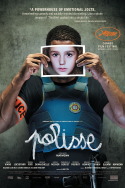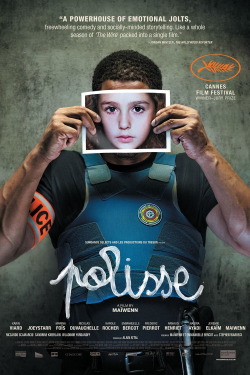
Review of Polisse (2011) by Steve P — 11 Jul 2012
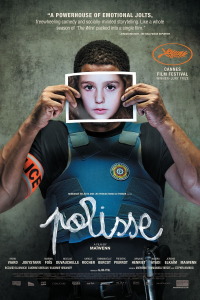
The clearest comparison is with the TV shows The Wire (HBO) and Spiral (Canal+). The film creates a broad picture of a city, Paris and a specific picture of a particular police department and it's struggle with the legal system. Inevitably there is also a secondary focus on the way that dealing with child abuse affects officers' stress levels in their private lifes. Unlike the TV shows though, the director, writer and joint lead Maïwenn gives the story a singular, transparent social message, namely that we can live in a chaotic, flawed, disjointed modern environment yet still prioritise those values and feelings that allow us to be good parents. She is the audience's quiet anchor as someone with connections to various different worlds and as a photo-journalist she is observing and gradually becoming more involved, just as we are hopefully. Unfortunately her style of acting stands out slightly compared to the method actors she has chosen in the other roles, but this is not entirely a problem as she does a very different job to the officers.
There is an excellent use of montage and song to begin, reminiscent of David Simon's TV shows. We are then thrown head first into the angular, antagonistic conversation and humour of the Parisian Child Protection Unit officers. The pace rarely relents and subtitles struggle to keep pace with the torrent of arguments at times. There are a couple of scenes which don't ring true, a moment of musical light-relief in a discothèque which seems to be inserted to give the audience a breather and part of the final scene which seems like something from a greek tragedy rather than a realist drama. There are similarly two scenes which seem to ring particularly emotionally true, where Maïwenn introduces her new boyfriend to her warm immigrant algerian family, an emotional heart which the film can retreat to for a time to contrast with the broken and cruel families which other children endure, and also a scene where the detective Fred, played by a particularly excellent rapper turned actor called Didier Morville, bonds with an abandoned Nigerian boy, comforting him in his time of crisis, demonstrating good parenting instincts and empathy. Although Morville may stand out, no cast member makes any less effort to seem stressed, swinging between acerbic and reticent as they negociate the minefield of a personal life burdened by an intimate knowledge of society's sickness.
The focus on children gives the director a clear route to examine the crucial issues affecting the welfare of all of the main demographic groups within Paris, but she does so without ever exploiting the audience's sympathy for children or sentimentalising anything - she even mocks the delusions and pretense of some teenagers. Miraculously she draws more laughs from a film about the penetration of paedophiles and abusers throughout the class system, than many comedies manage from less difficult subjects. The only factor that reminds us that this is not quite real is the insertion of slightly forced political or philosophical arguments, as is the French tradition, into conversations between particular officers and the time constraints placed on the progress of investigations - she seems to be aware of this problem by attempting to punctuate discussions with tantrums and humour. The overall behaviour of the officers does seem fairly authentic and I was not surprised to find that she had plundered the real CPU in Paris for anecdotes to use in her script, whilst shadowing them herself in a similar way to her character in the film. There seems to be a spontaneity or even incompetence to some officers' decision making which seems real. Maïwenn even creates some poetic imagery in certain scenes reminiscent of modern photo artists like Sam Taylor-Wood, as if to show her ex, Luc Besson, that realism can in fact be combined with breathtaking images occasionally.
So it's a film with dark undertones and no neat endings, yet it leaves you with hope and the idea that individuals can in fact make a difference when it comes to parenting, perhaps the last piece of real control over our quality of life that we still have and the first task that we should take responsibility for before we try to change anything else in our society. And everyone has some role to play. An inclusive, open, hopeful, smart, down-to-earth French film. How often do you hear that?
This review of Polisse (2011) was written by Steve P on 11 Jul 2012.
Polisse has generally received positive reviews.
Was this review helpful?