Review of Philadelphia (1993) by Spangle — 19 Nov 2016
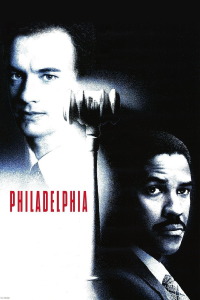
After catching flack for his portrayal of transsexuals in The Silence of the Lambs (still my favorite film), director Jonathan Demme returned two years later with Philadelphia. An urgent and deeply important film about raising awareness to individuals suffering from AIDS and pulling back the stigma surrounding the illness, Philadelphia is an often powerful film for this very reason. Yet, make no mistake, this film is hardly a full-throated endorsement of gay rights by Demme. Rather, it is a step. It is a step towards acceptance of the lifestyle, as the film essentially argues that it is not unnatural to be gay, nor is it something to be looked down upon. Homosexuals are people like anybody else and deserve to be treated as such, even if you do not approve of their lifestyle. As of 2016, we have obviously come much further with gay rights, but for 1993, Philadelphia was practically a revelation. In spite of its previous timeliness, however, Philadelphia is a largely predictable and typical courtroom drama that rides on great acting to really accomplish anything whatsoever.
As with all courtroom dramas, Philadelphia's conclusion is clear from the beginning. If you do not know that Andrew Beckett (Tom Hanks) will win the case, then you have never seen a courtroom film before. As such, reaching the conclusion is inherently tedious when rarely (if ever?) has a courtroom film ended up by reversing the cliche. The protagonists win and the antagonists lose. End story. Thus, while the film spends a lot of time in the courtroom, this only hurts the end product. The drama is outside of the court, not inside of it and, often, Demme loses sight of this in the film. After a certain point, he just settles into showing us testimony and the prejudiced beliefs of those around him in the office and that was why he was fired. While it was a wrongful termination, the film scores no dramatic points for this.
Also hindering the film is the opening. Slow and meandering, the film really never hits its emotional stride until after Andrew meets with Joe Miller (Denzel Washington). In the opening, Hanks' acting is spotty at best and the film is largely just an introduction to his illness and his life as a whole. While these moments are effectively told, they are simply never that intriguing, as it is merely the foundation of the case which, again, is never that interesting.
However, once that meeting between Andrew and Joe does happen, Philadelphia hits its stride quite solidly. Here, we find Andrew - a gay man suffering from AIDS - opening up the worldview of his lawyer, Joe Miller. Deeply anti-gay and bigoted, Joe has a violent hatred for homosexuals and finds their lifestyle deeply disgusting. Once he meets Andrew, however, his world begins to change and he sees gays completely differently. In many ways, Joe is intended to mirror the audience in 1993 who, entering the film with extreme prejudice, wind up leaving with an understanding and compassion for gays worldwide. While they may not fully accept them yet, there is no longer that hatred, which is an important hurdle to cross. To be clear, Joe does not like gays or understand them by the end of the film, but he is more accepting of their lifestyle and no longer carries the weight of hatred he once held.
Denzel Washington brings Joe to life brilliantly, from the man filled with vile hatred to the man who learns compassion from his encounters with Andrew. Meanwhile, Hanks brilliant as Andrew Beckett. Though initially spotty, once the disease begins ravishing Andrew, Hanks really begins to shine. He compassionately brings to light the suffering experienced by AIDS patients and does a terrific job capturing this pain and torment. This is where Demme's film is so truly important, as it humanizes the suffering and does not make it appear other. It shows the suffering of AIDS patients to be no different than anybody else's suffering. They may be gay, but that is okay and it is not a reason for them to suffer, which was previously a belief held by many. The film does not spare us the gory details of the toll AIDS has on the body and, for this, it makes it far more intimate and hits close to home for everybody in the audience.
Philadelphia is a slight and cliche film about an important topic, which is really unfortunate. Though Denzel Washington and Tom Hanks are terrific in the film, Philadelphia never diverts from courtroom drama cliches enough to really breathe life into the film. Yet, what does breathe some life into the film is Demme's sensitive handling of a very timely and vitally crucial issue: the AIDS epidemic. Bringing to light the suffering of those with AIDS, Philadelphia manages to play an important role in raising awareness to the issue of gay rights in America.
This review of Philadelphia (1993) was written by Spangle on 19 Nov 2016.
Philadelphia has generally received very positive reviews.
Was this review helpful?