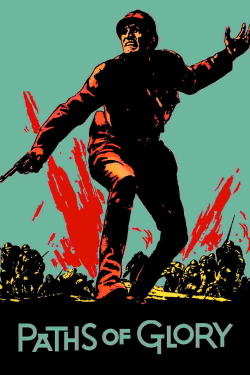
Review of Paths of Glory (1957) by Ricardo O — 14 Mar 2011
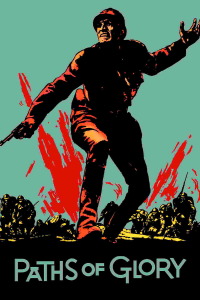
Following his fantastic race-track heist thriller The Killing, Stanley Kubrick, his co-producer James B. Harris (who also co-produced The Killing and Lolita), and his screenwriting collaborators Calder Willingham and Jim Thompson set out to make an unflinching anti-war statement that would make an impact on the film world, and that they did. It garnered glowing reviews from critics but was stale at the box office; nevertheless it made its director a talent to look forward to. Based on the novel by Humphrey Cobb, the film was initially denied by the studio but was eventually made thanks to Kirk Douglas who had read the script and found it to be terrific. He naturally took it over by funding the production and casting himself in the lead role of Colonel Dax. It is the third year of The Great War, General Broulard (Adolphe Menjou), a knowledgeable but morally corrupt officer, gives orders to seize the heavily fortified "Ant Hill" from the Germans. General Mireau (George MacReady) knows that taking this action will only result in many men getting killed, but he is willing to sacrifice his men to better enhance his reputation. Mireau orders Dax to to lead the charge in taking over the Ant Hill. Dax reluctantly obliges and the following day leads his men to sure defeat. Having been witness to so many of their fellow comrades, a group of French troops refuse to leave the trenches to be killed in "no man's land." Seeing the cowardice that Dax's men have shown, Mireau orders the artillery to fire on his own men. The artillery refuse to do so and eventually the men pull back to the trenches without even coming close to reaching the German wire. Having lost that battle, Mireau cannot admit to himself being responsible of the loss nor the fact that the whole idea was bad from the get go: he convinces himself, as well as the other officers, that the loss of Ant Hill was due to the cowardice of his men. Mireau demands that three soldiers be made an example of by execution. Colonel Dax then acts as defense attorney for the men facing a court-martial, but their fate has already been sealed even with an "eleventh-hour" piece of evidence proving that Mireau had ordered the artillery to fire upon his own men doesn't stop the execution.
Paths Of Glory is one of the most remarkable anti-war pictures ever made and is widely regarded as on of the films most think of when they mention war films. It's a film that still retains the power that was felt when originally released and has only gained more power through the years, particularly during the Vietnam War. It's a superb indictment on the military elite who remain out of touch with the men who take their orders even when they know they are surely going to be killed. Stanley Kubrick's documentary-style of filmmaking at this point in his early career goes perfectly with the film's horrifying look at the absurdity of war and those that give the orders. The battle of Ant Hill is one of the most realistic battle scenes committed to film that ranks along other pictures such as All Quiet On the Western Front and Saving Private Ryan as one of the most powerful ever filmed. These battle scenes along with the eventual courtroom proceedings with Kirk Douglas giving a fiery performance, as well as the performances of his co-stars terrific. The cinematography is gorgeously lit and shot by Georg Krause. Although his earlier film, The Killing, has a few of the signature elements that are a part of Stanley Kubrick's more famous later works, it is Paths Of Glory that really set his signature visual style up. The tracking shots that Kubrick has become so well-known for are established throughout this picture, whether it's a continuous shot of men going through a hallway, or Douglas' lead through the battle, or the iconic images of Kirk Douglas walking through the trenches right before he leads the men to certain death. Even his signature of using classical style music is set up in this picture, although the music itself was composed by a film composer and not an already existing piece. But most of all, Paths Of Glory is as much an intellectual feast as it is a visual feast thanks to a well-written screenplay. It is a masterpiece of the war movie genre that is also one of the easiest to watch as it has such a great pace that the 1 hr. 26 min. timeframe seem to go by without much notice once the viewer is right in the middle of the action. Also be on the look out for future Mrs. Kubrick, Susanne Christian, at the end of the film in the sentimental, melodramatic role of a German girl singing in a bar for the war-beaten soldiers looking for a small distraction before going back out to battle.
This is a must-see film for all movie fans. It should not be missed. 10/10.
This review of Paths of Glory (1957) was written by Ricardo O on 14 Mar 2011.
Paths of Glory has generally received very positive reviews.
Was this review helpful?