Review of Paths of Glory (1957) by Brett C — 18 Dec 2014
Review In A Nutshell:
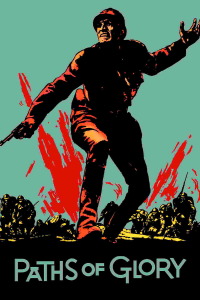
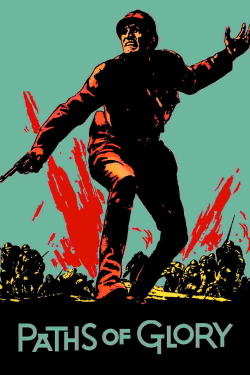
Powerful drama comes from those that expose the fragility and sadness of the human condition. Stanley Kubrick's Paths of Glory shows humanity at its worst and at its best, and through this conflicting perspective comes tension that shakes every nerve that runs through one's spine.
Paths of Glory is arguably Kubrick's most dramatic film, resorting to stories and characters that are familiar and unambiguous. The acts as a terrifying portrait of humanity, of how selfless and evil one becomes the higher they stand within the rankings; the film may explore this through a military perspective, but it is the same in any situation, when individuals who are viewing their employees from such a height, cannot possibly show empathy or sympathy for their fear and desires; they simply are seen as dispensable machines in order to take credit for their brilliant leadership. It is only when one stands along with these humans at the lowest point of the earth, fighting and working with them, do we understand what it means to be loyal and the true value of human life. It is Colonel Dax who takes charge and represent these men, fighting for what is deserving and protect them from the tyranny of those above him; but sadly one can only do so much without jeopardising one's own life, making Dax come off as a real human being rather than a symbol.
The film's first half plays out more like a traditional war film, but going through it feels more thoughtful due to the early establishment of the film's message and themes, making the audience constantly contemplate about the situation and the characters themselves. Paths of Glory features one of the most glorious action sequences, a wave of soldiers pushing through no-man's land and captured so with long takes and a large scope of field. A much more intimate moment is captured that produces a similar outstanding effect, and that was during Dax's long walk through the trenches before the upcoming charge, a final look at his fine men before they become slaughtered or destroyed by the enemy's gunfire and explosives. Never at a point does the film give us a glimpse of the Germans, as a reference to their antagonistic position, as Kubrick wants to constantly remind us of the true enemy that sent these soldiers to their death, their superior officers.
The second half of the film shifts into a courtroom drama that demonstrates the element of corruption that runs through the military system and the veins of its leading officers. A sense of justice cannot be gained and it is all the more frightening because Kubrick never gives us an indication that it could be changed; it seems corruption and greed will always be present when one reaches higher and further away from the labouring soldiers. It was during this side of the film, where we see murder at its worst, led by the hands of those that they once considered were brothers or fathers. The image of the execution was soul-crushing, aching me in areas where the bullets have penetrated them; there was simply nothing we could do but stand there and watch.
Gerald Fried returns again to collaborate with Kubrick in creating a musical score that is both ironic and sorrowful. We constantly hear throughout the sounds of the beating drum, a supposed symbol of patriotism and justice, but instead what is felt is a feeling of sorrow and grief, like watching a funeral, seeing the casket slowly descend to the bottom of the hole. Fried's music allowed Georg Krause's photography to seem direr, feeling the darkness behind the dominating grey. Has there been anything this painfully beautiful.
I have not seen many of Kirk Douglas films, especially the notable ones like "Ace in the Hole" and "The Bad and The Beautiful", but I don't need to see them to know that Paths of Glory is the actor's strongest film. The performance he brings is deep and affecting, displaying a man who is at his most desperate to find justice, attempting to shine a light on their hypocrisy, in such a corrupt and greedy system. It is deeply moving from start to finish.
Paths of Glory leaves a large mark to those who watch it, forever feeling the anguish of the unjustified deceased and of those who have witnessed it. This film marks as the true starting point of Kubrick's masterful craftsmanship.
This review of Paths of Glory (1957) was written by Brett C on 18 Dec 2014.
Paths of Glory has generally received very positive reviews.
Was this review helpful?