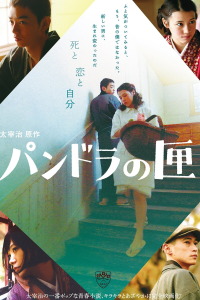
Review of Pandora's Box (2009) by Rachel W — 22 May 2008
"Pandora" is a good moniker for Louise Brooks. Her presence is pervasive, dominating, powerful, uncontrollable, yet it also looks completely natural. She's both authentic and superhuman. There have been many luminous stars in cinema, but she's something different.
She doesn't shimmer off the screen so much as leap right through it, shredding the artifice in the process so that even a story as inclined to soap opera as this one can be funny, dramatic, believable, theatrical, or otherworldly precisely when it needs to be.
Of course, too much talk of Louise Brooks can unwisely discount what Pabst and his crew were responsible for. As beautiful as Lulu is on her own, Günther Krampf's cinematography is absolutely essential to her image here.
And it's cut together perfectly -- the scene backstage at the Vaudeville revue is an extraordinarily paced collage symphony of gags, glances, emotional, psychological and sexual tension in broad strokes and nuance, ending with what is perhaps the most simultaneously dastardly and triumphant moment in the entire film.
The story doesn't seem distinctly special on the surface (as I said, it's inclined to soap opera) but just as Alban Berg did in his opera Lulu (based on the same two plays) Pabst cracks through the dusty surface to reveal a gem of juicy psychological drama with etchings of mythical Greek tragedy.
And almost above all, it's wildly sensual. Sex practically throbs off the screen in every shot until the very end, when it is finally punished and abandoned. Its death seems almost disingenuous: Lulu's sexuality was a kind of kinetic energy, and science tells us energy can't be destroyed.
That's one reason people keep coming back to her.
This review of Pandora's Box (2009) was written by Rachel W on 22 May 2008.
Pandora's Box has generally received very positive reviews.
Was this review helpful?