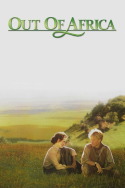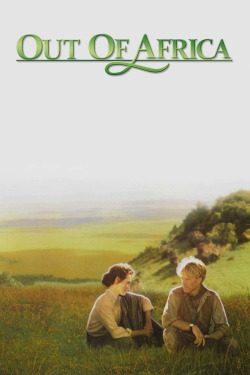
Review of Out of Africa (1985) by India M — 11 Aug 2012
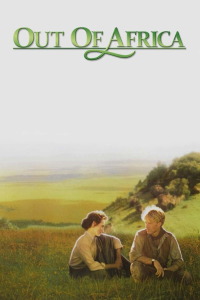
Well, it would appear as though Toto has realized that the plains in Africa aren't all that great after all, and must now get to... Dune, for some reason. Speaking of overlong epics, as good as Toto's score for "Dune" was, why in the world did they choose to get Toto do the score for "Dune", outside of the possibility that Toto wanted to practice their scoring abilities for their own film a year after "Dune" came out? Oh wait, this film isn't about David Paich changing his mind about going to Africa, like he said he would do in the song "Africa" (Even I have to breathe a sigh of relief over clarifying just what in the world I was talking about with all of my going on about Toto and Africa and whatnot), this is about Robert Redford and Meryl Streep hanging out... for well over two-and-a-half hours. I like this film and all, but from the sounds of it, there's no getting out of Africa, though I suppose that's what to be expected when dealing with someone like Sydney Pollack, who couldn't even keep a two-hour drama about some girl from a local newspaper falling in love with the guy she's supposed to be investigating from getting kind of dull. Yeah, I know that the plot to "Absence of Malice" doesn't sound especially exciting, but it starred Paul Newman, and Paul Newman makes everything exciting... except maybe a George Roy Hill film. Come to think of it, this film does seem like Pollack trying to make up for not getting the Sundance Kid while he had Butch Cassidy, though as irony would have it, Pollack couldn't get Butch Cassidy back while he had the Sundance Kid, most likely because Newman and Redford had already done "Butch and Sundance" and "The Sting" together, and didn't want to be labeled a duo. Yeah, well, that didn't stop people from forever remembering Newman and Redford as Butch and Sundance, because you don't forget chemistry like that, especially when it makes dull films more exciting, as this film further proves, seeing as how Redford's and Streep's chemistry carries this film quite a ways, and with the help of plenty of other strengths, though sadly not to where you forget what the strengths are trying to compensate for.
It's not like this film doesn't warrant something of a hefty length, as its subject matter and concepts are, to one degree or another, reasonably broad in scope, yet at 161 minutes, the film outstays its welcome, going padded out by overdrawn material, and even a couple of pieces of filler. Now, to my surprise, the film's padding doesn't entirely feel all that much like all-out bloating, yet the fact of the matter is that the film does drag along on more than a few occasions, limping from one point to another, if not going stopped on the spot by material that is simply cuttable, and it doesn't help that the film is slow to begin with. Okay, now, earlier, I joked that this film is kind of dull, and lord knows that everyone, except maybe grandmothers, has said time and again that this film gets to be a bit dull, but really, the film isn't all that boring, yet it is slow, and sometimes considerably more than it should be. The film dries up and loses momentum all too often, and while it never descends as low as boring, it loses steam something fierce on far too many occasions, which weakens the film's overall bite little by little, until, after a while, consequence goes in and out, and that is a big no-no with a film of this type. Now, we're not dealing with a three-hour military invasion epic, so it's not like consequence is immediate, or even all that immensely pressing, yet it is there, and occasionally lost in the midst of all of this padding and slowness. Your attention is certainly bound to go lost in the midst of the film's dragging, because although the film isn't entirely padded to the point of being excessively bloated, not entirely slow to the point of being terribly dull, the subtle missteps by this film go a long way, often tainting the film's substance, expelling your engagement and altogether drying up the film, almost to the point of driving the film beneath genuinely good. However, the film stands its ground, taking much damages from the padding and slowness that all but renders it underwhelming, yet coming out the other end, certainly not as good as it should be, but good enough to keep you going, or at least your aesthetic side.
David Watkin's cinematography owes much of its impressiveness being strong for its time, as it has not aged especially well, yet it has still aged well nonetheless, being reasonably and attractively detailed, with occasions where it finds the right time and place for lighting and leaves the film to all but take your breath away. This fine photography is certainly complimentary to other aspects of the film's art direction, as the production designs have a kind of marriage of authenticity and artistry that may not be especially spectacular or eye-catching (Don't go in expecting anything close to a "Titanic" level of authenticity-artistry-marriage attractiveness), yet still catches your eye, to a certain degree, while what catches your attention the most, to a certain extent, might very well have to be the work of the late, great John Barry. Like many other aspects of the film, Barry's score is perhaps more impressive as a standout of its time, yet remains among the aspects that date the most comfortably, still retaining much unique grace that's often tenderly subtle in its poignancy, sometimes engrossing in its broader moments, occasionally grand in its moving and sweeping moments and consistently lively in a fashion that often sustains enough of your attention when it is played, while what sustains enough your investment are the man who stands behind the substance, and I certainly don't mean Sydney Pollack. Kurt Luedtke's screenplay is flawed, yet hits more than misses, holding quite a bit of good dialogue, as well as a structrue that is decidedly imperfect, yet reasonably strong, for although Sydney Pollack's direction often betrays the quality of Luedtke's writing, you can still sense enough of Luedtke's touch for this fine story to spring to life just enough to hold your investment, with the people who lock in that investment and keep the film from making its descent beneath genuinely good being the people who stand in front of the camera, or at least three certain people. With all of the accolades and whatnot, Klaus Maria Brandauer has hardly anything to do, outside of portray brothers believably, which he does, portraying the individual distinctiveness of Bror and Hans Blixen so sharply that it doesn't take long before you forget that these brothers are played by the same person, while Robert Redford, even his having top billing, isn't used very often, and has nearly nothing to do when he is used, yet he engaged all the same through charisma, as well as his capturing Denys Finch Hatton's layers. As for leading lady Meryl Streep, well, it should pretty much go without saying that she stands out the most, nailing a Danish accent and emitting strong charisma, as well as even a degree of emotional range in her portrayal of Karen Blixen's facing gain, loss, humility, tragedy and many other things that, well, aren't really played up by Pollack's borderline bland direction, yet remain palpable enough, thanks to Streep's strong performance. Like the flaws, the strengths are in limited supply, yet also like the flaws, what strengths there are go a long way, and with there being just a few more strengths than flaws, the film comes out reasonably rewarding, for although the film really does deserve to be better, at the end of the day, you're likely to walk away having enjoyed yourself considerably.
In the end, the film isn't necessarily all that bloated or dull, yet its padding and slowness is considerably problematic all that same, slowing down the film's momentum, diluting the film's substance and focus and altogether weakening the film's bite, until the final product comes out as often disengaging and almost underwhelming, yet it never makes that plunge, catching your eyes with fine cinematography and art direction, your ears with John Barry's poignant score and, finally, your investment with Kurt Luedtke's flawed yet generally sharp writing, as well as with quite a few compelling performances, the most compelling of which being by Meryl Streep, who helps greatly in leaving "Out of Africa" to stand as an enjoyable and occasionally moving drama, even with its many shortcomings.
3/5 - Good.
This review of Out of Africa (1985) was written by India M on 11 Aug 2012.
Out of Africa has generally received positive reviews.
Was this review helpful?