Review of Out of Africa (1985) by I Don't Know W — 28 Jul 2011
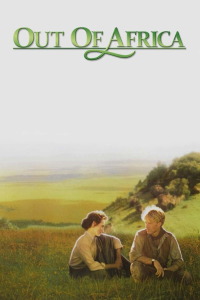
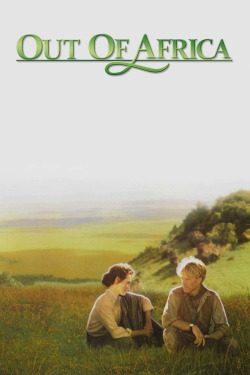
Out of Africa (1985) is based on a book by the same name in which Dane Karen Blixen (Meryl Streep) offers a detailed account of her life in Kenya from 1914 to 1931. Karen?s vulnerability, strength, and kindness are revealed in the film as well as her lean toward radical feminism in a time and place in which it is least expected.
Major conflicts are presented early in the film. Karen is publicly rejected by her lover and is consoled by his brother, Bror Blixen (Klaus Maria Brandauer). Karen is heartbroken by the rejection but faces a greater dilemma. She is not permitted to pursue advanced education and losing her lover also means losing her prospect for marriage, which seems to be her only real chance for upward social mobility: Bror?s brother is a Baron and marrying him would have made her a Baroness, a title that would significantly improve her social position. Desperate to marry and to gain the title, she proposes to Bror who is also a Baron, using their friendship and her inheritance as bargaining chips. Bror?s acceptance of the proposal reveals his greed and selfishness, his disloyalty to his brother, and the antagonistic role he will play throughout the film. In this initial scene, two major feminist concerns are presented: women?s access to advance education and women?s dependence on marriage to improve their social status. This scene also shows a woman in a non-traditional role, proposing marriage as a sound business deal? as a convenience.
The scenes that follow show Karen in more non-traditional roles. She travels to Kenya alone. Bror leaves before her to make wedding and living arrangements. Once in Nairobi, she finds her way to Bror?s hotel where she is immediately turned out of a sitting room because she is a woman. After some commotion, Bror appears and informs Karen that she has an hour to prepare for her wedding. The official who marries them does not know her name. In this short scene, more feminist concerns manifest themselves: the exclusion of women from social interaction with men, women?s limited control over the planning and preparation of important life events, and the tendency for women to lose identity, particularly in marriage but in other areas as well.
Conflict develops immediately in the marriage. On their wedding night, Karen asks Bror about purchases made to start the dairy. He informs her that they will not start a dairy as they had agreed. They will grow coffee instead. Karen is angry but powerless: the plans have already been made, the preparation already in progress, and the money already spent; and Bror reminds her that he may do as he pleases. This scene shows how easily women?s ideas, concerns, and desires may be ignored within marriage. Karen is alarmed but resolves to make the best of it.
The next morning, Karen discovers more problems. She is alone. The farm manager, laborers, and servants are there, but Bror has left and is not expected to return for several days. Karen knows nothing about operating a plantation and is informed that coffee has never been grown on the land and that it could be several years before it yields a crop, if at all. She decides to plant five hundred acres of coffee instead of one thousand as the farm manager suggests, asserting her intention to lead. When she realizes that Bror plans to contribute nothing to the development of the plantation, she throws herself into the work and participates in every aspect of the plantation?s operation, revealing incredible mental and physical strength and showing that women are capable of fully participating and excelling in non-traditional roles.
This film has been criticized for being lengthy, but the film?s length may be a dramatization of another feminist idea: that women are slow to radicalize. Many feminists believe that it is difficult for young women to understand and appreciate feminism because many of them have limited experience with life in general and that it is only after experiencing or witnessing what the world has to offer women that they begin to think and act differently. In the film, Karen never claims a feminist identity, but her choices reflect a radical feminist attitude. Her premarital affair with Bror?s brother, her proposal to Bror, her bold entry into the men-only parlor, her operation of the plantation, and later her intimate relationship with Denys Finch Hatton (Robert Redford) and her lobbying for the indigenous people who had lived on her land reveal her vulnerability, strength, and kindness, and her willingness to defy authority. Perhaps this film is slow to develop in much the same way as some women are slow to radicalize. Maybe to hurry-it-up and force it into the kind fast-paced film we?ve become accustomed to would negate a more subtle feminist message about voice: allowing women to tell their stories in their own way and at their own pace.
Out of Africa celebrates the life of an extraordinary woman and reminds us of issues that continue to affect women?s well-being. It transcends feminist theory, encourages empathy and compassion, and is worth the two hours and forty-one minutes devoted to it. I recommend watching it twice.
This review of Out of Africa (1985) was written by I Don't Know W on 28 Jul 2011.
Out of Africa has generally received positive reviews.
Was this review helpful?