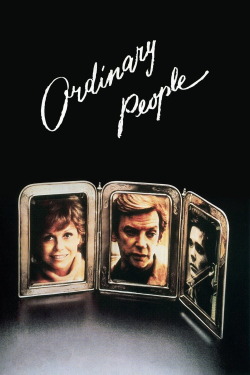
Review of Ordinary People (1980) by Andrey B — 11 Aug 2016
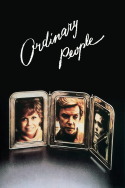
In a film that has all the makings of the standard coming-of-age drama, Ordinary People tackles sensitive subject matter with poise and a rewarding sentiment.
Mainly following the life of Conrad Jarrett (a powerTimothy Hutton), we watch a a regular, suburban family adjust to normal life after the death of one of their children. We are introduced to a seemingly normal, functioning family with Conrad at its focal point, from the audience's view at least. He engages in normal teenage activities: he rides to school in the backseat of his rowdy friends car, attends swim practice, and goes home to eat dinner with his pristine mother (Mary Tyler Moore) and his soft-spoken father (Donald Sutherland). All seems right on the surface but the film's uneasy tone never wavers as the frailties of the family slowly begins to unfold.
The film moves at a somewhat leisurely pace but it is never tiresome. In fact is effortless and allows each character to reveal their intricacies without bombarding the viewer.
The film deals with tragedy and suicide with care, and does not dwell on melodramatic expose. Each character's insecurity is hinted at but it is never too explicit where the audience need not discover it for themselves. Redford allows the viewer to empathize with each character by their own notion and presents the events in a way that shows without telling.
Much of these emotions and complexities are drawn out by a family psychologist Dr. Berger (Judd Hirsch) who operates with a calmness and assurance that couples well with Hutton's performance. Hirsch does a marvelous job here as the seasoned doctor who meets with Conrad and evokes his true emotions about his brother's death not by textbook questions but by establishment of trust and transparency. Hirsch and Hutton work well here and the dialogue is natural and effortless, reminds me of a young Matt Damon and Robin Williams conversing in a similar setting in Good Will Hunting.
Another couple that work well together with matching acting prowess is Tyler Moore and Sutherland. Playing the dichotomous couple who battle between acceptance and catharsis in the face of the tragedy, both actors nail their roles as the conscientious mother who struggles to create an intimacy with her son, and the quiet, agreeable father who attempts to find a common ground between the two polarized members of his family, respectively. Tyler Moore is unforgiving and tragic in her own sense as later scenes in the movie reveal but the film never leans in her favor. Alvin Sargent and Nancy Dowd, who wrote the screenplay, never neglect to give each character their own light and allows each character to operate effectively in separate scenes.
However, the best scenes in the movie I think involve the supporting characters. the most revealing instances are between Conrad and his two female interests. It's here we are able to connect with Conrad and get a real feel for his pain. One scene has Conrad meeting with his friend from the psychiatric hospital Karen (Dinah Manoff) and they share the details of their life after their encounter. We can see Conrad's struggle discern his own condition in comparison to Karen's. We can see for ourselves the insincerity of his upbeat attitude and his attempt at normality. Director Robert Redford helps bring vibrancy to the film and we see a part of the story develop rather than unfold. It's at these moments we understand the struggle Conrad face's with his own emotional turmoil and we can see his only two connections with happiness left; although one character embodies happiness in the past, the other in the future.
At the beginning and end, a version of Pachelbel's Canon rings out; a beautiful, grand composition that works as a synecdoche. To dip into musical terms, Pachelbel utilizes counterpoint, or a feature of music where every section plays their own tune at different times, yet the entirety of the piece sounds in harmony. It's a nice testament to the film, where each roles resonates solo and fortissimo, anchored by the unwavering performances of the cast. Yet the true genius of the film does not just lie in the players, but by the sure-handed direction of Robert Redford in his extraordinary debut.
This review of Ordinary People (1980) was written by Andrey B on 11 Aug 2016.
Ordinary People has generally received very positive reviews.
Was this review helpful?