Review of One Flew Over the Cuckoo's Nest (1975) by Andrew O — 27 Apr 2016
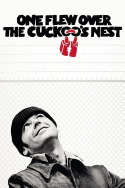
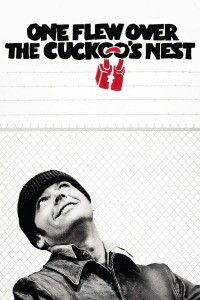
One Flew Over the Cuckoo's Nest is a 1975 American comedy-drama, directed by Milos Forman, and is based on a novel written by Ken Kesey in 1962. It focuses on models of oppression and tyranny being a threat to freedom and the importance of the individual. The film is very conscious of what it is trying to achieve and Forman uses many interesting cinematic techniques to portray the themes, primarily the use of camera angles. It brilliantly portrays the 'other', hidden side of human nature and allows the audience to either emphasise with the struggles of the characters or to gain a better understanding of what patients in mental health facilities face. It's main goal was to reflect on current society's role in systematic oppression of the mentally ill in institutions and society in general.
The story revolves around Randle McMurphy, an anti-authoritarian criminal who had been sent to a prison for statutory rape, but instead gets himself moved to a psychiatric institution for evaluation by pretending to be insane as he believes he can avoid hard labour this way. He meets other patients, ranging from the stuttering Billy Bibbit, to an apparently deaf and mute Native American, 'Chief' Bromden and quickly establishes himself as the leader. He immediately clashes with Nurse Ratched, the inflexible nurse who is unpleasantly emasculating and domineering and runs the ward in a totalitarian manner and uses unpleasant methods to keep control of her domain. McMurphy undermines her power, whilst at the same time, encouraging the patients that they are 'not nuts', to the point where they too recognise Ratched's authoritarian rule and begin to resist. By the end, McMurphy's hijinks cause him to be taken in for a lobotomy - meaning he is effectively dead. Bromden smothers McMurphy with a pillow and carries out the original escape plan, and in doing so, keeps McMurphy's spirit alive.
One reason this movie is so intriguing is because it emphasises the depressing reality of environments such as mental institutions. It is easy for cinema nowadays to have a brave hero that fights the system and emerges victorious, whilst encouraging other people along the way, but it is far harder to witness the way that real people behave in such environments. However, this film is more about the forced conformity of individuals in an oppressive system. This is shown primarily in the contrasting characters of Nurse Ratched and McMurphy. Ratched is the embodiment of an obstacle to personal freedom; she threatens the patients' physical and mental freedom to facilitate authoritativeness. Her use in the film is to define the borders of power, so McMurphy can be the reflection. The institutions categorise patients to be able to treat them, but it quickly becomes clear that the system is used for control and punishment, especially the group meetings. Ratched uses the group meetings to constantly force the patients to confront their problems and pits the men against each other. The regular enforced schedule means that Ratched has complete control over everyone and this means their individuality has been removed. Ratched's stiff, immobile facial expressions are the total opposite of McMurphy, who from the very beginning breathes life into the dreariness of the institute. He honours the sacredness of individuals, such as by talking to Chief even though he is supposedly deaf and mute. Although he is portrayed as morally ambiguous, he is willing to do all to give the confined men a chance at freedom. By encouraging Billy to have his first sexual encounter, he knowingly sacrifices his own freedom and ultimately pays the price for that.
The film is shot in such a way that the faces of the characters, and therefore their emotions, are highly accentuated, this creates a realistic effect for the audience as they can clearly visualise the consequence of the events. It also creates tension in the scenes as the camera focuses on eyes and mouths; this accentuates the humanity of the characters. Forman uses a real mental facility and natural lighting to show to the audience that the characters are not that different from themselves. He continuously juxtaposes this with shots of signifiers of containments, such as bars and locked doors, which both stresses the captive nature of the inhabitants and doesn't let the audience forget the truth of what is being shown. The choppy, moving style of the camera allows for multiple views of each scene, and doesn't bias the viewer to a particular character. The camera angles also create a claustrophobic feel with the images of monotonous, pristine white walls and tiled floors, where the patients almost blend into their surroundings is very drab and symbolises the mental state of the patients and the compassionless system they are held in. In the group therapy scenes, Formen increases the tension as the camera moves from face to face, and shows different perspectives to Ratched's painfully pointed questions. Contrastingly, when the camera lingers on a character's face, like when McMurphy sits by an open window after he sends Billy to Candy, highlights important moments. In that scene, McMurphy has realised that in allowing Billy to experience freedom, he is sacrificing his own freedom. The open window being a direct symbol of his almost freedom, and the camera remains on his face as he closes his eyes as a sign of his acceptance.
The film has a rather basic approach to the portrayal of mental illness, presenting it as a choice that can easily be 'fixed' by sheer willpower. One of the problematic scenes in the film is when McMurphy takes the other patients on a fishing trip on a stolen boat. He then, in a twist of irony, introduces them as doctors when questioned. But at this point, the camera zooming into each face shows their true confusion, their blind trust in McMurphy has forced them into an unknown situation - which McMurphy clearly did not consider. They clearly don't understand fully what is happening to them and they don't belong there - but their expressions can easily be misinterpreted with the context given by McMurphy. This is also indicative of our own society which parades the mentally ill around and uses them for their own gain, while ignoring their needs. It is also unfair to the audience because the characters have come to be understood in the context of the hospital ward, so to break the careful characterisation for an idealised, fantastical action scene, is a real injustice to the movie and to message that it is trying to represent.
The audience realises that although Ratched does not believe that McMurphy is insane, she must act like it to be able to exert control over him .The irrationality of the system is compounded when the audience realises that only a sane man can, and would, question the authenticity of such a broken system, but the very act of questioning causes his own sanity to called into question. This seems to defeat the purpose of a system that is meant to be curing people, to the point where it seems insane in itself. The humanising nature of One Flew Over the Cuckoo's Nest brings attention to the failings of our own institutes and the very real problem of forced conformity. This audience awareness allows for a possibility of change in the future to better our clearly broken establishments so that we may too avoid this extent of systemic oppression.
This review of One Flew Over the Cuckoo's Nest (1975) was written by Andrew O on 27 Apr 2016.
One Flew Over the Cuckoo's Nest has generally received very positive reviews.
Was this review helpful?