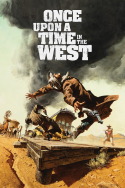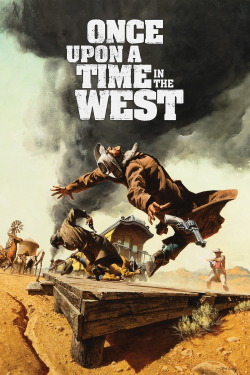
Review of Once Upon a Time in the West (1968) by Juan C — 20 Jun 2011
The word epic does not do enough justice when describing this monumental piece of cinematic work. The first entry in master filmmaker Sergio Leone's 'Once Upon a Time' trilogy is simply a masterpiece of filmmaking. From its large landscapes to its ritualistic gun duels, the film has inspired many other great directors for generations to come. It is not an understatement that without this film there would be no Godfather, Star Wars, Kill Bill and so many other classics of the cinema.
During the waning days of the Old West, a land battle ensues influenced heavily by the advancing railroad, that foreshadows the impending dominance of civilization, order and culture over the dying West. A subplot involves a vengeance fueled mission against the cold-blooded killer Frank (played to chilling perfection by Henry Fonda). The plot is rather simple and self-explanatory, yet, like much of his works, Sergio Leone handles the material with grace and elegance. The story is filled with depth and symbolism and as it expands, it becomes something far more grandeur and, yes, epic than it initially leads on.
Probably one of the best attributes of the film is the shifting tone in Leone's directional style. Unlike his far more popular 'Dollars Trilogy', ONCE UPON A TIME IN THE WEST isn't as tongue in cheek or quirky, but it is far more somber, gritty and deadly serious. Its characters aren't as colorful, although they still maintain his signature moral ambiguity, and also they begin to evolve with the events of the film. The film tends to deconstruct the iconic, mythical images of both men and women in relation to the Old West. Jill represents the stereotypical damsel in distress, who is nothing more than the object of men's lust and desires. But, by the end of the film she evolves into a strong, independent business woman who foresees the construction of oncoming railroad. Frank, Harmonica and Cheyenne represent the mythic Western savage male, who freely subjugate themselves to their impulses; whether it be lust, greed, love or vengeance. Morton, the railroad tycoon, is the symbolism of the everyday man who, out of his nature, is vulnerable, handicapped against the savagery of the Wild West.
There is so much more that I can say about this film, but I must regress. I'll just stop while I'm ahead. In closing the film serves to metaphorically symbolize not only society's conquest of the Wild West, the death of the mythic hero, of the iconic image of Man ('An ancient race', to quote the character Harmonica), but also of the Western genre on film. I'm not saying that there are have been no more great westerns, because there are been (Unforgiven, The Proposition, Tombstone and 3:10 to Yuma to name a few) and, hopefully, there still will be more. There just hasn't been another made in such an epic scale, which, still, the word does the film no justice.
This review of Once Upon a Time in the West (1968) was written by Juan C on 20 Jun 2011.
Once Upon a Time in the West has generally received very positive reviews.
Was this review helpful?