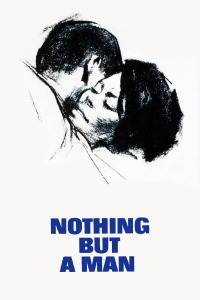
Review of Nothing But a Man (1964) by Edith N — 09 Sep 2012
The Hard Choices a Man Has to Make.
There are some movies which I watch and about which, in the end, I don't think I can manage five whole paragraphs. That isn't always a negative statement about the film itself. It's often easier to write more about a bad film, though I suppose it's also difficult to write about a neutral film--I can rave about a movie, or I can rip on a movie, but if it's "meh," what is there to say? Still, sometimes, a movie is so simple that there's just not that much to bring out of it. In most cases with a movie like that, I just don't write a review. This is why I watch more movies in any given year than I review, even leaving aside that I rewatch movies all the time. (I watched a movie the other day that I reviewed five years ago today, for example.) Sometimes, there is not enough memorable about the movie to share anything about it. This is almost, but not quite, in that category. It is only that I think more people should watch it that is making me try.
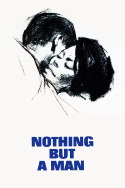
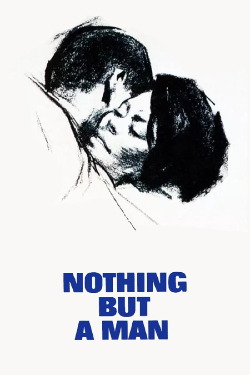
Duff Anderson (Ivan Dixon) is a will-o'-the-wisp. He has a son that he never sees, and he drifts from job to job. He is now a railroad worker in a small town somewhere near Birmingham, Alabama. He goes to a church function, and he meets Josie Dawson (Abbey Lincoln), daughter of the reverend (Stanley Greene). Her people all tell her that he's trouble, and the men at the mill all tell him that she's too good for him. However, they hit it off right away, and they spend time together. One day, he goes into Birmingham to see his father (Julius Harris), and he decides that he doesn't want to live that life. He asks Josie to marry him. Some other local men decide that Duff is the perfect type to help with the advancement of the local Civil Rights movement, but the only effect we see is that Duff gets fired while Josie is pregnant and has a hard time finding another job. And perhaps he will be like his father after all--or maybe he won't.
In the special features, Julius Harris tells the story of running into Malcolm X on the street. Malcolm X told him that he'd seen the movie and quite liked it--and that was all he said. Harris also says that Malcolm X was the only black person who'd ever told him that they'd seen this movie. And in fact, very few people at all have seen this movie. Perhaps that is in part because it doesn't have a very happy ending; its ending is ambiguous at best. Perhaps this is because it is a quiet movie about black people made in 1964 by two Jewish guys. There are plenty of people here who are vaguely familiar, but no one who is famous--Sidney Poitier turned down the role of Duff, and Ivan Dixon is probably best known as the Token Black Guy on [i]Hogan's Heroes[/i]. It has lived a life of obscurity, and it's the sort of thing I probably only would have encountered the way I did--because I got to "nothing" in the library's catalog, and there it was.
In many ways, Duff's life does not depend on his being black. His is a story that could be about many other kinds of men. Yes, the reason he gets blacklisted around town is that he is trying to get his coworkers to stick together against white prejudice, but that's hardly the only kind of prejudice which can cause trouble, especially in a small town. Heck, [i]Mystic Pizza[/i] and [i]Norma Rae[/i] are both small towns full of prejudice that aren't really "about" black-white relationships. It is true that black families in America have known a great deal of separation, but it isn't just black families where fathers abandon children; Norma Rae's children have different fathers, and I don't remember the Arujo girls' father being mentioned much at all. If Duff and Josie hadn't been black, the film might have gotten more attention in 1964, but I'm not sure the same level of desolation might have pervaded. After all, there were ways out for Norma Rae and the Arujo girls, and wherever Duff and Josie go, they're still black.
Really, I think what the film is most "about" is Duff's feelings of masculinity. He gets called "boy," because black men are treated as children by racist whites. Even before Duff got fired, Josie as a teacher was making better money than he was, but they couldn't have her go back to teaching after the baby was born, because a man supports his family. And of course, the way he was taught how to be a man was by his absentee father's behaviour. At the beginning of the movie, we see that Duff is not the kind of person who will actually patronize the prostitute, but he is also not the kind of man to be needlessly cruel to her. He wants a better world for his children, but he doesn't know if he is the kind of person who is capable of creating it. There are people who doubt that he is good enough for Josie, and in the end, he comes to doubt it himself. And maybe he isn't, but what's important is whether or not he is willing to work to be as good to her as he can. Even if that means letting her be the one to earn the money.
This review of Nothing But a Man (1964) was written by Edith N on 09 Sep 2012.
Nothing But a Man has generally received very positive reviews.
Was this review helpful?